Hi there,
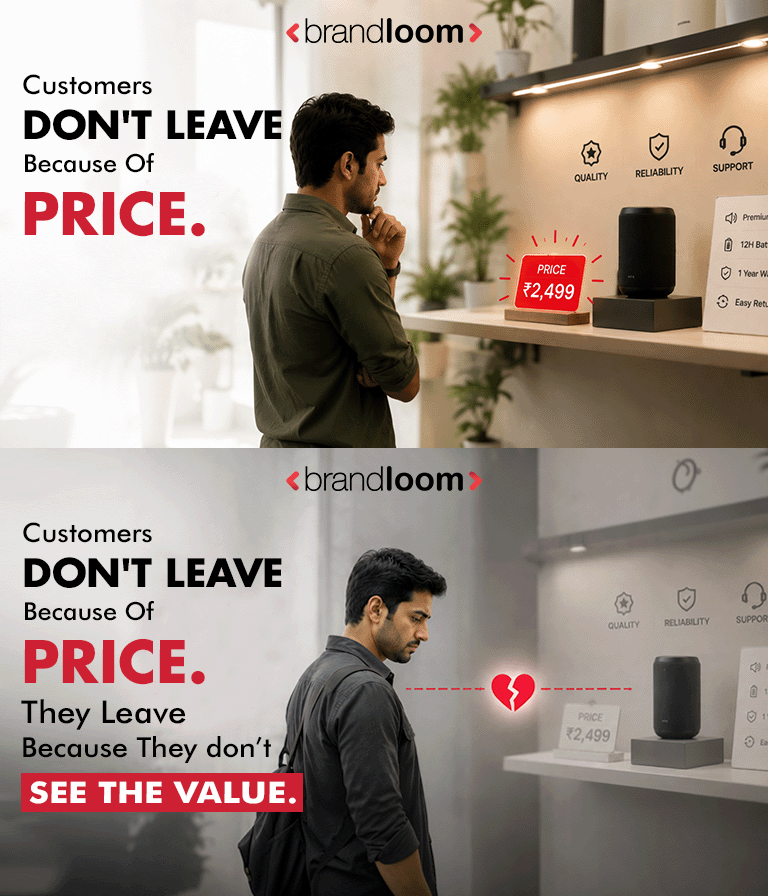
Most businesses assume that when customers say, “It’s too expensive,” the conversation is about price.
But it rarely is. The customer isn’t comparing numbers; they’re comparing perceived value.
This challenge has become even more relevant in India, where discounts are everywhere, yet consumers increasingly pay premium prices for brands they trust.
Why Price Isn’t the Real Problem
When customers hesitate, businesses assume the solution is simple: lower the price, offer a discount, run a promotion.
Sometimes it works. But only temporarily.
Price objections often hide deeper concerns. The customer may not fully understand the value. They may be comparing you to a competitor.
They may not trust the outcome yet. In other words, the issue isn’t always affordability; it’s perception.
And perception shapes purchasing decisions far more than most brands realize.
The Hidden Danger of Discounting
Discounts feel effective because they create immediate results. Sales increase. Conversions improve. But there’s a hidden cost.
The moment customers become accustomed to discounts, they begin waiting for them.
Frequent discounting sends an unintended message: your regular price may not represent your true value.
Over time, the discount becomes the product’s perceived worth. Every quarter requires another promotion, every campaign requires another incentive. And margins slowly erode.
Why Indian Brands Face This Challenge More Than Most
India presents a unique market dynamic. Consumers have been trained for decades to look for deals.
At the same time, Indian consumers are actively premiumising across beauty, health supplements, fashion, and home products.
They’re asking: “Why is it worth it?” And the brands that answer that question effectively win.
Diagnosing the Real Issue
Before changing pricing, ask yourself three questions:
- When Does the Objection Happen? If customers object before experiencing your product, the issue is perception. If they object after, the problem may involve pricing, delivery, or quality.
- Are Competitors Charging Similar Prices? If competitors at the same price points are succeeding, price isn’t the primary obstacle. Something in your value communication is missing.
- Do Customers Understand What They’re Buying? Ask customers to describe your product in their own words. If their explanation differs from yours, you have a communication problem—not a pricing problem.
The Value Communication Framework
The strongest brands communicate value effectively through three layers:
Layer 1: Clarify the Value
Most businesses explain features. Customers buy outcomes. Instead of describing what the product is, explain what it does. Show the benefit, the result, and the transformation.
Layer 2: Earn the Belief
Claims alone rarely convince people. Proof does. Customer stories, case studies, performance data, and third-party validation build belief. And belief converts interest into action.
Layer 3: Deliver Value at Every Moment
Value communication doesn’t stop at purchase. Every interaction either strengthens or weakens perceived value. Brands that manage all three moments consistently create stronger customer relationships.
A Real-World Example
One brand we worked with, NATURALTEIN, offered high-quality whey protein with exceptional standards. Yet sales underperformed.
The issue wasn’t the product; it was how customers perceived the value.
By redesigning the customer journey, introducing authentic influencer storytelling, and building campaigns focused on value rather than features, performance improved significantly.
Conversions increased, organic traffic grew, and customer confidence improved. Superior products don’t automatically create demand. Superior value communication does.
Three Actions to Take This Week
- Run an Objection Audit:
Review every pricing objection you’ve received in the last 90 days. Identify where it happened in the customer journey. Patterns often emerge quickly.
- Conduct a Value Spot Check:
Visit your homepage, top-performing ad, and best-selling product page. Can a customer answer these questions within ten seconds? What do I get? Why is it worth the price? Why should I trust this brand?
- Protect Your Price:
Instead of reducing price, increase perceived value. Offer expertise, provide guidance, bundle services, add exclusive benefits. The goal isn’t to charge less; it’s to make customers feel they’re receiving more.
What Most Businesses Eventually Discover
Customers rarely buy based on price alone. They buy based on confidence. When confidence is high, value becomes the focus.
The strongest brands don’t compete by being cheaper. They compete by being clearer and communicating value more effectively.
👉 If your brand is facing increasing price objections, the solution may not be another discount campaign. It may be a stronger value communication strategy.
Book a strategy session with BrandLoom to identify where your brand is losing perceived value and discover how to build stronger demand without relying on discounts.
P.S. If you missed the last edition: #101 – Why Reputable Brands Still Lose
That’s all for now. Stay valuable. Stay trusted.
Yours sincerely,

Avinash Chandra
Founder, BrandLoom Consulting
🌐 https://www.brandloom.com/
☎︎ +91-7669647020
📩 care@brandloom.com
💻 https://team.brandloom.com/book-a-meeting
1. Note: If you feel like talking, just hit reply on this mail.
2. Fun Fact: 82% of BrandLoom clients see an uptick of at least 20% in their revenue after the implementation of BrandLoom’s strategies.
BrandLoom Is Regularly Featured In :

Meet Us At:
Gurgaon. Mumbai. Pune. New Delhi. Bangalore. Texas. New York. London.