Hi there,
Two companies sell products that solve almost the same problem.
One has invested years in improving its technology, adding features and refining its product. The other offers something simpler, but its customers understand exactly what it does, why it matters and what makes it worth choosing.
Despite having the stronger product, the first company keeps losing deals.
This is more common than businesses would like to admit. Companies spend considerable time improving what they sell but considerably less time examining how customers understand the value.
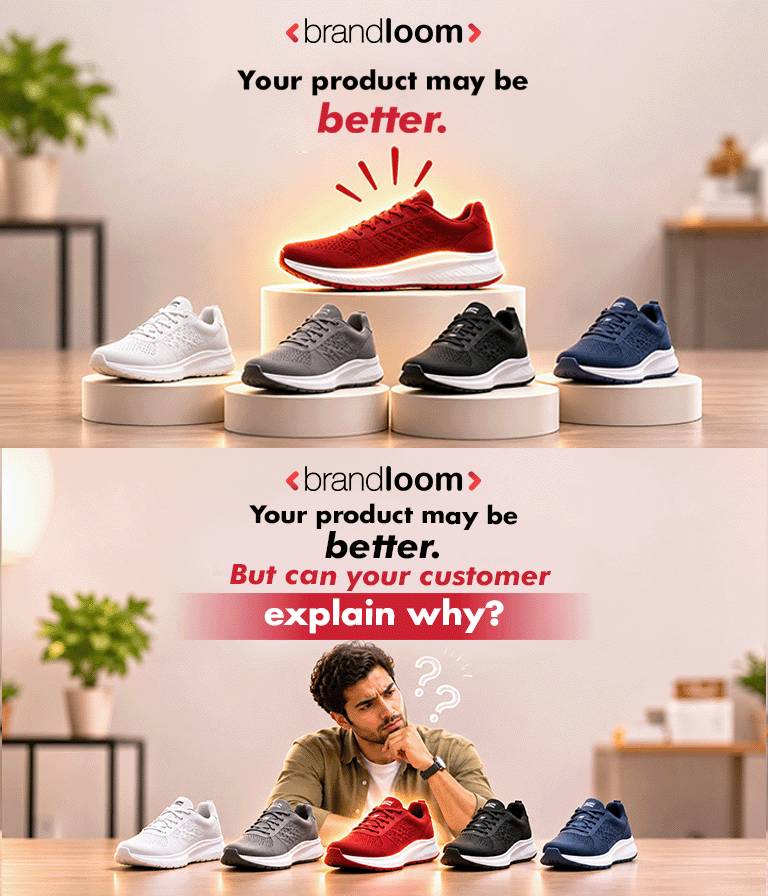
The product may be better. The difference simply isn’t reaching the customer.
And that creates a problem. A competitive advantage that customers cannot recognise rarely influences their buying decisions.
The positioning problem is becoming a commercial problem
In its 2026 B2B Vendor Differentiation Study, Wynter highlighted an issue many businesses are likely to recognise. Buyers frequently struggle to distinguish between competing vendors, even when those vendors offer different products and capabilities.
The study found that 98% of surveyed B2B buyers at least sometimes felt competing vendors offered essentially the same thing. Meanwhile, 64% found it difficult to distinguish vendors through their websites and messaging.
Think about what this means for a business that has genuinely invested in building a better product.
Its website talks about innovation, quality, customer experience and advanced technology. Its competitors use almost identical language. The customer visits both websites and struggles to identify a meaningful difference.
At that point, the buying decision may come down to price, familiarity, existing relationships or whichever option feels less risky.
The problem isn’t necessarily that the product lacks an advantage. It is that the business hasn’t translated that advantage into something customers can understand and value.
The difference between what you sell and why customers choose you
Consider a company selling business analytics software.
Its marketing focuses on advanced dashboards, predictive analytics, real-time reporting and multiple integrations.
These capabilities might genuinely be better than those of competing products.
But a business owner looking for analytics software may have a different concern. They want to understand why their marketing expenditure isn’t generating profitable revenue or which customer segments are worth investing in.
The software’s capabilities matter, but the business outcome gives those capabilities meaning.
This is where positioning becomes important.
At BrandLoom, we believe businesses need to look beyond product features and understand what actually influences customer preference. That means examining purchase objections, customer expectations, competitor alternatives and the outcomes people are willing to pay for.
A useful question to ask is: if we removed our product’s name and logo, would customers still recognise why it is different?
If the answer is no, there may be a positioning problem worth investigating.
Three questions businesses should ask
- What are customers actually comparing us against?
Your competition isn’t always another company selling the same product. Customers might be using an older system, managing the problem internally or choosing to do nothing. Understanding these alternatives reveals what your product is really competing against.
- Which differences actually matter to customers?
A feature that your development team considers groundbreaking may not influence a customer’s buying decision. Examine customer conversations, purchase objections, switching reasons and reviews to understand which differences have genuine commercial value.
- Can we prove why customers should choose us?
Saying your product is faster, better or more reliable isn’t enough. Show customers the evidence through measurable results, demonstrations, comparisons, testimonials and real use cases. A clear claim supported by evidence is more convincing than another list of promises.
Try this before adding another product feature
Choose three of your closest competitors and compare their websites, product pages and customer reviews.
Write down the main promises each business makes. Look at the features they highlight, the problems they claim to solve and the outcomes they communicate.
Now compare those promises with your own messaging.
Are you using the same words? Are you emphasising differences that customers don’t particularly care about? Is there an important customer problem that none of the competitors are addressing convincingly?
Then speak to five existing customers. Ask them what made them choose your product, what alternatives they considered and what they would miss if they switched to another provider.
Their answers may reveal a more valuable positioning opportunity than another round of competitor research.
Of course, positioning cannot compensate for a genuinely weak product or poor customer experience. A business must deliver on the advantage it communicates. But even a strong product needs a clear reason for customers to consider it.
The market doesn’t automatically recognise the work that goes into building a better product. Businesses have to make that difference visible, relevant and credible.
Your product might be better than the competition. But can your customers explain why they should choose it?
👉 If your business is investing in product development but struggling to communicate what makes it different, it may be time to revisit your positioning.
Book a strategy session with BrandLoom to identify what your customers value, where your competitors are falling short and how to turn your actual strengths into a compelling reason to choose your business.
P.S. If you missed the last edition, you can catch up here: 108 – Your AI Still Doesn’t Know How Your Company Thinks.
That’s all for now. Stay curious. Stay credible.
Yours Sincerely,

Avinash Chandra
Founder, BrandLoom Consulting
🌐 https://www.brandloom.com/
☎︎ +91-7669647020
📩 care@brandloom.com
💻 https://team.brandloom.com/book-a-meeting
1. Note: If you feel like talking, just hit reply on this mail.
2. Fun Fact: 82% of BrandLoom clients see an uptick of at least 20% in their revenue after the implementation of BrandLoom’s strategies.
BrandLoom Is Regularly Featured In :

Meet Us At:
Gurgaon. Mumbai. Pune. New Delhi. Bangalore. Texas. New York. London.