Hi there,
Most businesses think growth comes from reaching more people.
More impressions. More clicks. More traffic. More campaigns.
And to be fair, visibility matters.
Without attention, growth becomes difficult. But over the years, I’ve noticed something interesting.
The businesses that scale most efficiently aren’t necessarily the ones generating the most attention.
They’re the ones building assets that continue creating value long after the campaign ends.
This distinction matters more than most leaders realize.
Because there are two ways to grow a business.
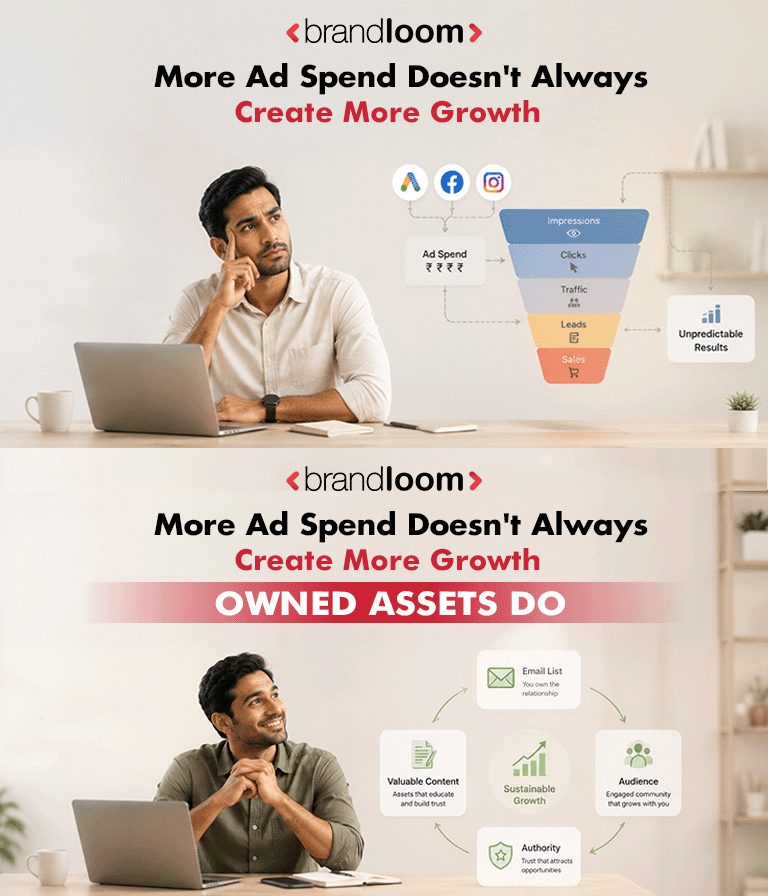
You can rent growth. Or you can own growth.
Many companies spend years perfecting the first approach. Far fewer invest enough in the second.
And that often becomes the difference between growth that feels fragile and growth that feels sustainable.
This week, let’s explore why some businesses become increasingly dependent on advertising while others build growth engines that continue working regardless of platform changes, rising costs, or market shifts.
The Difference Between Reach and Ownership
Every marketing channel helps a business gain visibility.
But not every channel creates an asset. Advertising creates reach. Owned assets create leverage.
The distinction may seem subtle, but its long-term impact is significant.
When you run an ad campaign, you gain access to someone else’s audience.
The moment the campaign ends, that access largely disappears.
When you build an email list, create valuable content, or establish industry authority, you’re creating something that remains valuable long after the initial investment.
One generates activity. The other generates equity. Both have a role to play.
But only one becomes more valuable over time. That’s why sustainable growth isn’t simply about generating attention.
It’s about converting attention into assets you control.
Why Paid Growth Gets More Expensive Over Time
Most businesses experience a similar pattern. Early campaigns perform well.
Customer acquisition feels manageable. Growth appears predictable.
Then competition increases. Advertising costs rise. Platforms evolve.
Performance becomes less consistent. And suddenly, maintaining the same level of growth requires significantly more investment.
The problem isn’t advertising itself. Paid media remains one of the most powerful growth tools available.
The problem emerges when advertising becomes the only growth engine.
When a business relies entirely on paid acquisition, every month starts from zero.
New budget. New campaigns. New competition. New uncertainty.
Growth becomes dependent on continuous spending.
And dependency rarely creates strategic advantage.
The strongest brands use paid channels differently.
They use advertising to accelerate growth while simultaneously building assets that reduce dependency over time.
The Three Assets That Continue Working After the Campaign Ends
While platforms, algorithms, and marketing trends continue changing, three growth assets consistently create long-term advantages.
Asset #1: An Audience You Can Reach Directly
One of the most valuable assets any business can build is direct access to its audience.
This is where email becomes strategically important.
Not because email is new. Not because email is exciting. But because ownership matters.
An email subscriber is someone you can reach without relying on an algorithm, bidding war, or platform policy.
Every subscriber represents future opportunities to educate, nurture, engage, and convert.
Over time, that audience becomes increasingly valuable.
Not because it gets larger.
But because it becomes easier and less expensive to reach.
Businesses often focus heavily on acquiring attention.
The smartest ones focus equally on retaining access to it.
Asset #2: Content That Builds Authority at Scale
Many businesses create content. Far fewer create authority. The difference is important.
Content created solely for visibility often delivers short-term results.
Content designed to demonstrate expertise creates lasting influence.
Every insightful article. Every useful guide. Every thoughtful newsletter.
Every meaningful perspective shared publicly contributes to a growing body of credibility.
Prospects begin encountering expertise before they encounter a sales conversation.
Trust starts forming before introductions happen.
And when trust arrives early, customer acquisition becomes easier.
Authority is one of the few marketing assets that compounds quietly.
It may not produce immediate results every day.
But over time, it changes how the market perceives you.
And perception influences every buying decision that follows.
Asset #3: Reputation That Creates Demand Before Marketing Starts
The most powerful growth asset isn’t a channel.
It’s reputation. A strong reputation creates something advertising alone cannot manufacture: Preference.
Customers arrive with confidence. Referrals happen naturally. Sales conversations become shorter. Decision-making becomes easier.
Growth becomes less dependent on persuasion because trust already exists.
This is often what separates category leaders from everyone else.
They are no longer competing solely on visibility.
They benefit from accumulated trust.
And trust is one of the few competitive advantages that becomes stronger with time.
Why the Strongest Brands Depend Less on Advertising Than You Think
It’s easy to assume that large, successful brands grow because they spend more.
In reality, many of them grow because previous investments continue paying dividends.
Their content continues attracting attention.
Their reputation continues generating referrals.
Their audience continues engaging with their insights.
Their authority continues influencing decisions.
Advertising remains part of the system. But it is no longer carrying the entire burden of growth.
That’s the outcome every business should strive toward. Not eliminating paid media.
Reducing dependency on it. Because dependency creates vulnerability. Ownership creates resilience.
The Compounding Effect Most Marketing Teams Ignore
One reason owned assets are often overlooked is that they rarely deliver instant gratification.
An email list grows gradually. Authority develops slowly. Reputation strengthens over years, not weeks.
But compounding rarely feels impressive in the beginning. Its power becomes visible later.
A newsletter with a few hundred subscribers eventually reaches thousands.
A collection of articles becomes a recognized knowledge library.
Consistent expertise becomes market authority. Trusted customer experiences become referrals. Each individual gain appears small.
Collectively, they create advantages that competitors struggle to replicate.
And unlike advertising budgets, these assets don’t reset every month. They continue accumulating value.
A Simple Question Worth Asking
Imagine every paid campaign stopped tomorrow.
What would continue generating growth?
Would prospects still discover your expertise?
Would customers continue referring others?
Would your audience still hear from you?
Would your reputation continue creating opportunities? Or would growth come to a halt?
The answer often reveals whether a business has built growth assets or simply funded growth activity.
Because there is a difference. One creates short-term momentum. The other creates long-term leverage.
What Most Businesses Eventually Discover
The businesses that scale most sustainably don’t win because they advertise more.
They win because they own more of the mechanisms that influence buying decisions.
They own relationships. They own audiences. They own authority. And they continuously strengthen trust.
Advertising helps them grow faster. Owned assets help them grow longer.
That’s why sustainable growth isn’t built solely on reach. It’s built on ownership.
Visibility can be purchased. Authority must be earned. Attention can be rented. Trust must be built.
And the businesses that understand this distinction often create advantages that continue paying dividends for years.
👉 If your growth depends heavily on paid acquisition, the next opportunity may not be another campaign.
It may be building the owned assets that make future growth more predictable, profitable, and sustainable.
Book a strategy session to identify where your business is creating activity and where it can begin creating long-term growth assets.
P.S. If you missed the last edition: The 5 Signals of a Growth-Ready Brand
That’s all for now. Stay curious. Stay credible.
Yours Sincerely,

Avinash Chandra
Founder, BrandLoom Consulting
🌐 https://www.brandloom.com/
☎︎ +91-7669647020
📩 care@brandloom.com
💻 https://team.brandloom.com/book-a-meeting
1. Note: If you feel like talking, just hit reply on this mail.
2. Fun Fact: 82% of BrandLoom clients see an uptick of at least 20% in their revenue after the implementation of BrandLoom’s strategies.
BrandLoom Is Regularly Featured In :

Meet Us At:
Gurgaon. Mumbai. Pune. New Delhi. Bangalore. Texas. New York. London.