Hi there,
Most businesses believe trust is built through reputation.
Positive reviews. Happy customers. Good word of mouth. Industry recognition.
And those things matter. A strong reputation helps buyers feel comfortable considering you.
But there’s a problem. Many reputable brands are still losing opportunities.
They’re known. They’re respected. They’re visible.
Yet when the final decision is made, someone else gets selected.
I’ve seen this happen across industries. The surprising part is that the winning brand isn’t always larger, louder, or better known.
It’s often the brand that has built authority. And while reputation and authority are frequently treated as the same thing, they influence buying decisions in very different ways.
This distinction matters because markets have become increasingly crowded.
Most categories already have enough competent providers.
Enough good products. Enough acceptable options.
The real challenge isn’t convincing people that you’re credible. It’s convincing them that you’re the best choice.
This week, let’s explore why reputation helps you enter the conversation, but authority often determines who wins it.
Why Reputable Brands Still Lose
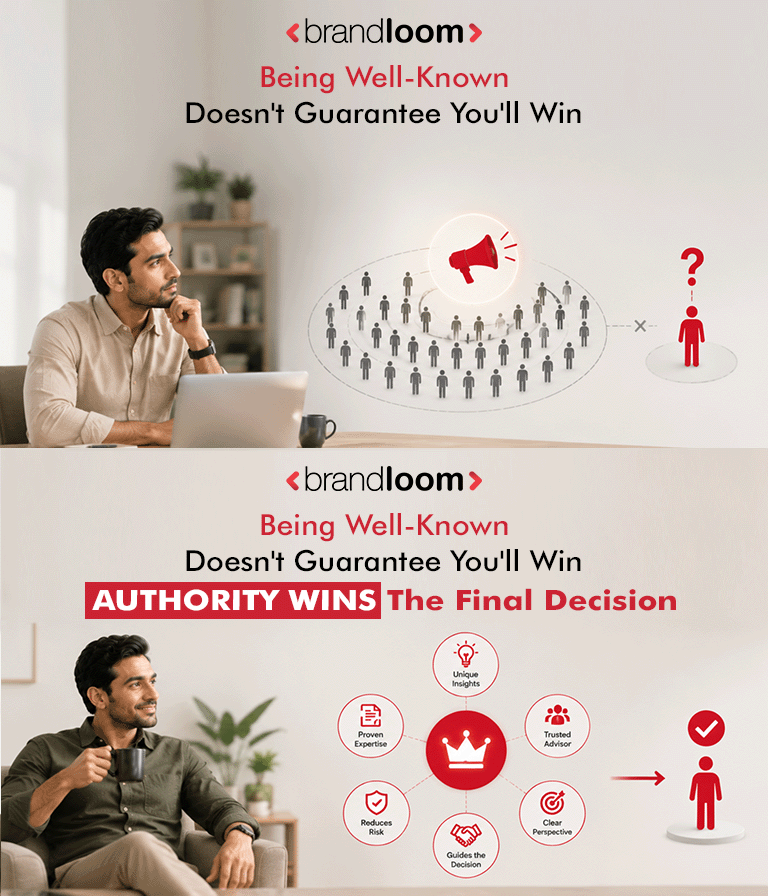
Reputation Gets You Considered. Authority Gets You Chosen.
Most buying decisions don’t start with a shortlist of one.
They start with multiple options that appear equally capable.
At that point, reputation does its job.
It signals reliability. It reassures buyers that you can deliver. It earns you a seat at the table.
But once you’re at the table, the evaluation changes. Buyers begin looking for confidence.
Not confident in your ability to do the work. Confidence in your ability to think.
They want to know who understands the problem best.
Who sees risks others don’t. Who has deeper insights. Who can guide decisions rather than simply execute them.
That’s where authority begins to separate brands.
Because reputation answers the question: “Can they do the job?”
Authority answers a different question: “Should they be the ones leading the decision?”
And that’s often what determines the outcome.
The Hidden Cost of Competing on Reputation Alone
Most businesses invest heavily in building credibility.
They collect testimonials. Showcase client logos. Promote awards.
Highlight years of experience. All valuable assets.
But here’s the challenge. Every competitor is doing the same thing.
As markets mature, credibility becomes expected.
It stops being a differentiator. Buyers assume competent providers will have positive reviews.
They expect strong portfolios. They anticipate good customer feedback.
What influences decisions isn’t proof that you’re good.
It’s proof that you understand something others don’t. The moment expertise becomes visible, comparison becomes easier.
And easier decisions often favor the brand with the strongest authority.
Why Authority Influences Buying Decisions
Authority changes how people perceive risk. When buyers encounter genuine expertise, uncertainty decreases.
They stop wondering whether a recommendation is correct. They stop second-guessing every step.
They feel guided. This matters because every purchase contains risk.
Especially in B2B environments.
Choosing the wrong partner has consequences. Choosing the wrong strategy has consequences. Choosing the wrong vendor has consequences.
As a result, buyers naturally gravitate toward the option that feels most capable of navigating complexity. Not simply the option that feels familiar.
Authority reduces perceived risk. And reduced risk accelerates decisions.
The Brands That Shape Markets Think Differently
Most brands focus on answering questions.
Authoritative brands focus on shaping them.
They don’t simply respond to industry conversations.
They influence them.
They introduce frameworks.
Create new ways of thinking.
Challenge assumptions.
Provide clarity where confusion exists.
Over time, this creates a powerful shift.
The brand is no longer viewed as a participant in the category.
It becomes a reference point.
People begin quoting its ideas.
Sharing its insights.
Using its language.
Following its perspective.
And that’s when authority starts creating demand before marketing even begins.
The Three Signals That Build Authority
Authority isn’t created through a single campaign.
It’s built through consistent evidence.
Three signals appear repeatedly among authoritative brands.
Signal #1: A Distinct Point of View
Authoritative brands don’t sound like everyone else.
They have a perspective.
A belief.
A way of interpreting industry challenges.
They stand for something beyond their services.
Signal #2: Intellectual Property
Experience alone doesn’t create authority.
Codified experience does.
The strongest brands transform lessons, observations, and expertise into frameworks, methodologies, models, and systems.
They make knowledge visible.
Signal #3: Transparent Thinking
Most businesses showcase outcomes.
Authority comes from showcasing reasoning.
People trust experts who explain how they arrive at conclusions.
Not just the conclusions themselves.
Why Most Brands Stop Too Early
Building a reputation feels rewarding.
Results arrive relatively quickly. Reviews improve. Awareness grows. Referrals increase.
Authority operates differently.
It requires patience. A perspective must be developed.
Ideas must be shared consistently. Frameworks must be refined.
Trust must be earned repeatedly. The early signals are subtle.
Which is why many brands abandon the effort too soon.
But those who stay committed eventually benefit from something powerful.
Their expertise becomes scalable.
Their credibility becomes transferable.
And their influence begins working even when they’re not in the room.
The Compounding Effect of Authority
One insightful article may not change your business.
One framework may not transform your market position.
One thoughtful perspective may not generate immediate demand.
But authority rarely works in isolation. It compounds.
Each insight strengthens credibility. Each framework reinforces expertise. Each idea deepens trust.
Over time, buyers begin arriving with greater confidence.
Sales conversations become shorter.
Referrals become more frequent.
Competition becomes less about price and more about perception.
And perception often drives preference.
That’s the hidden advantage of authority.
It keeps working long after the content is published, the event is finished, or the campaign ends.
A Simple Question Worth Asking
If your audience stopped seeing your advertisements tomorrow, what would remain?
Would they still seek your perspective?
Would they still trust your recommendations?
Would they still reference your ideas?
Would they still see you as an expert?
Or would visibility disappear along with attention?
The answer often reveals whether you’re building reputation or authority.
One helps people recognize you.
The other helps people choose you.
What Most Businesses Eventually Discover
The strongest brands don’t win because they’re the most visible.
They win because they’re the most trusted.
And that trust isn’t built solely through reputation.
It’s built through demonstrated expertise.
Through clear thinking.
Through meaningful perspectives.
Through consistent proof of judgment.
Reputation opens doors.
Authority creates preference.
And preference is one of the most valuable advantages a brand can possess.
Because in crowded markets, being known is helpful.
Being trusted is powerful.
But being the authority changes the game entirely.
👉 If your brand has already built visibility and credibility, the next stage of growth may not come from reaching more people.
It may come from becoming the voice your market trusts most.
Book a strategy session with BrandLoom to identify the authority gaps holding your brand back and discover how to move from being reputable to becoming truly authoritative.
P.S. If you missed the last edition: The Real Driver of Sustainable Growth
That’s all for now. Stay curious. Stay credible.
Yours Sincerely,

Avinash Chandra
Founder, BrandLoom Consulting
🌐 https://www.brandloom.com/
☎︎ +91-7669647020
📩 care@brandloom.com
💻 https://team.brandloom.com/book-a-meeting
1. Note: If you feel like talking, just hit reply on this mail.
2. Fun Fact: 82% of BrandLoom clients see an uptick of at least 20% in their revenue after the implementation of BrandLoom’s strategies.
BrandLoom Is Regularly Featured In :

Meet Us At:
Gurgaon. Mumbai. Pune. New Delhi. Bangalore. Texas. New York. London.