You optimized everything, including the video title, description, and tags. Yet, your YouTube videos struggle to reach the target audience. There’s minimal traction on the Home feed. No push in Suggested videos. Minimal reach beyond YouTube’s search.
Does it sound familiar? You are clearly optimizing with an outdated system. YouTube SEO in 2026 has changed a lot. From a search engine, YouTube has morphed into an AI-driven Search engine + recommendation engine.
Earlier, growth relied on metrics like:
- Keyword research
- Matching search terms
- Ranking in YouTube’s search
Now, growth comes from:
- Content understanding
- Viewer satisfaction
- Channel authority
Keyword-based ranking alone is no longer enough. Now, the AI-powered platform recommends content based on what people are most likely to watch next. This is the reason two similar videos perform very differently, and even without the perfect tags, some creators gain traction.
To master YouTube search optimization, you should learn how AI evaluates your YouTube videos and how YouTube discovery actually works. To create an effective video SEO strategy in 2026, you need an agency with proven expertise in AI and YouTube content optimization. BrandLoom, with its experience of guiding numerous brands and content creators, fits the bill.
How does YouTube Discovery Work in 2026?
Most creators still approach YouTube like a search engine. Their aim is to optimize for keywords, rank in YouTube’s search, and get views. Those are not enough for YouTube SEO 2026.
YouTube has transformed into a behavior-driven discovery system. Now, visibility comes from how the platform recommends your content—not just how it ranks it.
Four Major Discovery Surfaces
- YouTube Search – Users actively type search terms. Here, traditional YouTube SEO—like keyword research, video title, and description are relevant.
- Home Feed – This serves as the primary discovery layer. Videos are shown based on Past engagement, Interests, and watch history.
- Suggested Videos – This surface drives continuous viewing by appearing beside or after videos. If the content syncs with a viewer’s pattern, YouTube pushes it.
- Shorts Feed – Short-form content helps introduce your videos to new audiences at scale.
What Powers YouTube Content Discovery Now?
According to YouTube data, its recommendation system learns from over 80 billion signals every day. These include- what users watch, skip, rewatch, and engage with. So, it is clear that YouTube doesn’t just look at metadata but also analyzes behavioral patterns at scale. It also predicts what users are most likely to watch next. YouTube predicts user preferences based on past behavior.
That’s why some YouTube videos grow without high search volume. They perform well across Home, Suggested, and Shorts, over only Google search results.
What does this mean for Brands?
Brands aiming to ace YouTube video SEO should remember they are optimizing only for visibility in search. The YouTube discovery optimization strategy must focus on:
- How do target users interact with your content?
- How long do they stay on your videos?
- Does YouTube see your video as worth recommending again?
In 2026, growth doesn’t come from being found alone; it comes from consistent visibility.
How does AI understand and rank YouTube Videos?
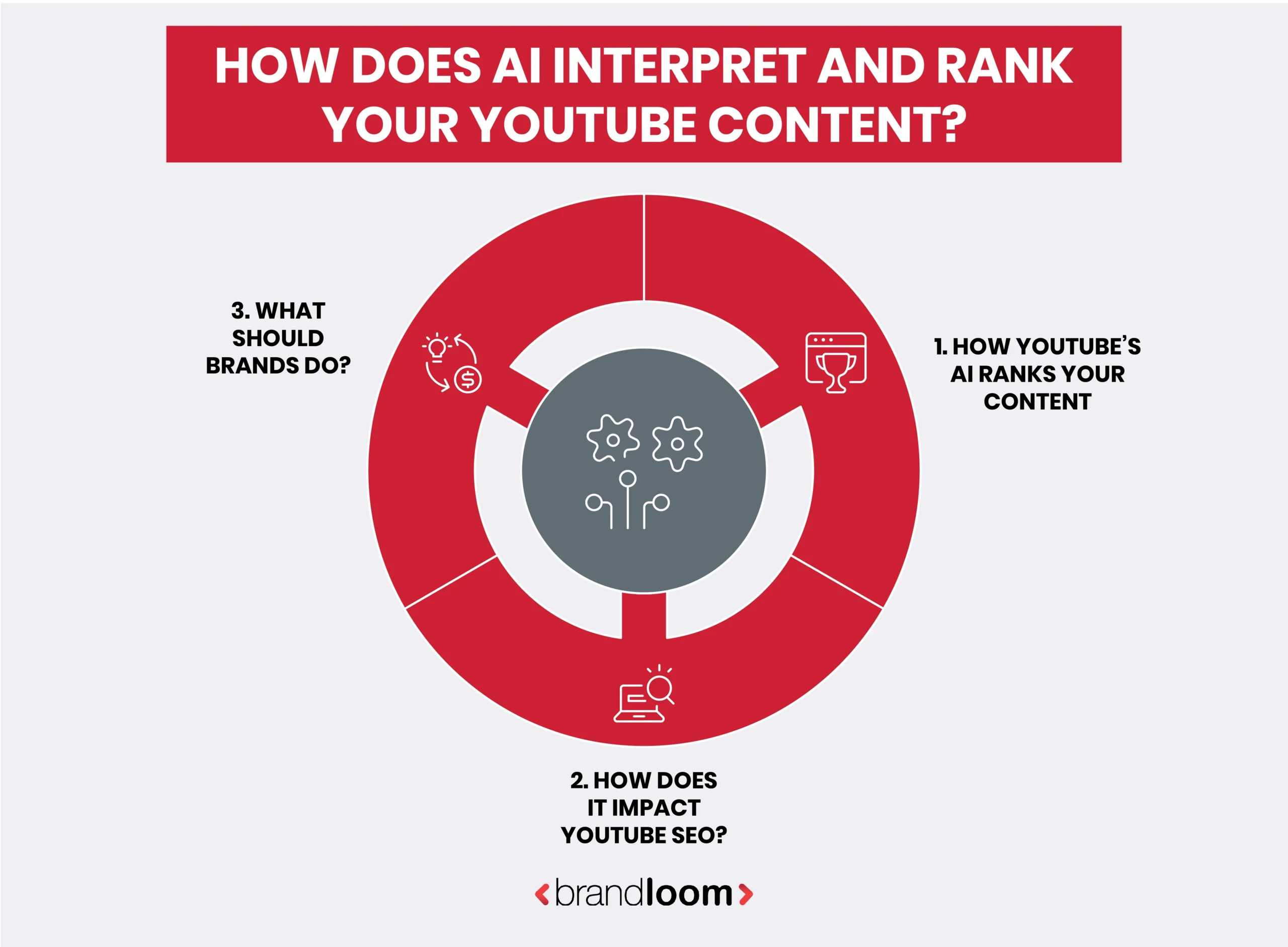
YouTube used to rank videos mainly based on video title, video description, and tags. That was the scene a few years ago. Now, YouTube search optimization doesn’t rely only on what you tell it. It has started relying on its own understanding and analysis, powered by AI technologies.
Transform your online presence with India’s best SEO company. Experience unparalleled expertise, innovative strategies, and dynamic results.
How YouTube’s AI Reads and Interprets Your Content
YouTube’s systems use machine learning to evaluate videos beyond metadata. It checks how users interact with content and what the content actually contains. Here’s what YouTube’s AI algorithm processes:
1. Audio
- AI can transcribe speech automatically
- It detects keywords and context naturally
- The spoken content strengthens your topic
2. Visuals
- It looks for Thumbnail relevance
- It analyzes objects, scenes, and patterns
3. Context
- AI connects your content to broader topics
- It maps your videos within a content ecosystem
So, that’s how YouTube builds a complete understanding of your video content.
Maximize your online visibility with Delhi NCR’s leading SEO company. Expert tactics, customized solutions, and proven success to grow your business.
How Does it Affect YouTube SEO?
Earlier, brands controlled ranking using keyword research and optimized videos using search terms.
Now, YouTube analyzes whether your content actually matches the user’s intent or not.
So, that means:
- Weak content can’t be saved by using tags
- Misleading titles will hurt content performance
- AI scrutinizes the match between promise and delivery
YouTube’s AI algorithm checks the following signals:
- Relevance – Does your content match what users are looking for?
- Performance – Do people watch, engage, and stay?
- Satisfaction – Do viewers keep on watching after your video?
These signals matter more than just titles, descriptions, and tags.
Boost your digital footprint with Mumbai’s top SEO company. Innovative strategies, personalized service, and measurable results for your business.
What Brands Must Do?
To improve your YouTube SEO, you must:
- Speak naturally about your topic without relying solely on text fields
- Align your video title, video description, and actual content
- Focus on clarity, structure, and intent
YouTube does not resort to guesswork in 2026. It analyzes, validates, and then decides whether to promote your content or not.
Want to get a clear and better understanding of YouTube ranking in the AI era? Talk to our AI SEO experts and strategists in BrandLoom.
Elevate your online presence with Gurgaon’s premier SEO company. Tailored strategies, expert analysis, and impactful results to drive your success.
Why do Traditional YouTube SEO Tactics Fall Short?
For years, marketers followed a predictable formula for YouTube SEO. It involved doing keyword research, optimizing your video title and video description, and adding tags, with an aim to rank in YouTube’s search.
In 2026, that approach is not enough to drive consistent growth.
What has changed?
Nowadays, optimizing YouTube video content is basic. Most creators already:
- Optimize titles, descriptions, and tags
- Add a custom thumbnail
- Use relevant search terms
These help YouTube understand your content, but do not guarantee reach. YouTube’s systems prioritize videos based on how viewers interact—what they click on, how long they watch, and what they do after that.
So, visibility is no longer decided at the upload stage. After users start watching your content, it gets amplified.
Unlock your website’s potential with Pune’s leading SEO company. Expert strategies, personalized service, and proven results to elevate your brand.
Where Traditional SEO Falls Short?
The old model is based on the assumption that a correctly optimized video will rank well. However, the YouTube recommendation system now plays a key role.
A perfectly optimized video won’t grow if the following occurs:
- People don’t click on it
- They drop off quickly
- They don’t continue watching
On the contrary, a video with average keyword optimization will perform well if viewers stay engaged.
The Real Shift
Search-based SEO focuses on AI video discovery. And YouTube chooses content that engages people effectively.
You can no longer focus exclusively on: “Did I use the right keywords?”
The worthy question is: “What keeps users engaged?”
What Does this Mean for Brands?
Keyword research, video title, and video description are still important in YouTube video SEO. However, your YouTube content optimization strategy should not be limited to those methods.
To optimize your videos for AI discovery, focus on:
- Delivering content matching users’ intent
- Holding attention
- Creating content people want to keep watching
Because in today’s YouTube ecosystem, growth doesn’t come from optimization alone- it thrives on performance. When you can’t find what’s holding back your YouTube video strategy, contact our veteran SEO analysts at BrandLoom.
Looking for top SEO results in Bangalore? BrandLoom offers unmatched expertise, cutting-edge strategies, and customized solutions for your success.
The Redesigned YouTube SEO Framework for 2026 and Beyond
If traditional YouTube SEO is no longer enough, you must focus on what works for YouTube ranking in the AI era.
So, what actually drives growth today?
In 2026, no single method will affect video ranking. Now, it is about how well your content performs across multiple signals. The key factors are AI and end-user behavior. We’ll analyze it using a simple framework.
The 4 Pillars of Modern YouTube SEO
Content Analysis
Before anything else, YouTube needs to understand your video content and context. It won’t rely solely on your video title, video description, or tags. Its systems will analyze your spoken content, visuals, and overall context for a clearer understanding. YouTube’s deep learning models interpret content and connect it to viewer intent, behind the scenes.
Viewer Satisfaction
This is a major ranking factor in 2026. YouTube analyzes how users respond after clicking a video. It checks if:
- Do they continue watching more videos?
- They keep watching or not?
- Do they engage further?
Its recommendation system processes over 80 billion signals daily. It deeply analyzes user behavior like clicks, watch time, skips, and rewatch patterns. Your video grows only when viewers find it useful and interesting.
If video engagement is strong, YouTube will expand your reach. Or else, the distribution slows down even if the video is optimized.
Packaging (Title + Thumbnail)
Before your content can perform, it must get clicks. Your video title and custom thumbnail affect your video’s popularity. YouTube’s system closely tracks user clicks and uses the information to refine recommendations.
However, clicks alone can’t bring growth. Your content needs a high CTR. If your packaging attracts clicks but your content fails to deliver, the performance takes a hit.
Channel Authority
YouTube doesn’t just analyze individual videos, but it checks your YouTube channel over time. It will check patterns like:
- Consistent content creation around a subject
- Number of returning viewers to the channel
- Video performance
YouTube recommended channels that offer depth and consistency. So, a focused content strategy scores over random uploads.
How Do These Pillars Function?
You don’t grow by optimizing a single element. Growth comes when:
- Viewers engage and stay
- They understand your content easily
- Your packaging drives clicks
- Your channel wins trust gradually
Then YouTube starts recommending your videos consistently across Home, Suggested, and beyond. The evolved YouTube algorithm is about aligning content, user behavior, and consistency.
To get a grasp on evolving YouTube algorithms, you will need assistance from SEO experts and AI analysts. Choose BrandLoom, the agency with multiple coveted AI awards in its portfolio.
How to Optimize Your Videos for AI-Driven Discovery?
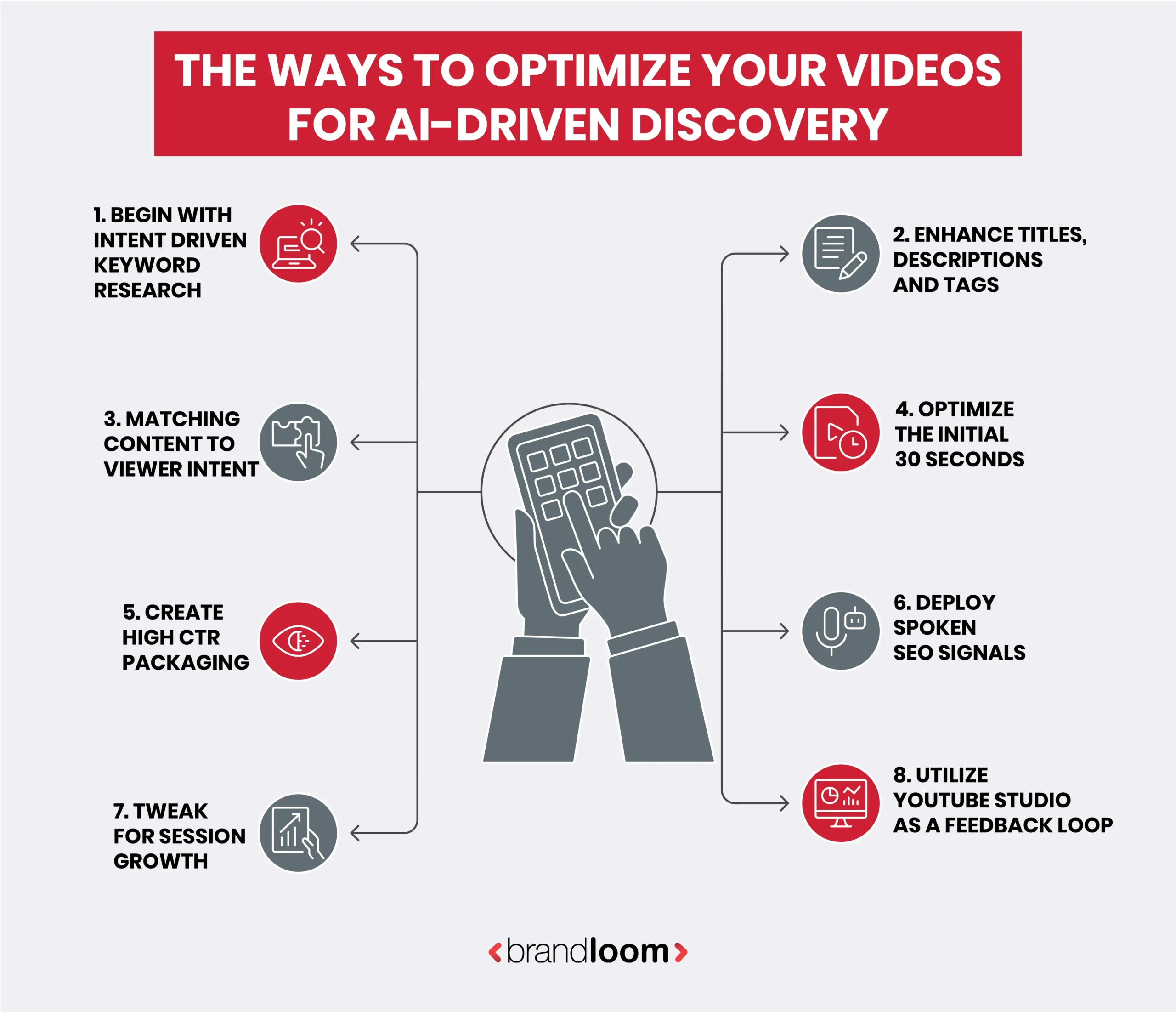
In 2026, optimizing your YouTube videos isn’t limited to following a checklist. You must align your content with the methods used by YouTube to understand, test, and distribute videos.
Start with Intent-Driven Keyword Research
Keyword research still matters for YouTube SEO, but not in the old way. You should use search terms to understand user intent, rather than seeking high-volume terms. Think of what the end users are trying to solve, learn, or decide.
For example, a term like “YouTube seo tips” offers direction. But a long tail query like “how to rank YouTube videos in 2026” shows clear intent. Now, keywords help you design better content.
Optimize Titles, Descriptions, and Tags
Your video title, video description, and tags are important, but as baseline metrics. You can use the primary keyword naturally in your video title and write a clear and structured video description supporting the topic. Add apt tags, but don’t overload.
These elements help YouTube categorize your content, but content performance is what affects the AI video discovery.
Matching Content to User Intent
This is where real optimization starts. As users click your video, they expect a specific outcome. If that is not there, they leave, giving YouTube a negative signal.
So, focus on delivering in video what you promised and stay aligned to the topic. YouTube rewards clarity in content.
Optimize the First 30 Seconds
The first few seconds decide the fate of your video. YouTube observes early drop-offs. A video with a strong opening sequence must show the promise made in the video title and move into value. When viewers stay, YouTube continues distributing your video.
Develop High-CTR Packaging
Before your content can perform, it must get clicks. The custom thumbnail and video title serve as the packaging. They influence whether a viewer will pick it over other content. Your title should support the thumbnail.
Use Spoken SEO Signals
YouTube reads your metadata and listens to your video. Your spoken content helps strengthen the context. It also improves the platform’s topic understanding. Mention the subject early in the video and also use related phrases. Keep things aligned with your core idea to strengthen your relevance.
Optimize for Session Growth
YouTube’s goal is to retain users. So, it evaluates your video’s performance by what happens next. If users continue watching more content, your video becomes more valuable. This explains why connected content works better than isolated pieces. You must create related videos for a flow.
Use YouTube Studio as a Feedback Loop
To improve your videos, rely on data. Use YouTube Studio and focus on three signals:
- Traffic sources → Where is your growth coming from?
- Click-through rate (CTR) → Are users watching your video?
- Retention → Are they staying?
Such engagement signals directly influence how YouTube’s AI algorithm recommends content.
For proper YouTube discovery optimization, focus onuser intent, delivering promised value, and creating connected content. More than optimization, YouTube rewards videos that consistently perform.
To develop a custom and robust YouTube video optimization roadmap for your business, call our experts at BrandLoom.
Using Topic Clusters to Build Channel Authority
Your YouTube SEO 2026 strategy must not stay limited to optimizing individual videos. Set the focus on your channel’s overall authority on a topic.
Why Channel Authority Matters?
YouTube’s AI algorithm is meant to connect viewers with content they’re likely to keep watching. So, it looks beyond a single video clip and analyzes patterns across your YouTube channel.
Now, user behavior patterns influence YouTube recommendations. It checks content that people watch, view repeatedly, and engage with consistently. Creators repeatedly offering value-based content in a specific domain race ahead.
What Do Topic Clusters Mean?
Rather than creating disconnected content, develop clusters of related videos around a central theme. Channels covering random marketing tips struggle to get views and clicks,s but those covering SM marketing or influencer marketing niche build depth.
Then, YouTube can understand your niche more clearly and refer your videos to the right audience, across several discovery surfaces. Viewers become aware of your expertise.
How to Build Authority Faster
Authority comes from consistency and connection. So, you must create videos that are naturally linked to each other. Then organize them into playlists and use structure to lead viewers from one clip to another. This affects session time positively.
YouTube Channels built around a clear content strategy outshine scattered content as YouTube prefers structured content. Viewers also prefer these channels, and recommendations become predictable. A system that compounds growth works better than a single viral clip, in the long term.
YouTube SEO + Google Search – A Win-Win Combination
Do not think of YouTube and Google as totally unrelated content platforms. Your YouTube videos can rank directly in Google search results. For informational queries, video results often appear alongside blogs and guides.
Why Does This Matter?
Traffic from Google is not the same as YouTube recommendations. Google users have intent, and they actively seek answers. So, they are more likely to watch longer and engage with your content. So, Google serves as a powerful discovery channel, especially for content marketers, educators, and brands.
How to Optimize for Both Platforms?
Your content must align with how both platforms understand relevance. Use intent-driven topics. Your video title should clearly say the content of the video. The video description should reiterate that. The content must cover the topic in a structured and complete way.
When you use your videos within blog content, it improves visibility further.
The Strategic Benefit
But combining the YouTube recommendation system with Google search visibility creates a stronger growth system. It does not get affected entirely by algorithm fluctuations.
In 2026, a YouTube video SEO strategy is not just about getting recommended but also about showing up where intent already exists. Google fits the bill perfectly.
How do you plan and develop a strategy that lets you leverage the benefits of both platforms simultaneously? Contact our SEO analysts and AI strategists at BrandLoom.
Metrics That Actually Matter in YouTube SEO (2026)
By now, you understand YouTube SEO is more affected by performance than optimization. So, you must track the right metrics. Focusing on views is common, but it is a result, not a signal.
What YouTube Actually Measures?
The YouTube recommendation system evaluates content based on how viewers interact with it. It checks what they click, how long they watch it, and what they do afterward. So, your video growth depends on a few major signals. These are:
- Click-Through Rate – Are people choosing your video?
- Audience Retention – Are they staying and watching the clip?
- Returning Viewers – Do they return to your channel?
- Watch Time – How long do they stay engaged?
- Traffic Sources – Do you get recommended on the Home and Suggested sections?
These signals directly influence how often YouTube shows your videos.
How to Analyze These Metrics
Each metric shows something unique.
- CTR reflects your packaging—your video title and custom thumbnail.
- Returning viewers show growing trust and authority.
- Retention shows your content quality.
If your CTR is high but retention is low, the content is not delivering. If the opposite is true, work on your packaging.
Why Does This Matter?
YouTube keeps on testing your video with a small set of viewers. Strong video performance leads to wider distribution. To improve your AI video discovery, focus on feedback and track main metrics.
In 2026, more than the algorithm, the audience decides your growth.
Conclusion
You can optimize your video title, refine your video description, and adhere to traditional YouTube SEO tips. In 2026, your content performance drives growth over optimization. YouTube recommendations are affected by how viewers interact with videos, what they choose, the timespan they watch for, and if they return.
For YouTube video SEO optimization, you need:
- Content that matches end-user intent
- Packaging (title + thumbnail) that works for users
- Strong retention to sustain distribution
- A well-planned YouTube channel with topical authority
When these factors align, YouTube starts recommending your videos consistently. To develop a YouTube SEO guide in 2026 and implement it, you will need expert assistance. Contact the SEO analysts and AI strategists at BrandLoom who have assisted numerous client brands in optimizing their YouTube strategies.
FAQs
In 2026, YouTube video SEO is not limited to video title, description, and tags optimization. Now, an AI-powered YouTube recommendation system uses billions of signals daily to understand what viewers like. It analyzes engagement patterns, watch time, and behavior, and not only metadata optimization. So, you must make content align with user intent, along with optimizing it. Also, creating a cluster of related content works better than single uploads. The ranking and recommendation will depend more on performance.
AI plays a big role in YouTube video ranking. It analyzes user behavior deeply and checks if the content delivers what it promises. YouTube’s recommendation system now does not rely on keywords solely. It deploys deep learning to analyze what users watch, how long they stay, and whether they engage with your video or return to watch more content on the channel. By processing billions of signals daily, it learns to predict and recommend videos according to user satisfaction and intent. So, eventually, content that resonates with viewers gets recommended and distributed.
Yes, keywords still play a role in YouTube video SEO. But the process has changed. YouTube’s AI algorithm has made things more refined. Using relevant keywords in your video title, description, and tags helps YouTube comprehend what your content is about. But it is not enough for ranking. YouTube now focuses on user interaction patterns, including click-through rates, watch time, and engagement. These help it determine what content is ideal for recommendations. So, consider keywords as a starting point for YouTube search optimization.
YouTube’s AI doesn’t just rely on titles or descriptions. It understands video content and its relevance. YouTube’s AI algorithm uses advanced machine learning to inspect your audio, visuals, and context. The audio and visual elements undergo scanning. AI also tracks how viewers interact with the video and checks if they engage with the content, skip, or watch until the end. With such a detailed understanding, YouTube picks videos for recommendations that match viewer intent and satisfaction.
In the AI-powered YouTube discovery era, viewer satisfaction is vital. YouTube’s AI algorithm doesn’t just rank videos based on keywords anymore. It checks how the content resonates with users. It interprets signals like watch time, engagement, and click-through rates. AI analyzes content by transcribing audio, checking the visuals, and viewer behavior patterns. Videos matching end-user intent, getting views till the end, and consistent engagement are recommended. These videos are what you see across YouTube’s Home feed, Suggested videos, and Shorts.
To optimize videos for AI systems, creators should develop content that matches user intent well. They must use elements for consistent engagement. The video title and description must match the content.
Structure your video to get attention, retain viewers, and encourage interaction.
Also, use custom thumbnails to get higher click-through rates.
Then, create content that offers value within the first few seconds.
Interlinking videos will make your viewers interested in watching more.
A consistent content strategy is a must for YouTube discovery optimization.
Yes, watch time certainly matters for YouTube video SEO. YouTube’s recommendation model uses watch time to analyze viewer engagement and satisfaction. Videos with longer watch times reflect that users find the content valuable. Then YouTube recommends that video more. The system also checks session time, the duration viewers stay on YouTube after watching a specific video. Yes, keywords and metadata are still important. But watch time determines if your video gets promoted across different feeds of YouTube.
Topical authority is a must for long-term YouTube growth. Channels offering content around a specific topic signal to YouTube that they are experts in that domain. This increases the chance of recommendations. AI helps YouTube understand the depth of content within a segment. So, channels showcasing authority on specific topics get promoted. When you create videos on related topics in a niche (like different social media platform tips), it enhances your chances of ranking in search. These clips get repeat viewers and feature in suggested videos.
Shorts have become a must for success in YouTube video SEO. Short-form content is very popular. So YouTube’s AI algorithm now prefers signals from Shorts. It checks aspects like watch time, completion rates, and user interactions. Long-form videos are still important. But Shorts offer creators the scope to reach new audiences quickly. YouTube’s AI analyzes how often users click on shorts, watch, and rewatch them. These directly affect your content’s recommendation potential on the platform. So, brands and creators should utilize YouTube Shorts to capture attention and attract traffic to their longer videos.
In 2026, brands should target YouTube SEO with a performance-based approach. It’s not all about using metadata and keywords. They must focus on creating content that users find valuable. That helps hold user attention, improve engagement, and build topical authority. YouTube’s AI wants consistent, relevant content. It recommends videos that retain viewers and trigger further engagement. Brands should also choose Shorts for quick visibility and AI video discovery. Analytics tools like YouTube Studio help to track CTR, watch time, and audience retention.