
Running a gym today feels very different from running one even a few years ago. More people care about health and wellness, but gym owners face tougher competition than ever. According to industry reports, over 80% of fitness consumers research gyms online before visiting in person.
Boutique studios, fitness apps, at-home training platforms, and AI-powered coaching tools all compete for the same audience. Simply opening your doors and offering discounts no longer guarantees steady sign-ups or sustainable gym membership growth.
Consumer behavior has changed, too. Before joining a gym or fitness center, most people now search online, compare reviews, browse social media, and check local ratings. They want proof of results, transparent pricing, and a strong community experience. If your business lacks visibility online, potential members often move to competitors before they even step inside your facility.
This shift explains why many businesses struggle with gym growth challenges, even when they invest heavily in equipment or infrastructure. Strong facilities matter, but digital visibility, credibility, and engagement influence purchasing decisions just as much.
Today, a strong gym digital marketing strategy helps fitness businesses attract attention, build trust, and convert interest into memberships. From local gym marketing and social media to paid advertising and retention campaigns, digital channels now shape how gyms grow.
At BrandLoom, while working with multiple Gym owners, we have seen one pattern repeat across the fitness industry. The gyms that grow consistently do not rely on seasonal offers alone. They build smart systems that attract the right audience, nurture relationships, and create long-term member loyalty through strategic digital marketing for gyms. Our digital marketing team has helped them build such growth systems for Gym owners.
The Biggest Gym Growth Challenges
Growing a fitness business has become more complex than ever. Gym owners no longer compete only with nearby fitness centers. They compete with boutique studios, digital fitness subscriptions, home workout apps, and even creator-led wellness communities.
As customer expectations evolve, many gyms struggle to maintain steady growth. Understanding these gym marketing challenges is the first step toward building a stronger business.
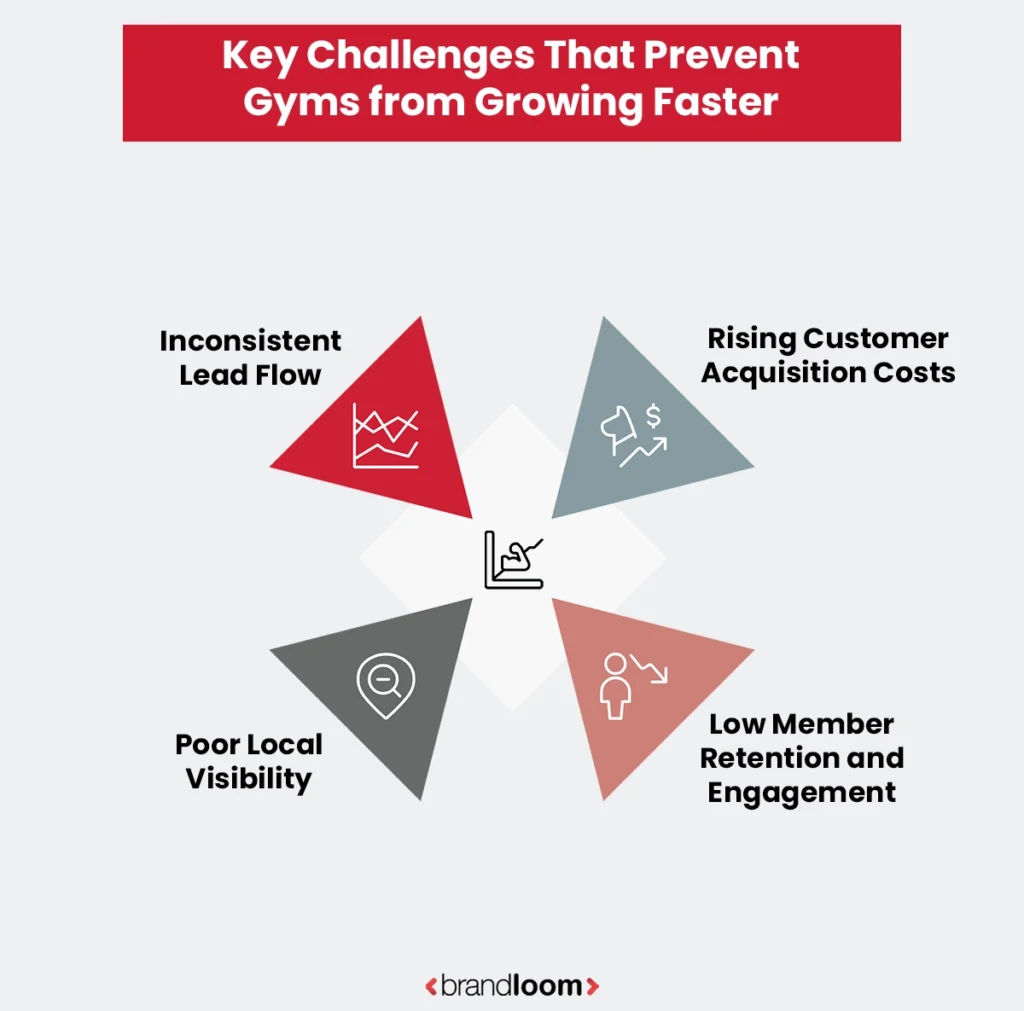
1. Rising Customer Acquisition Costs
Attracting new members now costs more than it did a few years ago. Competition for online visibility continues to increase, especially in local markets where multiple gyms target the same audience. Paid ads on search engines and social platforms demand larger budgets, while organic reach on social media has become less predictable.
Many gym owners invest in promotions without a clear gym customer acquisition plan. Discounts may drive temporary interest, but they rarely create sustainable results. Without a defined gym advertising strategy, businesses often burn through marketing budgets without seeing meaningful returns.
A smart fitness marketing strategy focuses on attracting the right people rather than simply increasing reach. Strong targeting, local optimization, and audience segmentation help gyms reach potential customers who are more likely to convert into long-term members.
2. Low Member Retention and Engagement
Signing up members is only one part of the challenge. Keeping them engaged matters even more. Many gyms lose members within the first few months because they fail to create personalized experiences or consistent communication.
This problem directly affects gym member retention strategies. New members often feel motivated during the first few weeks, but attendance drops when gyms fail to maintain engagement. Generic emails, limited interaction, and weak onboarding processes create a disconnect.
Successful gyms improve gym member engagement by creating a stronger sense of community. Retention improvements of even 5% can significantly increase long-term gym profitability. They share personalized fitness plans, offer useful workout tips, highlight member milestones, and encourage user-generated content through challenges and transformations. These efforts help members stay connected to the brand.
3. Poor Local Visibility
Many gyms struggle because local customers simply cannot find them online. Even the strongest facility means little if nearby audiences never discover it.
Poor visibility often results from weak local gym marketing, incomplete business listings, or inconsistent reviews. Many fitness businesses also overlook local gym SEO, which plays a major role in attracting local traffic.
Today, people searching for a gym usually start with Google Maps or local search results. If your gym does not appear in those searches, competitors often win the customer before you get a chance.
4. Inconsistent Lead Flow
Many gyms still depend heavily on referrals or seasonal spikes in motivation. Membership inquiries increase in January but slow down sharply during other months. This inconsistency makes revenue difficult to predict.
Without a structured system for gym lead generation, gyms struggle to maintain steady demand. Businesses need a repeatable process that attracts, nurtures, and converts leads over time.
The most effective digital marketing for gyms creates a predictable pipeline through content, paid campaigns, SEO, and retargeting. Sustainable gym membership growth depends on building systems that generate leads year-round, not just during peak seasons.
How Gym Marketing Has Changed: The Shift to Digital-First Fitness Growth
Gym marketing has changed significantly over the last few years. Earlier, gyms relied on newspaper ads, flyers, referral discounts, and outdoor banners to attract members. While these methods still create some awareness, they no longer drive consistent gym membership growth on their own. Today’s consumers make decisions differently, and gyms must adapt to remain competitive.
People no longer walk into a fitness center based on proximity alone. Before signing up, they research online, compare pricing, read reviews, check social media pages, and evaluate the overall experience a brand offers. This shift has changed the way marketing for gyms works.
A modern gym acquisition strategy focuses on visibility, trust, engagement, and conversion. Instead of waiting for people to walk through the door, gyms now need to meet potential members where they spend their time online.
Today’s Fitness Customer Journey
The customer journey in the fitness industry has become far more digital.
A person looking for a gym often starts with a Google search such as “best gym near me” or “fitness clubs in my area.” From there, they compare ratings, browse websites, and explore Instagram or YouTube pages to see trainer expertise, member experiences, and facility quality.
Social proof plays a major role in decision-making. Transformation videos, testimonials, class highlights, and authentic user-generated content often influence trust more than direct promotions. People want reassurance before making a commitment.
Website experience matters too. If a gym website loads slowly or lacks clear membership information, visitors leave quickly. Strong website traffic means little without a good user experience.
Many fitness businesses still underestimate how much digital friction affects conversions. From our experience working with growth-focused brands, gyms often lose potential members not because of poor offerings, but because their online experience creates hesitation at critical decision-making stages.
Why Traditional Gym Advertising Falls Short
Traditional promotions often fail because they target broad audiences without considering intent. Discount-heavy campaigns may attract short-term members but rarely improve retention. Many gyms still invest in isolated campaigns that create visibility but fail to support long-term engagement.
Successful fitness business marketing takes a different approach. It targets the right target audience, nurtures interest through valuable content, and creates stronger engagement over time.
The strongest gym marketing strategies connect every touchpoint, from discovery to membership conversion. This is where many gyms struggle. Running paid ads without local SEO or social media without conversion tracking often leads to wasted marketing efforts.
For gyms focused on sustainable growth, we recommends treating marketing like an ecosystem rather than a checklist. When SEO, content, paid campaigns, and community-building work together, gyms improve visibility, strengthen brand awareness, and create stronger member relationships rooted in trust.
The Ultimate Gym Digital Marketing Strategy
A successful gym no longer grows through a single marketing tactic. Running occasional promotions or posting on social media without a plan rarely delivers sustainable results. Today, gyms that grow consistently rely on a connected gym digital marketing strategy that attracts leads, builds trust, improves engagement, and strengthens retention.
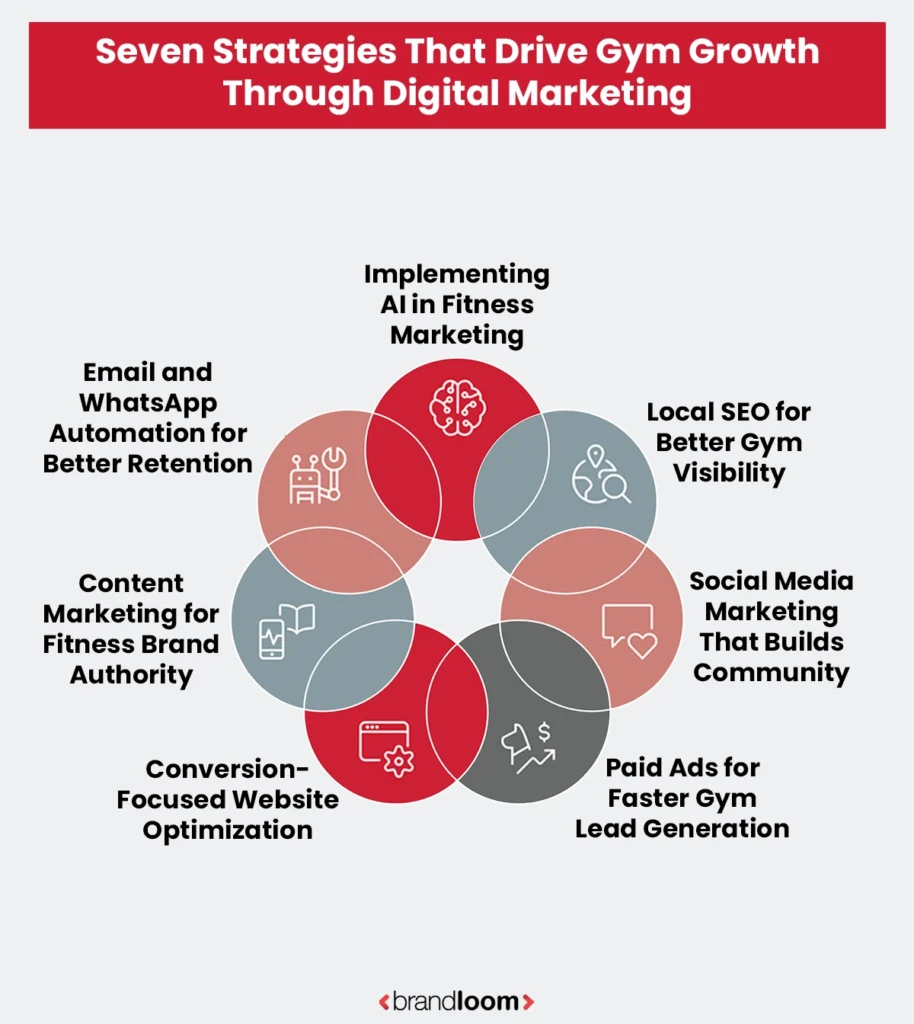
The goal is simple: create a system where every marketing channel works together to support gym membership growth.
1. Local SEO for Better Gym Visibility
Strong local gym marketing starts with visibility. Most people searching for a gym begin online, often using location-based searches like “best gym near me” or “fitness center nearby.”
This makes gym local SEO essential. Optimizing your Google Business Profile, maintaining accurate business information, collecting member reviews, and targeting location-specific keywords can improve visibility in local search results.
Gyms that appear prominently on Google Maps often attract higher-quality leads because customers already show purchase intent. A strong local presence also helps potential clients compare facilities, read testimonials, and quickly contact your team.
Many fitness businesses overlook local optimization and lose valuable opportunities. In our experience, improving local discoverability often creates faster wins than increasing ad spend.
2. Social Media Marketing That Builds Community
Social media now shapes how members perceive fitness brands. People want to see real transformations, authentic experiences, and expert guidance before they commit.
An effective gym social media strategy focuses less on promotions and more on engagement. Posting trainer-led videos, beginner-friendly workout tips, member spotlights, fitness challenges, and behind-the-scenes content helps gyms create stronger emotional connections.
Authenticity matters. User-generated content, such as progress photos or community events, builds credibility and trust better than polished advertisements.
Strong social media marketing also improves retention because it keeps members engaged beyond the gym floor. People stay connected when they feel part of a larger fitness community.
3. Paid Ads for Faster Gym Lead Generation
Organic growth takes time, but paid campaigns can accelerate visibility when managed strategically.
Platforms like Google Ads and Meta Ads help gyms improve gym lead generation by targeting nearby audiences based on location, interests, and fitness intent. Limited-time trials, free consultations, and membership offers often perform well when paired with strong landing pages.
However, effective gym advertising strategies require more than boosting posts. Campaigns need audience segmentation, clear messaging, and retargeting to convert interested visitors into members.
Many gyms waste ad budgets by chasing clicks instead of qualified leads. Strong digital marketing for gyms focuses on conversion quality, not vanity metrics.
4. Conversion-Focused Website Optimization
Your website often creates the first impression of your business. Even gym website conversion-optimization campaigns struggle when websites confuse users or slow conversions.
A strong fitness website should load quickly, clearly explain membership options, and make inquiries simple. Features like trial booking forms, trainer profiles, FAQs, and local landing pages improve user experience and increase conversions.
High website traffic means little without optimized pathways that turn visitors into members. A well-designed website supports every other part of your marketing strategy for gym growth.
5. Content Marketing for Fitness Brand Authority
Fitness consumers value expertise. Educational content helps gyms build authority while attracting organic traffic.
Publishing blogs, nutrition advice, trainer insights, recovery tips, and fitness guides strengthens fitness marketing efforts while improving SEO performance. Sharing success stories also helps gyms establish credibility and inspire confidence among potential customers.
Gyms that educate consistently build stronger brand awareness and trust over time.
6. Email and WhatsApp Automation for Better Retention
Retention improves when communication stays consistent.
Automated onboarding emails, class reminders, renewal notifications, and personalized check-ins support stronger engagement among gym members. Gyms can also use WhatsApp to send schedules, promotions, or motivational updates.
Strong gym member retention strategies focus on maintaining relationships long after someone signs up. Personalized communication creates a better member experience and supports long-term loyalty.
7. AI in Fitness Marketing: The Biggest Competitive Advantage
Artificial intelligence continues to reshape the digital fitness market, especially in customer acquisition and retention.
Today, AI in fitness marketing helps gyms analyze customer behavior, predict drop-offs, personalize campaigns, and automate communication. Instead of sending the same message to everyone, gyms can now create smarter experiences based on member interests and activity.
An AI-driven fitness marketing strategy can improve engagement by identifying members at risk of leaving and triggering personalized outreach automatically. This creates more efficient marketing efforts while improving retention outcomes.
AI-powered gym marketing tools can also automate lead scoring, personalize offers based on workout interests, and optimize ad targeting in real time. This helps gyms reduce wasted spend while improving member engagement
For gyms focused on sustainable fitness business growth, AI-powered decision-making is no longer optional. It increasingly defines how modern fitness brands stay competitive.
How Digital Marketing Solves Real Gym Business Problems
Many gym owners know they need better marketing, but the bigger question is this: how does it solve actual business problems?
A strong gym digital marketing strategy does more than improve visibility. It helps gyms attract better leads, improve retention, increase conversions, and strengthen member relationships. Instead of treating marketing as a separate function, successful gyms use it to solve operational bottlenecks that directly impact revenue.
1. Struggling with Low Walk-Ins?
Low foot traffic often points to a visibility problem rather than a demand problem.
Most people looking for a gym or fitness center start online. If your business does not appear in search results or Google Maps, nearby prospects may never discover you. This is where local gym marketing becomes important.
Optimizing Google Business listings, improving gym local SEO, collecting positive reviews, and running geo-targeted campaigns can significantly improve visibility. Paid local ads also help gyms target nearby users actively searching for memberships.
One pattern BrandLoom frequently notices among underperforming gyms is an overreliance on offline referrals while neglecting local discoverability. Even highly rated facilities struggle when nearby audiences cannot find them at the moment of intent. Strong visibility often becomes the difference between a gym with empty slots and one with a waiting list.
2. Losing Members Too Quickly?
Poor retention remains one of the biggest fitness marketing challenges for gyms.
Members often leave when engagement drops after onboarding. A lack of communication, inconsistent follow-ups, or generic experiences can reduce motivation quickly.
Strong gym member retention strategies focus on personalization. Automated onboarding, trainer check-ins, fitness reminders, milestone celebrations, and personalized offers help members feel supported.
Social content also plays an important role in gym member engagement. Community events, trainer videos, progress stories, and motivational content encourage people to stay connected to the brand beyond workouts.
From our perspective, retention problems rarely stem from pricing alone. More often, gyms struggle because they fail to build meaningful engagement after the initial sign-up. Members who feel connected to a community tend to stay longer and contribute more to long-term revenue.
3. Getting Leads but No Conversions?
Generating inquiries means little if leads never convert.
Many gyms attract clicks through ads but lose prospects because landing pages fail to build trust. Poor website design, unclear pricing, or complicated forms often reduce conversion rates.
A strong fitness marketing funnel solves this issue by guiding leads through every stage of decision-making. Clear calls to action, testimonials, trial memberships, and retargeting campaigns help move prospects toward commitment.
This is where fragmented marketing efforts often create friction. Running paid ads without conversion-focused landing pages usually drives traffic but limits results. BrandLoom typically recommends aligning content, ads, and website journeys so gyms can convert intent into memberships more consistently.
4. Finding It Hard to Compete Against Large Fitness Chains?
Independent gyms and smaller studios often struggle to compete with bigger brands that have larger budgets.
However, strong digital marketing for fitness centers helps smaller businesses compete more effectively through niche positioning, localized messaging, and community-driven branding.
Large chains often market broadly. Smaller gyms can stand out by focusing on personalized experiences, specialized training programs, and stronger community relationships.
The strongest marketing for gyms does not depend on outspending competitors. It depends on clarity, positioning, and trust. BrandLoom often advises fitness brands to stop competing on discounts alone and instead invest in stronger storytelling, member experiences, and local credibility that turns potential clients into loyal advocates.
Conclusion
The fitness industry continues to evolve, and gyms that want sustainable growth must keep pace. Rising competition, changing customer behavior, and increasing expectations have made traditional promotions less effective. Today, success depends on how well gyms attract attention, build trust, and keep members engaged over time.
A strong digital marketing strategy for gyms helps businesses move beyond short-term tactics. It creates a system that supports consistent gym lead generation, stronger retention, better member experiences, and measurable growth in gym memberships.
From gym local SEO and paid advertising to community-driven content and AI-powered engagement, digital channels now shape how fitness brands compete.
The challenge for many gyms is not a lack of effort. It is a disconnected execution. Running ads without retention systems, posting on social media without a conversion plan, or relying only on seasonal offers often limits long-term growth.
This is where strategy matters.
BrandLoom believes successful gym marketing works best when every channel supports a larger business goal. Visibility should drive leads, content should build trust, and engagement should strengthen loyalty.
The gyms seeing the strongest results today are not simply marketing harder. They are building smarter systems that turn interest into memberships and memberships into long-term relationships.
Whether you run a boutique fitness studio, a growing fitness brand, or a multi-location chain, the future belongs to businesses that invest in connected, measurable, and member growth marketing. Today and in future, sustainable growth will come from creating experiences that members want to join and stay part of.
Frequently Asked Questions
Most gyms struggle because competition has increased while customer expectations have changed. Poor visibility, weak retention strategies for gym members, and inconsistent lead generation for the gym limit growth. BrandLoom often finds that gyms that rely solely on discounts miss out on the benefits of a structured digital marketing strategy.
Gym marketing has shifted from flyers and referrals to digital-first engagement. Today, customers research online, compare reviews, and check social media before joining. A strong gym digital marketing strategy now combines SEO, content, and other digital channels to attract and retain members effectively.
The most effective gym marketing strategies include local SEO, paid ads, content marketing, email automation, and a strong gym social media strategy. BrandLoom recommends combining these channels instead of relying on one tactic, helping gyms improve gym membership growth and long-term engagement.
Yes. A strong gym digital marketing strategy helps gyms reach the right audience, improve visibility, and nurture leads through targeted campaigns. BrandLoom has seen gyms increase memberships by combining digital marketing for gyms, optimized websites, local SEO, and conversion-focused advertising strategies.
Gyms can improve walk-ins through stronger local gym marketing, optimized Google Business Profiles, reviews, and local gym SEO. BrandLoom often advises fitness businesses to focus on local discoverability because appearing in nearby searches directly improves foot traffic and membership inquiries.
Social media helps gyms build trust, community, and stronger engagement among gym members. Sharing transformations, trainer content, workout tips, and user-generated content keeps audiences engaged. BrandLoom recommends using a consistent gym social media strategy to strengthen loyalty and attract potential members.
Consistent gym lead generation comes from combining SEO, paid ads, retargeting, and conversion-focused landing pages. Many gyms struggle because their marketing efforts lack consistency. BrandLoom recommends building an integrated funnel that attracts, nurtures, and converts leads throughout the year.
Gym local SEO helps fitness centers appear in location-based searches where purchase intent is highest. Without visibility, gyms lose potential customers to competitors nearby. BrandLoom often identifies local SEO gaps as one of the biggest reasons fitness businesses struggle with predictable growth.
Gyms can track ROI by measuring lead sources, conversion rates, website traffic, ad performance, and member retention. BrandLoom encourages fitness brands to connect marketing metrics with business outcomes so they can evaluate which digital marketing efforts for gyms actually drive revenue.
Gyms should consider engaging a specialist agency if they lack internal expertise or are experiencing consistent growth. BrandLoom can align SEO, ads, content, and retention into a single gym digital marketing strategy, helping businesses achieve stronger gym membership growth and greater marketing efficiency.