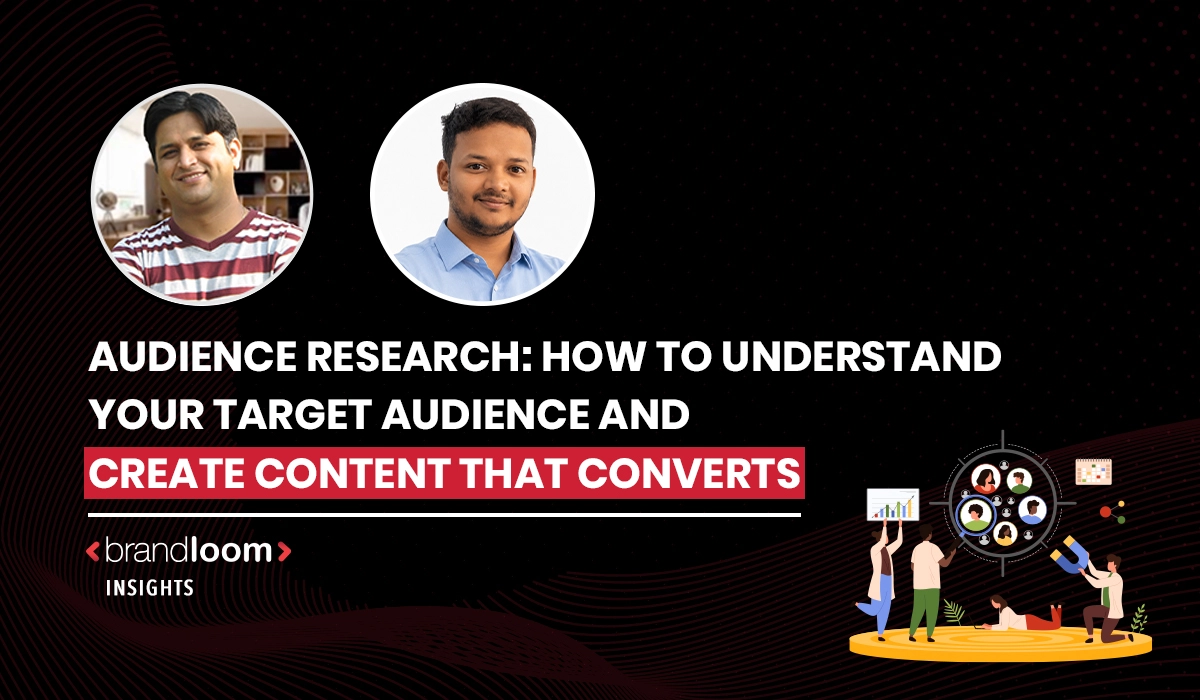
Audience Research is the most important marketing tool that forms the basis of every marketing campaign.
It helps you understand who your target audience is and what their pain points are. The insights can help you understand the motivations, behaviours, preferences and how you can address the pain points of your audience. A detailed research helps you customize your marketing content, improving your brand’s messaging, SEO and number of conversions.
Audience Research 101: What It Really Means To Go Beyond Demographics
Audience research is the process of gathering and analyzing information about the people you want to reach. It entails going beyond just surface facts to grasp their motivations, pain points and behaviors patterns.
It is not just knowing who your audience is on paper; it’s understanding why they behave as they do and how they make decisions.
Think of it as stepping into your customers’ shoes and seeing the world (and your content) through their eyes. This goes well beyond basic demographics like age or location. It’s about learning what keeps them up at night, what language they use to describe their challenges and what truly motivates their choices.
Audience research is about uncovering:
- Motivations
- Behavior patterns
- Decision-making triggers
- Content consumption habits
Without these insights, marketing efforts are like casting a wide net without knowing where the fish are swimming. It is about getting to the heart of your audience’s needs so that your content resonates and converts.
Audience vs. market research
Audience research is people-centric, while market research is landscape-centric.
Market research zooms out – it looks at broad industry trends, competitors, or market size (the “telescope” view).
Audience research zooms in – it examines specific segments or communities of people (the “microscope” view).
For example, market research might tell you that demand for eco-friendly products is rising in your industry, but audience research will tell you why a specific group of consumers are valuing sustainability and how they talk about it. Both are important, as market research guides high-level strategy (what markets or products to pursue), while audience research guides execution (how to position, message, and create content so it resonates).
In short, market research finds the opportunity and audience research ensures you capitalize on it with the right content and campaigns.
Why does it matter now?
Today’s consumers are digitally empowered. A majority of people research a business online before ever interacting with it. By the time a prospect lands on your site or content, they may have already formed opinions from what they’ve read or heard elsewhere.
Add to that the shifts in how people discover content (e.g., search engines answering many queries with zero-click results, social platforms favoring content native to their feed) – and it’s clear you must meet your audience on their terms.
If you don’t know who may buy from you or influence those buyers, your marketing becomes a shot in the dark. In this landscape, audience research isn’t a “nice-to-have”; it’s mission-critical for cutting through the noise.
Why Most Content Fails to Convert: The Audience Insight Gap
Most campaigns don’t fail due to a traffic shortage, they fail due to oversimplified audience research.
It can be tempting to blame algorithms or ad spend when content underperforms. A strategy with shallow understanding of its audience reduces itself into a bland list of demographic traits: age, gender, income and location.
While these metrics are foundational, they only scratch the surface. What’s truly important is understanding why these individuals make certain decisions, what motivates them and how they behave in real-world situations.
Content based on hunches or generic personas are bound to fail in attracting conversions. A majority of marketers don’t know who their audience is, leading to wasted budgets over catering the wrong market.
If your audience doesn’t trust you or care about your message, you can buy clicks all day but still see minimal conversions. It is like shouting into a void; without insight, even great content becomes just noise.
Understanding your audience at a deep level is the prerequisite for content that truly converts.
Why Marketing Without Deep Audience Insight Fails
The Real Cost of Shallow Research
The impact of shallow audience research impacts all your marketing efforts. Poorly understood audiences lead to:
- Wasted ad spend — money spent targeting the wrong people or using ineffective messaging.
- Poor SEO rankings — caused by misaligned content with what the audience really searches for.
- Irrelevant content — leaving your audience feeling disconnected and uninterested.
- Low engagement — because you are not answering your audience’s actual questions.
- Customer Acquisition Cost (CAC) inflation — because you’re attracting unqualified leads who bounce instead of converting.
The result? Resources poured into efforts that don’t yield returns. When you lack audience insight, every bit of resource is spent guessing. And guesswork is expensive.
The 5 Layers of Audience Understanding (Beyond Basic Demographics)
Demographic Reality
Demographics are the baseline. They answer basic questions like:
- Who are they?
- Where do they live?
- What’s their age, income, education level?
This information is necessary but doesn’t tell you anything about why they make decisions. For true understanding of your audience, this is just the starting point.
Psychographic Drivers
Psychographics provide insight into what your audience truly cares about, believes in and aspires.
- Values, beliefs, and interests
- Lifestyle choices
- Subconscious motivators and personal goals
These insights allow you to tailor your messaging and speak directly to their hearts and minds, ensuring your content doesn’t just sell a product but aligns with their personal beliefs.
Behavioral Evidence (Most Critical)
Behavior is the most important layer. It tells you what your audience actually does – not what they say they will do.
- Which pages do they visit?
- What content do they engage with?
- How do they navigate your website?
- What tools or apps do they use?
Behavioral data shows you where to focus your efforts.
For example, if your audience is spending time on social platforms like LinkedIn, investing in that channel makes more sense than focusing on other platforms like X (Twitter).
Intent Signals
Intent signals are the most valuable and actionable insights. They show you the problems your audience is actively trying to solve.
- Are they searching for “cost-saving strategies”?
- Are they looking for “quick-start guides”?
- Are they comparing you to your competitors?
By understanding their intent, you can craft content that speaks directly to the need at that moment, pushing them further down the funnel.
Influence Sources
Figuring out the sources which influence audience’s decisions helps you tap into their trust centers, like –
- Creators and influencers
- Peers and colleagues
- Review sites and ratings
Knowing where your audience spends their time and who they trust is key to shaping your content and channel strategy. Buying decisions don’t just happen on your website or during a direct search – they start in broader, more informal conversations.
In the next sections, let’s break down the research process step by step, so you can apply the same principles in your organization.
How to Conduct Audience Research: A Practical Step-by-Step System
Step 1: Define the Question Before the Methods
Before starting any research, be clear about the problem you are trying to solve. This clarity distills the business problem or goal into a few key questions. Ask questions like
Are you trying to find out why a certain product line isn’t resonating with millennials? Do you need to identify new audience segments for a mature market?
Focus on the simple question – What do I ultimately need to know to make a difference?
This sharp focus prevents the research from meandering and ensures every question that you ask or data point you dig up amounts to a strategic goal.
Every research project must answer a specific business decision to ensure it stays focused and actionable. Ask “So what if I know this?” If a certain set of data does not demand a change in any decision, don’t waste your efforts chasing it.
Step 2: Start With Internal Knowledge
There is rich and often underutilized knowledge present within your organization. Involve stakeholders who regularly interact with your audience, like –
- Sales leaders
- Customer service reps
- Account Managers
They often know common buyer objections, frequently asked questions and feedback that never makes it into reports.
For example, your sales team might reveal that enterprise clients keep bringing up a specific concern that marketing collateral hasn’t addressed. These insights form hypotheses for the research and ensure that marketing is not operating in a silo, isolated from real feedback and insights.
Example:
If 40% of prospects ask about implementation time, your content should address onboarding, not just product features.
Step 3: Identify and Segment Your Target Audience
Why segment first? Because a one-size-fits-all approach is too simplistic and not everyone thinks alike or desires the same thing.
Rather than treating your audience as one monolith, break it into meaningful segments or personas. Segmentation can be based on demographics, firmographics (for B2B), behaviors, or needs. Ideally, it should be based on a combination that makes sense for your business.
For instance, you might have “Segment A: Budget-conscious first-time buyers” and “Segment B: Tech enthusiasts looking for premium features.”
The goal is to ensure our research captures the differences between these groups so you can tailor the content accordingly.
Prioritize which audience segments are most critical to your growth so that you can focus your resources there. This means balancing current customers with potential customers. Looking at current customers can be misleading because they represent just a fraction of your potential audience.
Step 4: Triangulate Data Sources (Qualitative, Quantitative and Behavioral)
With properly defined target segments, dive into data collection using a mix of research methods. As relying on only one source will paint a biased picture, combine
- quantitative data (the numbers, trends and ‘what” of behavior),
- qualitative insights (the stories, emotions and “why” behind behavior) and
- behavioral analytics (observed digital and real actions).
Triangulating these sources helps separate signal from noise. Use tools like:
- Google Analytics
- Heatmaps
- CRM
- Funnel data
to acquire behavioral data that tells you what actually works. Also analyze competitors’ content engagement and reviews – sometimes the gap in what competitors are addressing can highlight which audience needs are waiting for your content to fill.
Step 5: Extract Key Insights – Needs, Motivations and Pain Points
Analyze for patterns and “Aha” moments
The next task is to transform raw information into meaningful insights with the collected data. Comb through survey results, interview transcripts, social comments and analytic reports to identify recurring patterns.
Ask questions like – what frustrations do people keep mentioning? Which benefits excite them? Are there words or phrases that appear repeatedly that you can use for your messaging? This is where qualitative meets the quantitative.
For example, suppose qualitative interviews reveal that customers feel overwhelmed by too much technical detail, and analytics show that simpler “101” articles get much longer on-page time than complex ones. This is a strong insight on your audience’s need for simplicity and clarity.
It is required to document such findings clearly.
e.g., “Segment A users consistently cite lack of time as a barrier, implying they need bite-sized content and quick wins,” or “Prospects don’t understand X concept, yet our site assumes they do – causing drop-offs.”
Make sure that each insight ties back to the implications of the content strategy (what it means for your messaging, content format, or content topics).
Analyze competitors’ content strategies and look for gaps in what they offer. Your growth lies in solving problems they haven’t.
Dig for root causes and emotions
Beyond surface observations, you need to aim to understand the why behind your audience’s behaviors.
If 50% of respondents in a survey say they prefer webinars over whitepapers, ask why – is it convenience, format, ability to multitask?
If many customers express a pain like “I don’t know where to start with (your solution)”, probe whether it is a knowledge gap, fear of complexity or something else.
Reach the fundamental motivators or anxieties of your base using frameworks like the “5 Whys”, which is iteratively asking why in order to peel the layers and reach the core of the issue.
Interpret data with wisdom and context to produce an “Insights Report” that summarizes –
- the key audience needs
- pain points
- decision drivers
- preferred content topics
- trust factors
- language/tone preferences.
As each insight is supported by evidence, like quotes from interviews, stats from surveys etc, the report becomes credible. This should become your playbook for content creation – a cheat sheet that captures what “truly matters” to your audience in their own words.
Step 6: Actionable Audience Profiles and Journey Maps – Utilizing Insights
After collecting and refining the insights, create audience profiles and personas that can be easily applied by your team later. These won’t be fluffy, generic personas (“Meet Marketing Mary, she likes coffee and ROI”) but insight-rich profiles grounded in research.
Outline each key segment-
- their demographics (if relevant)
but more importantly their
- key motivations,
- Challenges
- content preferences
- and the messaging that works or doesn’t work for them.
Include direct quotes or anecdotes from actual customers to give life to the persona
For e.g. “I need to prove the ROI before I invest” might be a quote under a CMO persona’s fears.
The goal is to make sure anyone reading it can immediately grasp who this audience is and what they care about.
You should also highlight how a certain persona prefers to consume information.
Maybe Segment A loves in-depth white papers while Segment B mostly watches quick how-to videos. These profiles act as a constant reference for your content creators and strategists, who can pin them and ask if a piece will resonate with a specific persona, based on the insights.
Mapping the customer journey
The aim is to map the customer’s journey- from awareness to consideration to decision, and noting what questions or needs arise at each stage and what content can meet them. This equips you with the strategic clarity on when to deliver certain messages.
For instance, early in the journey, your audience may realize they have a problem and seek basic education (so plan top-of-funnel educational content).
Later, they might compare solutions (hence plan comparison guides or case studies addressing why your approach is different).
If our research uncovered specific trust barriers (say, concern about implementation), push content at the decision stage to address it (maybe a webinar with a successful customer or a step-by-step implementation guide).
The journey map is essentially a blueprint of “content needs and opportunities” aligned with the funnel.
It is a clear visualization or outline of the customer journey paired with content touchpoints, which directly feeds into the content calendar and SEO strategy. By having this, you can avoid the common issue of creating content in a vacuum and ensure every piece has a purpose for a specific persona at a specific stage.
Step 7: Integrate Audience Insights into Content & SEO Strategy
From research matter to content ideas
Now you can use the insights and journey map to craft content that converts. Brainstorm and prioritize content ideas explicitly tied to the findings.
A useful exercise you can employ is a “Content Opportunities Matrix”. It is plotting audience pain points against content formats or topics.
For example, if a major pain point is “Difficulty understanding ROI,” you can propose an article like “The CFO’s Guide to Measuring ROI in X Industry” or an interactive ROI calculator tool.
Create content that squarely addresses that concern.
Mine your audience research for content “triggers” – questions and frustrations. These are “content gold” because they highlight exact information gaps your content can fill. With this approach, your editorial calendar becomes directly audience-driven.
Instead of starting with a keyword and guessing at intent, start with an insight and create content to serve it, then map keywords to it, ensuring SEO aligns with actual intent.
SEO with audience intent, not just volume
A key differentiator in your strategy should be aligning SEO efforts with audience insight. Many SEO-driven content plans fixate on high-volume keywords and assume that appeals to the audience.
But volume alone can be misleading. You need to know who is searching and why. Using the research, perform “intent-based keyword research”.
For example, one insight might be that customers are searching “Product Category for startups budget” – a long-tail term that our research indicates as important, even if it is not the highest volume. You can create content around that with confidence as it addresses a real need, rather than blindly following generic keywords.
You also need to mirror the searcher’s language to build relatability and improve SEO. Applying the keyword infused language used by your audience increases conversions due to a better connection with their problems.
By integrating SEO and content strategy around real audience insight, you can solve the usual disconnect between attracting traffic and converting it. The traffic you attract with this strategy is more likely to be the right traffic that is primed to engage, because the content was built for their needs from the start.
Content formats and channels guided by insights
Decide on content formats and distribution based on where the audience pays attention, uncovered by the audience research.
If research shows your target group trusts webinars or industry podcasts over blog articles, adjust the content mix accordingly. If they spend a lot of time on LinkedIn but not on Twitter, focus promotion on LinkedIn.
Essentially, keep this question in mind –
Given what we know about this audience, what is the best way to deliver our message to them?
Remember that not all segments consume information the same way. So choose the right channels and the right language with keywords that will resonate with your audience.
The result of Step 6 is a concrete content and SEO plan – topics, formats, keywords and channels which are backed by research. This plan serves as a strategic roadmap for your content creators, SEO specialists and campaign managers.
Step 8: Align Teams and Integrate Insights into Workflows
Breaking down silos with shared insight
Even the best audience insights won’t drive results if they live in a PDF on someone’s desk.
So a crucial step is weaving these insights into the daily workflow of your content, SEO and marketing teams. Conduct alignment sessions or workshops with all stakeholders – content writers, designers, SEO analysts, social media managers and even sales teams, to present the findings and discuss how to apply them.
In these sessions, each persona or key insight is introduced to be brainstormed with the team: “How does this insight change our approach?”
For example, writers might decide to adopt a more conversational tone after hearing customers describe industry content as “too formal,” or the SEO team might realize that some high-volume keywords are irrelevant if they don’t match the audience’s stage of awareness.
By having everyone in the same room (virtual or physical), you can ensure a unified understanding. This addresses the gap in stakeholder alignment.
It’s notable that many popular audience research guides don’t talk about internal alignment at all even when it is essential. If product marketing is writing one message and content marketing another, you get inconsistency that confuses customers. Take an approach that makes sure that everyone is on the same page about who the priority audience is and how to speak to them consistently.
Embedding insights in content processes
Integrate the research outputs into content processes and tools.
For instance, you can create “audience insight cheat-sheets” or “persona cards” that are attached to content briefs. Every new blog outline or campaign brief will include a section, “Target Persona & Key Insight,” summarizing who it is for and what we know about their needs.
Encourage teams to revisit the research when planning any new content. For e.g., check the exact wording customers use for a pain point before writing headlines. If you use project management or editorial calendar software, you can upload the personas and research highlights for easy reference.
Additionally, set up feedback loops. As content goes live, monitor performance metrics in context of the audience segments. Close the loop between insight and result by operationalizing insight, so that it becomes a living part of your marketing strategy.
Over time, this builds an insights-driven culture. Your team starts instinctively asking for data on “What does the audience think?” before making decisions and enforcing a habit that improves marketing effectiveness.
Step 9: Audience Insight as an Ongoing Practice – Continuous iteration
Audiences evolve, and so should your research
The final step is recognizing that audience understanding is never completed.
Markets change, new competitors emerge, customer preferences shift – and your insight-driven strategy needs to keep up. Arrange quarterly mini-research rounds or at least an annual deep-dive to refresh your personas and assumptions. Audiences change and ideally you should refresh insights a few times a year.
Set up lightweight ways to do this: maybe a feedback survey attached to your newsletter, periodic social media polls or an annual customer advisory board session. The point is to continuously listen and gather data so you notice if a new concern has bubbled up.
Measure, learn, and refine
Turn content performance into a learning mechanism by tracking how each piece performs in terms of engagement and conversion and with which audience segment. These metrics are fed back into your audience understanding.
If something unexpected happens – say a piece targeted at Persona A is getting traction with an adjacent audience unexpectedly – that is a signal to investigate and refine the audience model.
Regular A/B testing can be employed by trying different messaging angles derived from your research hypotheses and observing which resonates better.
Keep tabs on changes in search behavior, new trending topics in forums and industry reports to keep you aware of emerging audience needs. The goal is to maintain an agile understanding of your audience.
You can avoid acting on stale assumptions by incorporating this approach. Your content strategy remains dynamic and ahead of the curve, continuously honed by fresh insight. Over time, this creates a compounding advantage as you adapt quickly to your audience’s evolving needs while competitors are guessing or relying on old information.
The Benefits of Insight-Driven Content
Precision in Personalization
When you ground your strategy in real audience insights, you can craft highly personalized content and offers. Instead of one-size-fits-all messaging, you speak directly to what different segments care about.
This personalization is powerful – it makes your audience feel seen and understood, increasing the chances of them engaging.
In fact, marketers overwhelmingly feel more confident in their campaigns when they’ve done thorough audience analysis.
This builds confidence born from relevance: you know your content addresses the right problems with the right tone for the right people.
Better conversion and ROI
Targeting the right people with the right message means less waste and more impact. By focusing resources on high-potential segments (and not chasing unqualified traffic), research-led marketing boosts conversion rates and maximizes return on investment.
Every piece of content has a clear purpose and audience, so it’s more likely to drive action – whether that’s a click, a signup, or a purchase. We’ve seen this across industries: for example, a B2B SaaS company that shifted from broad blogging to insight-driven content saw higher demo request rates, because the content was laser-focused on the pain points of their actual decision-makers (something they uncovered through interviews and behavior data).
When your content consistently hits the mark, it doesn’t just convert better – it also shortens sales cycles and improves marketing efficiency.
Stronger brand loyalty and trust
Consistently reflecting your audience’s needs and language in your content has cumulatively built trust. Customers feel “this brand gets me.”
Over time, that relevance fosters loyalty. Audience research helps you tap into the emotional drivers and values of your customers, not just their wallets.
For instance, if research shows your audience values sustainability and community, weaving those themes authentically into your content will strengthen their affinity for your brand (as opposed to a competitor who just touts product features).
By integrating audience insights, you’re not simply making a sale – you’re forging a relationship. And loyal customers, as we know, become repeat buyers and even advocates.
A robust understanding of your audience aligns your entire marketing strategy with what buyers actually want. It informs better product decisions, more effective channel choices, and content that earns attention rather than begs for it.
Conclusion: Build on Insight, Reap the Conversions
In a content-saturated world, those publishing the most are not the winners; the ones publishing the most relevant media are. And relevance in content can only be achieved when you truly understand your target audience. We’ve seen why content fails (lack of audience insight) and walked through how to do audience research the right way – from stakeholder alignment and multi-method data collection to converting insights into a content strategy that drives results.
Embracing this methodology means shifting from a campaign-by-campaign mentality to building an insights engine inside your organization. It means your marketing is continually learning and improving – your content gets smarter, your SEO gets more targeted, and your ROI climbs as you stop guessing and start knowing what will resonate. Yes, it requires upfront effort and a strategic mindset, but the payoff is content that doesn’t just generate vanity metrics, but real conversions and loyal customers.
Most importantly, this approach solidifies your position as a customer-centric business. It tells your audience, “We hear you. We understand you. And we’re here to solve your problems,” through every piece of content. In return, you earn their trust, engagement, and business. That’s the ultimate conversion: turning audience insight into brand growth.
This is the 360-degree, research-led approach BrandLoom brings as a growth partner: we diagnose before we prescribe, ensuring every blog, ebook, or campaign is rooted in what will actually move your prospects.
Ready to turn the lights on in that “audience insight gap” and create content that truly converts? Let’s research, strategize, and build together – because the brands that win are those that know their audiences best.
Frequently Asked Questions
Audience research in digital marketing is the process of gathering insights about your target audience’s behaviors, preferences, and motivations. It goes beyond basic demographics to include how they interact with your brand, what they care about, and their buying triggers. This research helps businesses tailor their strategies to speak directly to their audience’s needs and desires, leading to more impactful campaigns.
Audience research is crucial for content creation because it ensures that your messaging resonates with your target audience. By understanding their interests, pain points, and language, you can create content that answers their questions and solves their problems, making your content more relevant, engaging, and likely to drive conversions.
Marketers conduct audience research through a combination of quantitative and qualitative methods. These include surveys, social media listening, competitor analysis, website analytics, and direct interviews with customers. The goal is to gather insights into audience behaviors, preferences, and needs to craft more effective strategies and content.
There are several tools available for audience research, such as Google Analytics, SEMrush, Audiense, and Brandwatch. These tools provide data on audience behavior, demographic insights, social media trends, and engagement patterns. Marketers also use survey tools like SurveyMonkey or Typeform, as well as social listening platforms like Mention and Sprout Social, to gather real-time feedback.
Audience research is the process of gathering data on your target market’s behaviors, needs, and preferences. Buyer personas are fictionalized representations of your ideal customers based on that research. While audience research is data-driven, buyer personas bring that data to life by humanizing the audience and helping marketers better understand motivations, buying triggers, and content consumption patterns.
Audience research improves SEO by aligning content with what your audience is actively searching for. By understanding user intent, keywords, and pain points, marketers can optimize content to better match search queries. This leads to improved rankings, better visibility, and increased organic traffic, as search engines prioritize content that meets user needs and expectations.
The best data sources for audience analysis include website analytics tools like Google Analytics and Search Console, social media platforms (Facebook Insights, Twitter Analytics), CRM data, surveys, and competitor data. Combining behavioral data (e.g., page visits) with psychographic and demographic data helps create a comprehensive view of your audience.
Businesses should update audience research quarterly for light checks and annually for deep dives. Consumer preferences, behaviors, and market conditions change frequently, so regular updates ensure strategies stay relevant. This helps avoid outdated assumptions and ensures content and campaigns remain aligned with audience needs.
Yes, small businesses can conduct effective audience research with the right tools and approach. By leveraging free or affordable tools like Google Analytics, social media insights, and customer feedback, small businesses can gather valuable data on their audience. Focused, strategic research can help them target their messaging, improve engagement, and boost conversions without large budgets.
Audience research helps with conversions by ensuring that your marketing speaks directly to your target audience’s needs, desires, and pain points. By aligning content with user intent and delivering tailored messaging, businesses can increase trust and relevance. This creates a smoother buyer journey, leading to higher engagement and, ultimately, better conversion rates.