There is a well-known saying in marketing that goes something like this: people do not trust brands; they trust people. That idea is the entire foundation of social proof, and it explains why a single honest review from a stranger can outperform a full-page ad from a brand with a multimillion-dollar budget.
The notification that pops up on a checkout page says someone in Hyderabad just purchased this item. The Facebook page has 80,000 followers. These are not random design choices. They are deliberate psychological triggers, and they work because of something deeply built into how humans make decisions.
If you are building an e-commerce store, managing a brand, or simply trying to understand what social proof is and why it matters so much in modern marketing, this guide covers everything you need to know, from the psychology behind it to the specific types, real examples, and practical ways to use it. And if you want expert help putting any of it into practice, BrandLoom Consulting’s digital marketing and brand strategy team is built exactly for that.
What is Social Proof?
Social proof is a psychological phenomenon first described by Robert Cialdini in his 1984 book Influence: The Psychology of Persuasion.
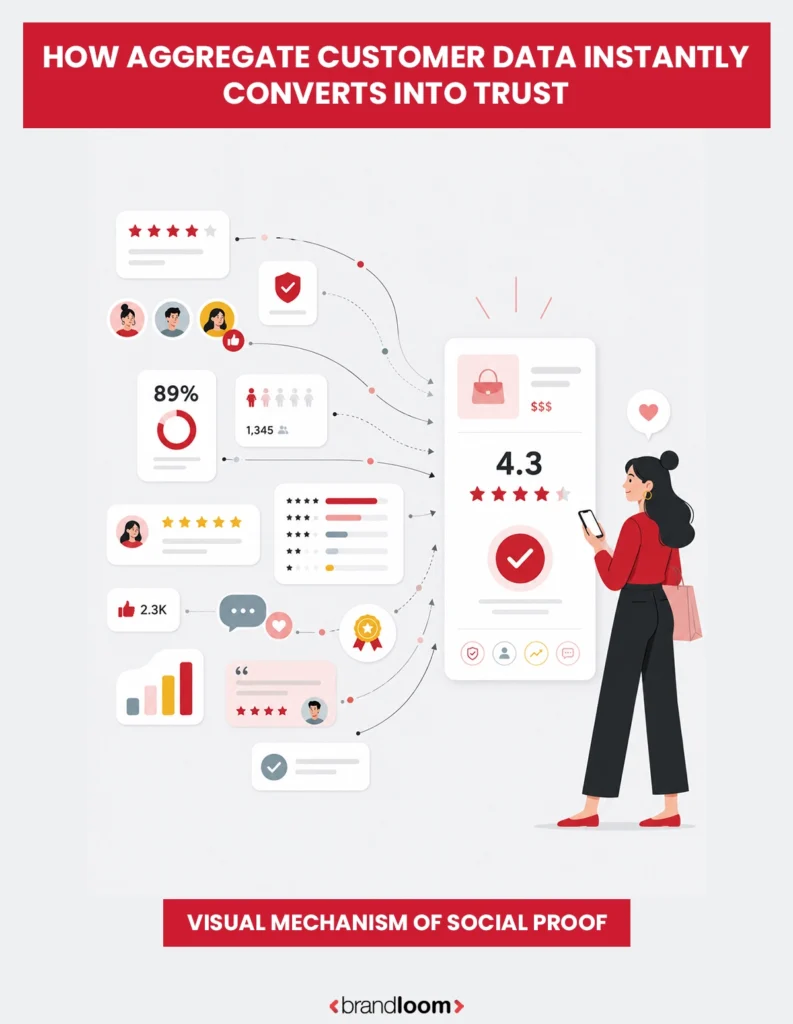
- Cialdini observed that people tend to look to others’ behavior to determine the correct behavior in a given situation. When someone is uncertain about what to do, they default to doing what everyone else seems to be doing.
- This is also called informational social influence. The assumption is that if a large number of people have made a particular choice, they probably know something you do not. So you follow their lead. It is not weakness or gullibility. It is an efficient mental shortcut that has helped humans navigate complex social situations for thousands of years.
- In a marketing context, social proof is any signal that a potential customer has already made the same choice and found it worthwhile. That signal can take many forms: a star rating, a written testimonial, a social share count, a press mention, or simply a display of how many customers or users a brand has served.
The restaurant analogy captures it perfectly. You are walking past two places to eat. One has a queue out the door. The other is empty. You have never eaten at either. Without a single additional piece of information, you are already leaning toward the busy one. That is social proof at work, completely unmediated by any marketing.
Benefits of Social Proof for Businesses
Human beings are social by nature. We want to fit in. We want to make good decisions and avoid looking foolish. This is why social proof is not just a tactic but a genuine psychological mechanism.
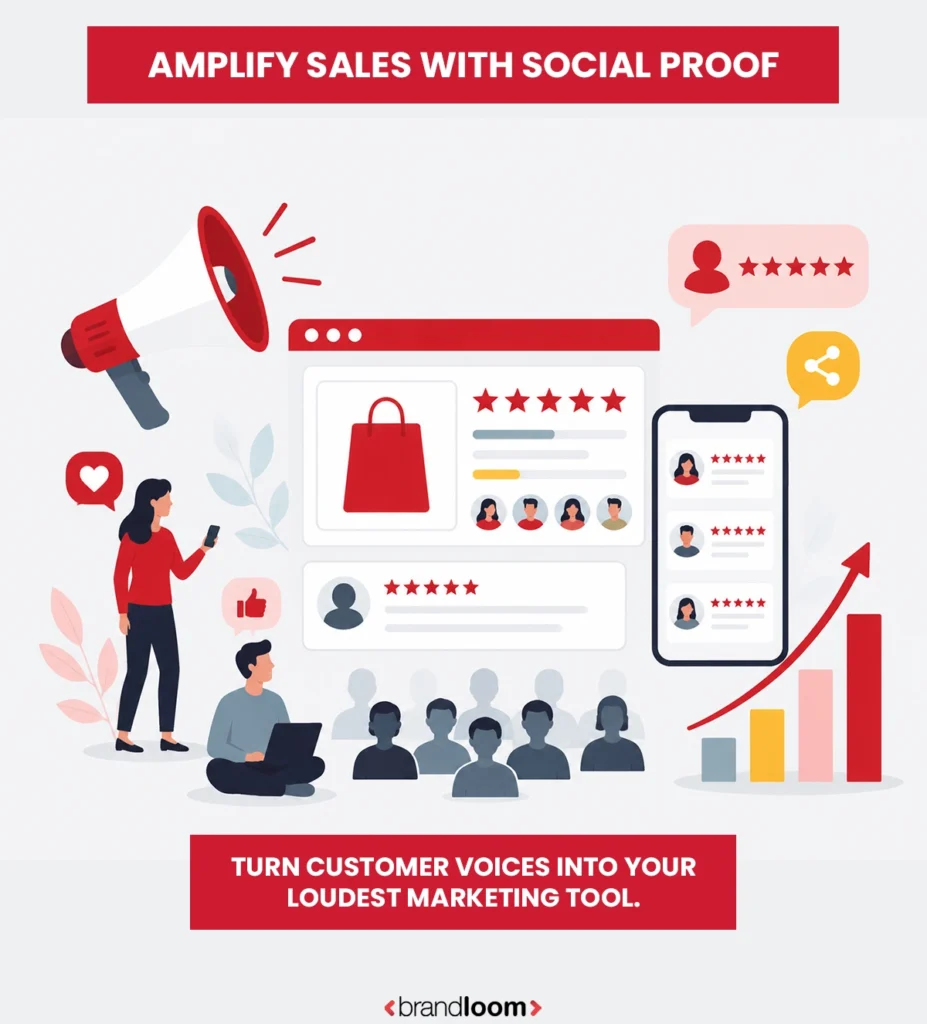
- It reduces the perceived risk of a decision. If someone else has already taken the leap and things worked out well, the cost of making the same choice feels lower. That emotional reassurance converts into real purchasing behavior.
- There is also a generational dimension worth noting. Younger consumers are significantly more dependent on social proof than earlier generations.
- They grew up in an environment where peer recommendations, influencer endorsements, and user reviews were the primary way they learned about products. For them, a brand without visible social proof feels incomplete or even suspicious.
- 93% of consumers say online reviews influence their purchase decisions, and 94% report that a poor review has convinced them to avoid a business entirely. That second figure is just as important as the first. Social proof is not just about attracting buyers; it is also about what happens when the proof is bad or missing.
- Seller claims are expected. Buyers are used to marketing language. But when real customers are saying something good about a brand, that carries a different kind of weight. It bypasses the skepticism that advertising naturally triggers and lands with far more credibility.
What are the Seven Types of Social Proof?
Not all social proof is equal, and understanding the different types helps you choose the right form for the right context. There are generally seven recognized types, and the most effective is a combination of several.
1. Expert Social Proof
This is when someone with genuine authority in a field endorses a product or service. Industry experts carry credibility because they are assumed to have evaluated the product with professional judgment. A nutritionist recommending a supplement, a software engineer endorsing a development tool, or a security researcher approving a cybersecurity product, these signals matter to buyers who respect the associated domain.
2. Celebrity with a brand Social Proof
Celebrity endorsements are active even when audiences know the celebrity was paid. There is something about associating a recognizable face with a brand that creates positive feelings toward it. That said, the landscape has shifted. Audiences are more skeptical of traditional celebrity deals than they used to be, especially younger buyers who have grown up with a healthy distrust of paid promotions.
3. User Social Proof
This is the bread and butter of social proof ecommerce. User social proof comes from real customers who share their experiences through ratings and reviews, social media comments, photos, and videos. It is the most common and often the most trusted form because it comes from people with no obvious incentive to be dishonest.
4. Wisdom of the Crowd
This is social proof backed by numbers. When a brand says over two million customers trust us, or this product has been downloaded five million times, they are using the crowd as evidence. The number of customers or users signals popularity, and popularity signals that a choice is safe. This type of social proof works particularly well at the top of the funnel when someone is encountering a brand for the first time.
5. Wisdom of Friends
Recommendations from people within someone’s personal network carry the most weight among all forms of social proof. This is sometimes facilitated through social sharing features, when a friend likes or shares a product on a Facebook page, their connections see that and are influenced by it. Referral programs also tap into this mechanism directly.
6. Certification and Trust Badges
A certification from a recognized authority is a form of social proof indicating that a credible third party has reviewed and approved this product or brand. Trust seals on checkout pages, security badges, payment certifications, industry accreditations, and do meaningful work. Research from Actual Insights found that trust logos increased the perceived trustworthiness of a brand for 75% of respondents.
7. Earned Media
When credible publications write positively about your brand, that coverage becomes a powerful form of social proof. Displaying as seen in logos from recognized media outlets tells visitors that people outside the brand, with editorial standards and reputations to protect, found it worth covering.
Real Examples of Social Proof in Action
Understanding what social proof is in theory is useful, but seeing how it is actually deployed on real sites and in real campaigns is where the lessons become practical.
1. Product Reviews on E-commerce Sites
Product reviews are the most widely used and consistently effective form of social proof in e-commerce. Brands like LuLuLemon let customers rate products, leave written feedback, and even indicate whether sizing runs true, giving future shoppers contextual information that helps them make confident decisions without guessing.
The purchase probability for a product with five or more reviews is 270% greater than for a product with none, and 91% of consumers aged 18 to 34 trust online reviews as much as personal recommendations from people they know. That is not a small effect. That is the difference between a product that converts and one that just sits there.
2. Customer Testimonials on Landing Pages
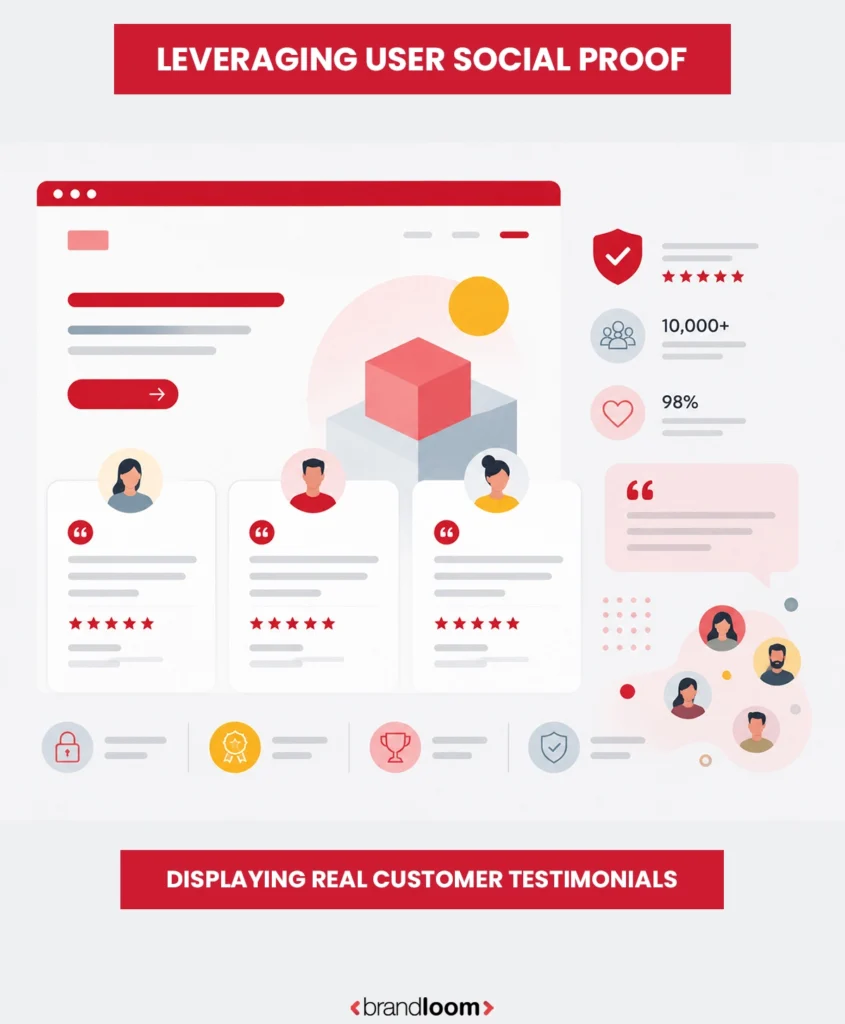
Testimonials differ from reviews in how they are positioned. A review appears on the address page and is generated by a transaction. A testimonial is curated, placed prominently on a homepage or landing page, and chosen specifically because it addresses a potential customer’s hesitations.
3. Social Media and User-Generated Content
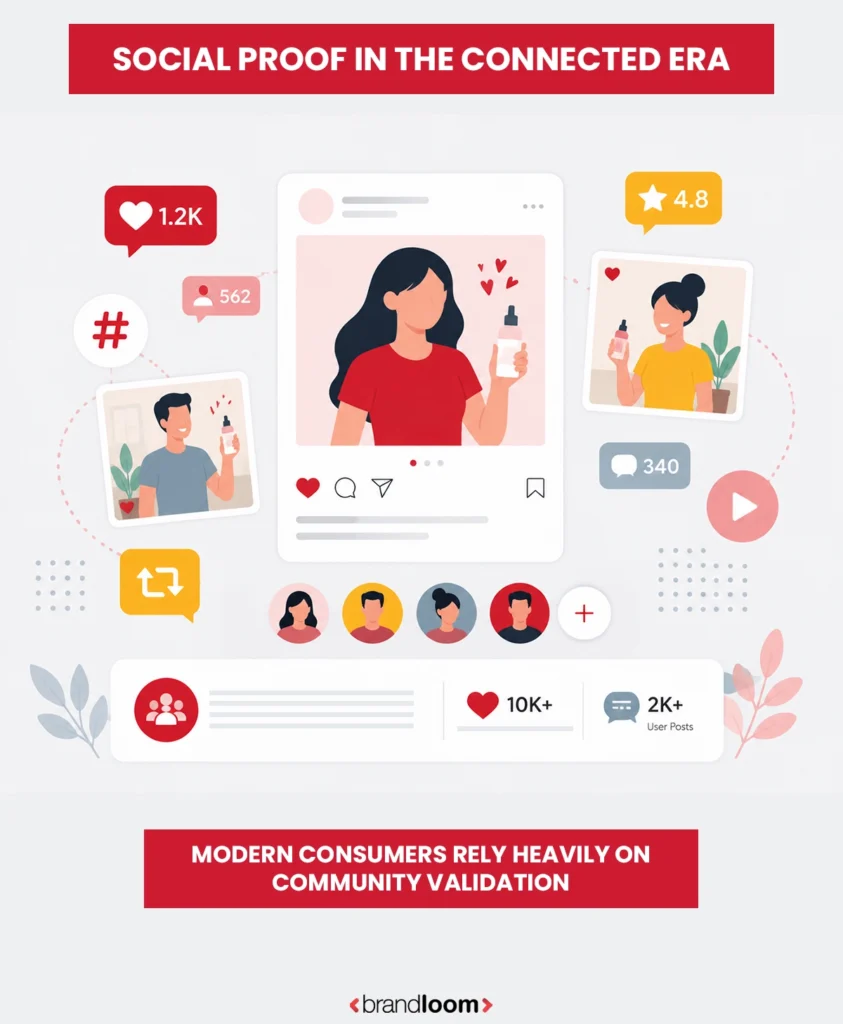
When customers post photos and videos of products on their social networks, that content is more powerful than any branded photo shoot. It is unfiltered and personal. Brands that actively encourage and reshare this kind of content build social proof that compounds over time.
4. Press Coverage and Media Logos
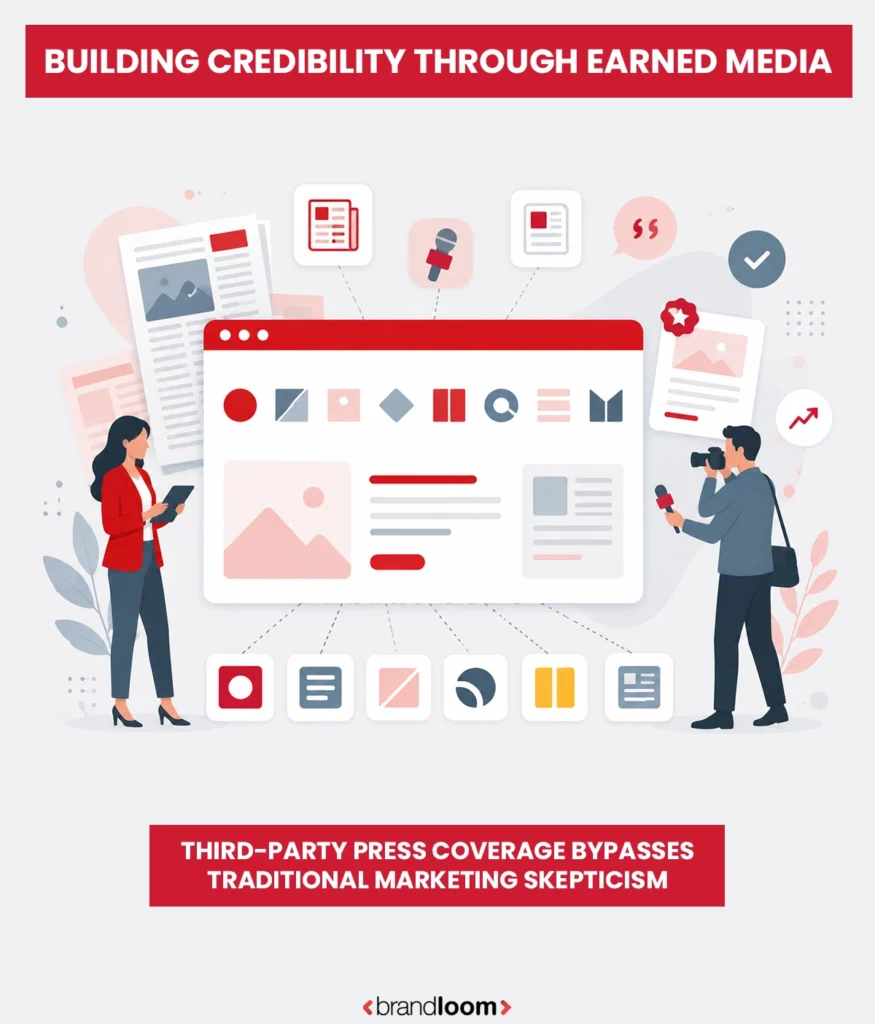
Displaying recognizable media logos on a homepage or a landing page immediately communicates that someone outside the brand found it worth covering. It provides third-party validation without requiring the visitor to read a single word.
5. Real-Time Social Proof Notifications
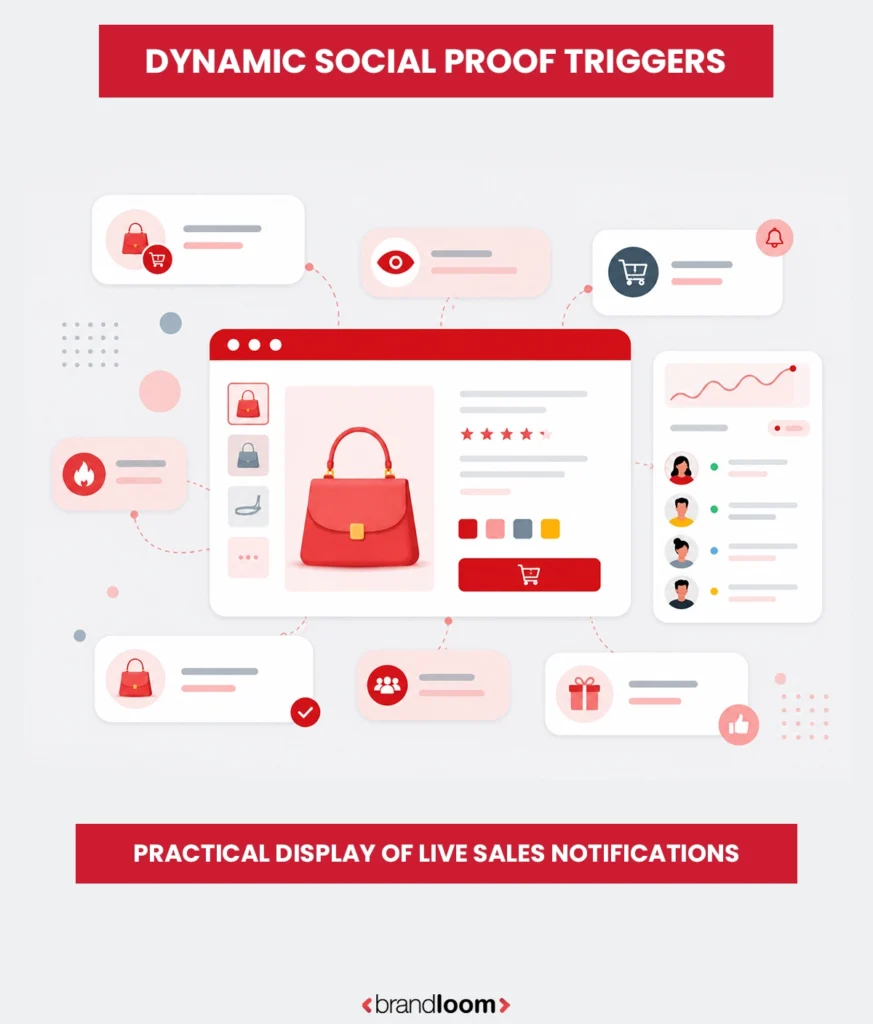
Tools that show live purchase activity and notifications like “someone in Bengaluru just bought this” or “47 people are viewing this right now” create urgency and reinforce the sense that many people are actively choosing this product. Used carefully, these nudges can meaningfully improve conversion on product pages and checkout flows.
Social Proof in B2B vs B2C Marketing
Although social proof influences buyers across every industry, the type of proof that works best depends on whether you’re selling to businesses or individual consumers.
Social Proof in B2B
B2B buyers usually have longer decision-making processes and involve multiple stakeholders. As a result, they look for evidence that reduces business risk rather than emotional reassurance.
The most effective forms of B2B social proof include:
- Detailed case studies with measurable results
- Client testimonials from decision-makers
- Recognizable client logos
- Industry awards and certifications
- Analyst reports and expert recommendations
Because B2B purchases often involve significant investments, credibility and proven outcomes matter more than popularity.
Social Proof in B2C
B2C purchasing decisions are typically faster and influenced by emotion, convenience, and peer recommendations.
Effective B2C social proof includes:
- Customer reviews and star ratings
- User-generated photos and videos
- Influencer recommendations
- Social media engagement
- Real-time purchase notifications
Consumers want reassurance that others like them have already purchased the product and enjoyed the experience.
While the formats differ, the objective remains the same: reduce uncertainty and build confidence before the customer makes a decision.
Social Proof in Digital Marketing and Facebook Ads
Understanding what social proof in digital marketing is goes beyond placing testimonials on a webpage. Social proof is woven into the structure of digital campaigns at every level.
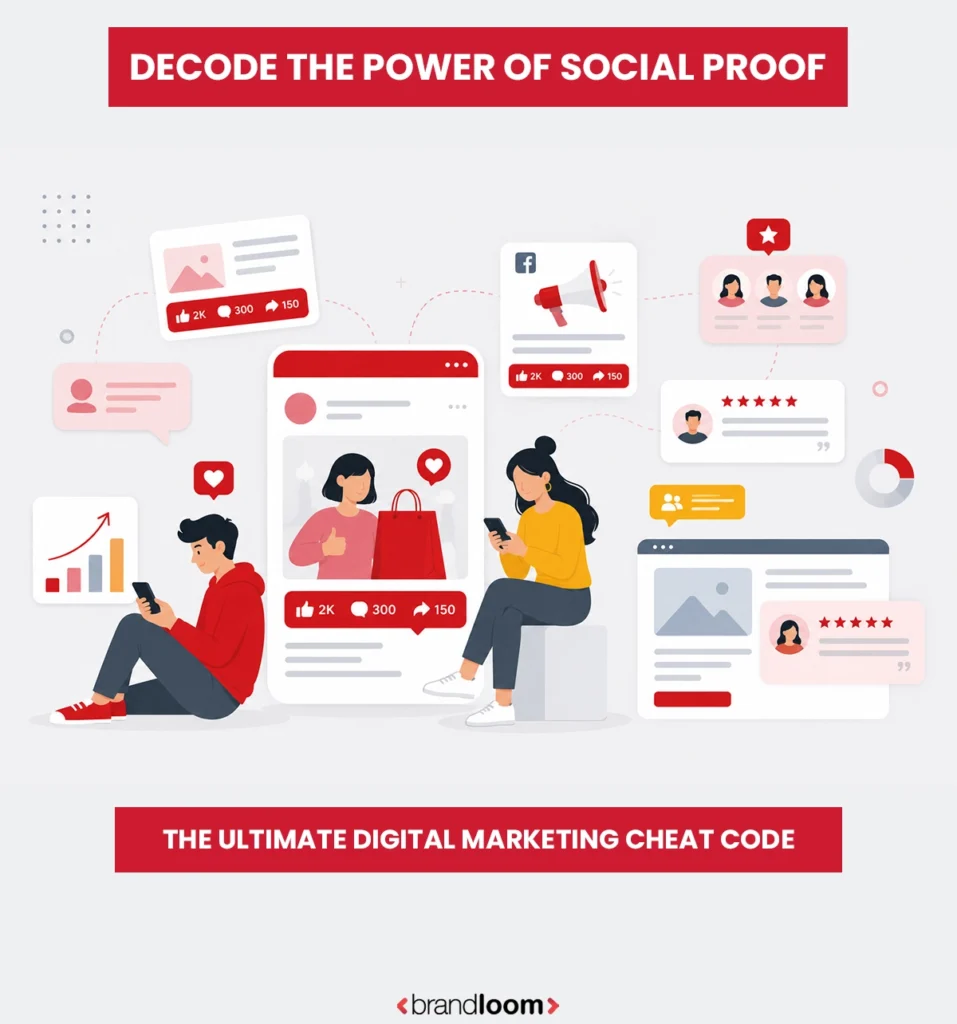
- In Facebook ads, existing engagement, such as likes, shares, and comments visible on a post, serves as social proof before a potential customer has even read the copy.
- An ad with 2,000 likes and 300 comments signals popularity in a way that a fresh ad with zero engagement simply cannot. This is why knowing how to keep social proof on Facebook ads when duplicating campaigns for new audiences is a genuine tactical consideration, not just an aesthetic one.
- On a landing page, the placement of social proof relative to the call to action is critical. A testimonial buried at the bottom of the page is doing almost nothing. A testimonial placed directly beside the signup button or next to the pricing table is positioned to reduce hesitation at the exact moment a decision is being made.
- Email marketing sequences can also carry social proof in the form of case study snippets, review highlights, or usage statistics sent to leads who are still in the consideration phase. The function is always the same: to reassure an uncertain potential customer that others have made this choice and are happy they did.
BrandLoom’s digital marketing services are built around this kind of strategic thinking. Rather than treating social proof as a box to check, their team helps brands identify which specific proof points resonate most with their target audience.
How to Implement Social Proof on Your Website
Knowing what social proof is gets you halfway there. Knowing how to actually implement it is where most brands either get it right or leave real conversion on the table.
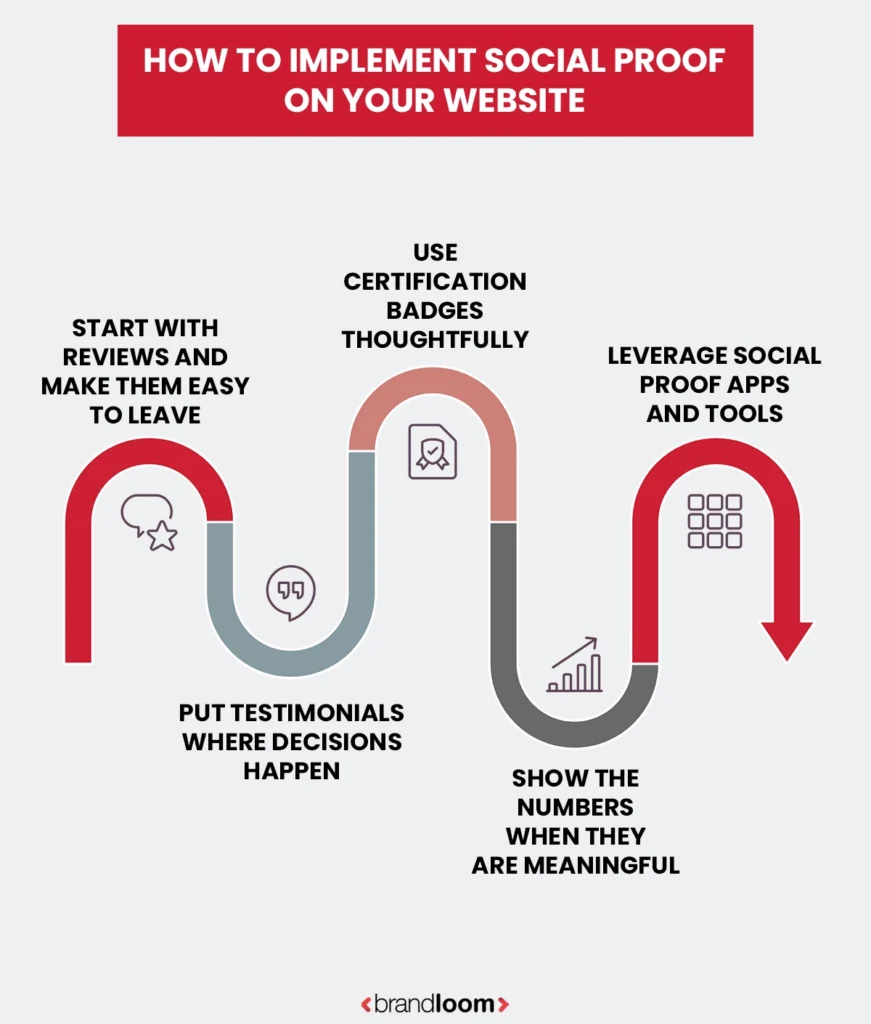
1. Start with Reviews and Make Them Easy to Leave
If your e-commerce site or service business does not currently collect product reviews, this is the single highest-impact fix available to you. Set up an automated post-purchase email sequence that asks customers for honest feedback. Keep it short, make it frictionless, and send it at the right time, a few days after delivery, once someone has had a chance to actually use what they bought.
2. Put Testimonials Where Decisions Happen
A testimonial is most effective when it appears near a point of friction. On a pricing page, use a testimonial from a customer who was initially unsure about the cost but found it worthwhile. On a checkout page, show a quote from someone who was nervous about buying but ended up genuinely satisfied. Match the testimonial to the hesitation it is meant to address.
3. Use Certification Badges Thoughtfully
Trust seals and certification logos work best near payment fields and checkout buttons. That is where anxiety about security peaks, and a visible trust badge can make the difference between a completed purchase and an abandoned cart. Do not scatter them randomly across pages; place them where the concern they address is actually felt.
4. Show the Numbers When They Are Meaningful
If you’ve served many customers, then say that. Words such as “trusted by 15,000 companies” or “over one million orders delivered” do a lot to communicate your point without wasting any words. Being able to serve this large a number of customers in and of itself proves that the decision is a safe one. Just make sure these numbers are accurate.
5. Leverage Social Proof Apps and Tools
Social proof apps specifically designed for Shopify will give users purchase alerts, review widgets, and visitor stats. For WordPress and WooCommerce stores, there are free social proof plugins that do not require developer assistance. The right social proof app for your store will depend on your requirements.
BrandLoom offers brand strategy and digital marketing services that include a full social proof audit, identifying where trust signals are missing in your current funnel, and building a framework to address them systematically. For brands that want to get this right without prolonged trial and error, guided implementation is worth considering.
How to Measure Social Proof Performance
Adding reviews or testimonials to your website is only the first step. To understand whether your social proof strategy is working, you need to measure its impact using meaningful performance metrics.
Some of the most useful metrics include:
Conversion Rate
Compare conversion rates before and after adding customer reviews, testimonials, or trust badges to important pages.
Click-Through Rate (CTR)
Measure whether visitors are clicking your calls to action more often after social proof elements are introduced.
Bounce Rate
If visitors spend more time exploring your website instead of leaving immediately, your trust signals are likely reducing hesitation.
Average Order Value
Monitor whether customers purchase more products or choose higher-value options after seeing customer recommendations or product ratings.
Customer Review Growth
Track how many new reviews you receive each month and monitor both review quality and response rates.
Customer Retention
Returning customers often indicate that your brand has successfully built trust. Measuring repeat purchases alongside customer feedback provides valuable insight into long-term brand credibility.
It Always Comes Back to People Trusting People
At its core, social proof in marketing is a formalized version of one of the oldest human behaviors. We look to each other for guidance. We take cues from the choices of people around us. We trust the lived experience of real customers more than we trust the claims of a brand that is trying to sell us something.
An agency that helps businesses across industries build credibility at scale can help your business. From content marketing and SEO to social media strategy and conversion optimization, the team at BrandLoom works with brands to identify where social proof is missing in their funnel and what it would take to fill those gaps properly. They can help you build your brand’s reputation and authority, so that you can hit your business goals.
Frequently Asked Questions
Social proof is the tendency for people to follow others’ behavior when making decisions, especially in situations where they feel uncertain. In marketing, it shows up as ratings and reviews, testimonials, social media activity, and endorsements from industry experts.
The seven types of social proof are expert opinions, celebrity testimonials, user opinions and ratings, crowd wisdom with a huge number of users, friend wisdom with individual references, certifications and trust badges, and earned media.
Social proof reduces the perceived risk of making a purchase decision. When a potential customer lands on a product or landing page and sees evidence that others have already made that choice and been happy with it, their hesitation drops. If you are unsure how to structure this for your specific funnel, BrandLoom’s conversion optimization services can help you identify exactly where trust signals are missing and what to put there.
BrandLoom provides end-to-end content marketing and digital brand strategy services, including building social proof frameworks tailored to your specific market and audience. Whether you need to collect more authentic product reviews or optimize your landing pages with the right trust signals, BrandLoom can help you build a social proof strategy that supports both conversions and long-term brand credibility.
Negative social proof occurs when messaging inadvertently signals that an undesirable behavior is the norm. It can also come from a low average rating or a visible pattern of negative reviews on your product page or Facebook page that goes unaddressed. Research shows 94% of people have been convinced to avoid a business by a poor review.
Product reviews are generally written on the page itself and refer to an actual transaction. Testimonials, on the other hand, are carefully selected quotations or statements placed by brands on their homepages or landing pages to tackle particular doubts of prospective buyers.
Social proof is not limited to the website but can extend to creative ads, the email nurture process, content on social media platforms, and even retargeting campaigns. These include Facebook ads’ engagement levels, nurture emails’ case studies, and content’s social shares, among others.
Social proof apps for websites such as Shopify and social proof plugins for WordPress are built by fetching real-time data, including recent purchases, current visitor count, and review count. Such tools convey a strong signal that the item is currently being selected by other users for purchase.
Absolutely. False reviews, exaggerated statistics, and hidden paid endorsements can destroy trust in brands if exposed to the public. The audience is smarter than that. Apart from fabricated evidence, even authentic social proof can work against the campaign.
Begin with the easiest step you can take: send an email after purchase requesting an honest review. For something a bit more systematic that combines strategy and implementation, you could consider working with BrandLoom on your credibility-building needs.