Over the past few years, social media has completely changed how people discover and buy products. What started as a place to connect with friends and consume content has evolved into a powerful shopping destination where inspiration and purchasing happen almost simultaneously.
The scale of this transformation is remarkable. The global social commerce market is valued at over $1.6 trillion in 2025 and continues to grow at an impressive pace. This isn’t just another digital trend it reflects a major shift in consumer behavior and the way businesses sell online.
Today’s shoppers don’t always begin their journey on search engines or brand websites. Instead, they discover products while scrolling through Instagram Reels, TikTok videos, Pinterest boards, or YouTube Shorts. Recommendations from creators, customer reviews, and user-generated content often influence buying decisions more than traditional advertisements.
Social commerce is no longer the future of online retail—it is already changing how millions of people shop every day.
What Is Social Commerce?
To understand what social commerce is, it helps to look at how consumer behavior has evolved. Social media is no longer a passive browsing space. It has become a dynamic environment where people discover trends, follow creators, explore new products, and make purchase decisions in real time.
Instead of searching on Google or visiting a brand website, users now find products while scrolling through Reels, Shorts, or TikTok videos. This shift has made social platforms a natural place for both discovery and buying.
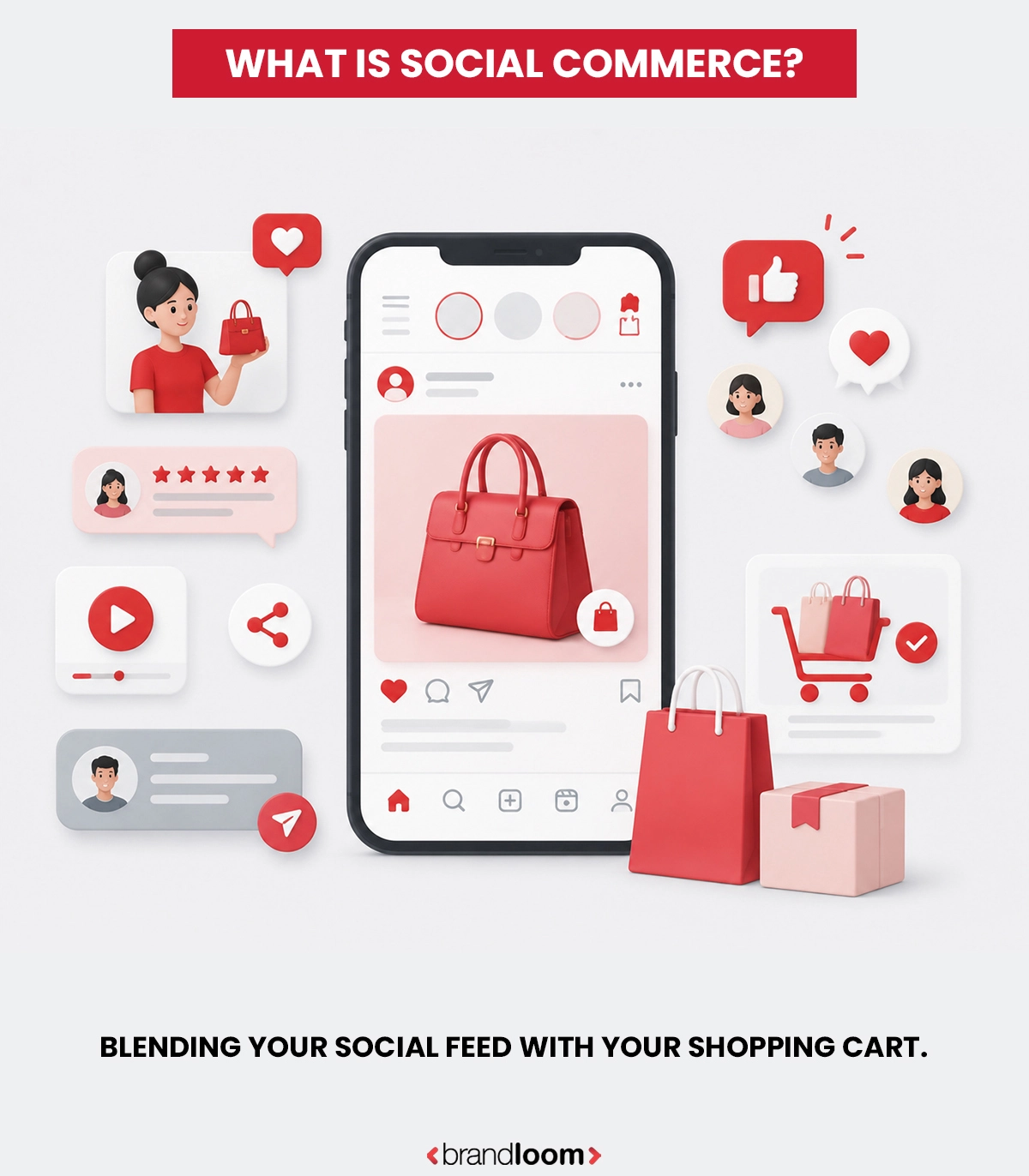
At its simplest, social commerce is buying and selling products directly on social media platforms. What makes it different from traditional e-commerce is the seamless flow:
- Product discovery
- Social proof (comments, reviews, creator content)
- Engagement through likes, shares, or DMs
- In-app checkout or quick purchase links
All of this happens without leaving the app. The entire shopping journey is compressed into a single, integrated experience.
Social Commerce Statistics You Should Know
The rapid rise of social commerce isn’t driven by hype alone. Consumer behaviour and market data clearly show that shopping through social media has become mainstream.
Global Market Size
The global social commerce market is expected to surpass $1.6 trillion in 2025, with analysts projecting strong double-digit growth over the next several years. Businesses across industries—from fashion and beauty to electronics and home décor—are investing heavily in social shopping experiences.
Mobile Shopping Dominates
Most social commerce purchases now happen on smartphones. Since people naturally browse social media on mobile devices, the path from product discovery to checkout has become much shorter. A customer can watch a product video, read reviews, and complete a purchase in just a few taps.
Better Conversion Rates
Social commerce often delivers higher conversion rates than traditional online shopping because it removes unnecessary steps. Features like product tags, in-app checkout, live shopping, and instant messaging reduce friction and encourage impulse purchases.
Gen Z Is Driving the Shift
Around 73% of Gen Z consumers use social media as their primary source for discovering new products. Rather than searching for brands directly, they rely on creators, short-form videos, customer reviews, and community recommendations to decide what to buy.
As Millennials and Gen Z continue to dominate online spending, businesses that invest in social commerce today will be better positioned for long-term growth.
Why Social Commerce Works
Social commerce succeeds because it combines three things consumers value most—trust, convenience, and discovery.
Instead of forcing shoppers to leave a social platform and visit a separate website, the entire buying journey happens where they are already spending their time. Products are discovered through creators and communities, validated through reviews and user-generated content, and purchased with minimal effort.
Its success comes down to three key factors:
- Trust through creators and customer content
- Faster product discovery powered by algorithms
- A seamless buying experience with fewer steps
These elements work together to create a shopping experience that feels natural rather than transactional. The specific features and business benefits are explored in the sections below.
At BrandLoom, a top SEO agency in India, we have seen this model accelerate growth for D2C brands, local sellers, and even established retailers.
Why Brands Need to Pay Attention
Social commerce is no longer optional. Platforms now prioritise native shopping features, and consumers expect fast, interactive, creator-led experiences.
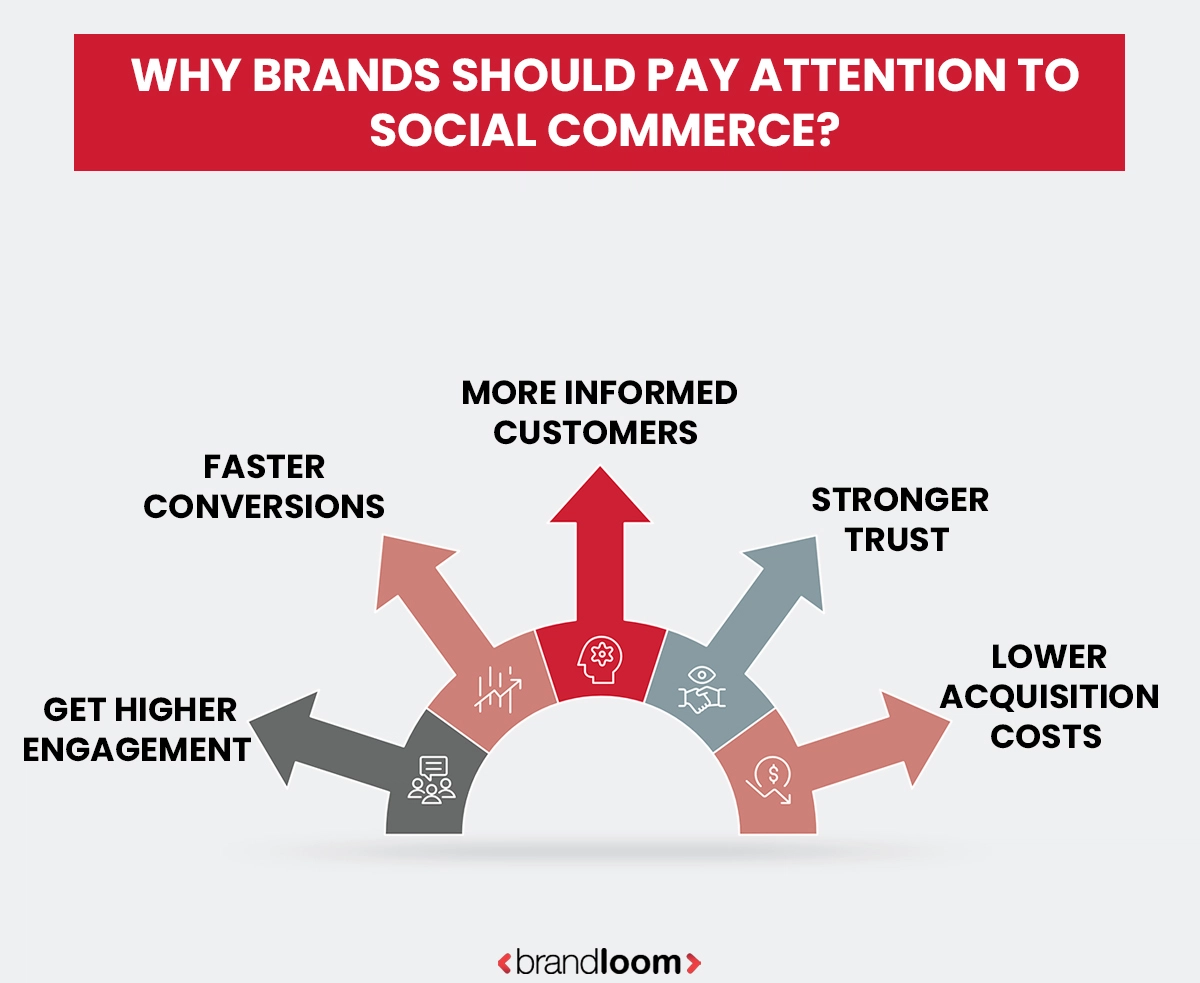
Brands that adapt early gain:
- Higher engagement
- Stronger trust
- Lower acquisition costs
- More informed customers
- Faster conversions
At BrandLoom, we help brands leverage this shift with the right mix of platform strategy, content design, and creator partnerships.
To fully understand what social commerce is, think of it as the meeting point between community, content, and commerce. It turns everyday interactions into purchase moments and reshapes how modern consumers shop.
Social commerce is not the next big thing. It is the current reality driving the future of digital retail.
How Social Commerce Works: The Complete Breakdown
Social commerce is not just online shopping on social media. It is a full ecosystem designed to reduce friction, build trust, and move potential customers from discovery to purchase in the shortest possible path. To understand how brands consistently drive conversions on social media, you need to view the journey from both the user and technical sides.
1. The Full User Journey: What Actually Happens Before a Purchase
a. Discovery
Everything begins when a user comes across a product through a post, reel, creator video, or ad. Algorithms surface content that signals high engagement or purchase intent, so your most relevant users see your product first. This stage is largely emotional, and curiosity becomes the first hook.
b. Evaluation
Once the user is interested, they look for clarity. Product tags, short descriptions, swipe-through catalogs, and pinned comments help answer the basic questions quickly. The smoother this step is, the better your chances of keeping them on the platform.
c. Social Proof
Before buying, users look for validation. This could be UGC, creator reviews, quick unboxings, comment threads, or testimonials embedded within posts. Social proof acts as reassurance and gives them the confidence that the product actually works.
d. Purchase
Social platforms now offer native checkout options such as Instagram Shop, Facebook Shop, TikTok Shop, and Pinterest product pins. The fewer redirects a user experiences, the higher the conversion. Ideally, the platform allows them to complete payment without leaving the app.
2. The Back-End Engine: Integrations That Power Social Commerce
Behind the scenes, social commerce runs on a network of integrations that sync your entire product ecosystem:
- Catalog Integrations: Platforms connect to your product catalog and automatically pull images, descriptions, variants, and prices.
- APIs: These connect your website or eCommerce platform with social channels and ensure real-time updates.
- Product Feeds: Automated feeds push product details to multiple platforms simultaneously, reducing manual effort and keeping inventory consistent.
These integrations ensure that what users see is accurate, up to date, and instantly purchasable.
3. The Front-End Experience: What Users Interact With
Social commerce succeeds because the interface is designed to match natural browsing behavior:
- UGC: Feels authentic and builds trust.
- Product Tags: Reduce friction by letting shoppers check details instantly.
- Interactive Content: Polls, AR try-ons, quizzes, and carousels guide users deeper into the experience.
Each touchpoint is created to keep potential customers engaged without forcing them off the platform.
4. Real-Time Engagement: The Trust Builder
Comments, DMs, live chat responders, and even quick emoji reactions influence buying behavior. When users receive responses within seconds, they are more likely to continue with the purchase. Real-time interaction also boosts engagement signals, which pushes the content to a wider audience.
5. How Algorithms Drive High-Intent Shopping Moments
Algorithms prioritize content that reflects:
- High engagement
- Save and share activity
- Comment activity
- Traffic to tagged products
- Interaction with creators in your niche
If your content shows purchase intent signals, platforms push it to more users who behave similarly. This creates a continuous loop that helps you scale conversions faster.
6. The Role of Creator-Led Shopping and Live Commerce
Creators have become the new storefronts. Their reviews, tutorials, and recommendations build trust faster than brand content. Live commerce streams combine entertainment, real-time engagement, and instant checkout, which results in significantly higher conversion rates.
Key Features of Social Commerce
The social commerce journey is powered by several built-in platform features that make discovery, engagement, and purchasing feel seamless. These tools support every stage of the customer journey explained above and help brands convert interest into sales more efficiently.
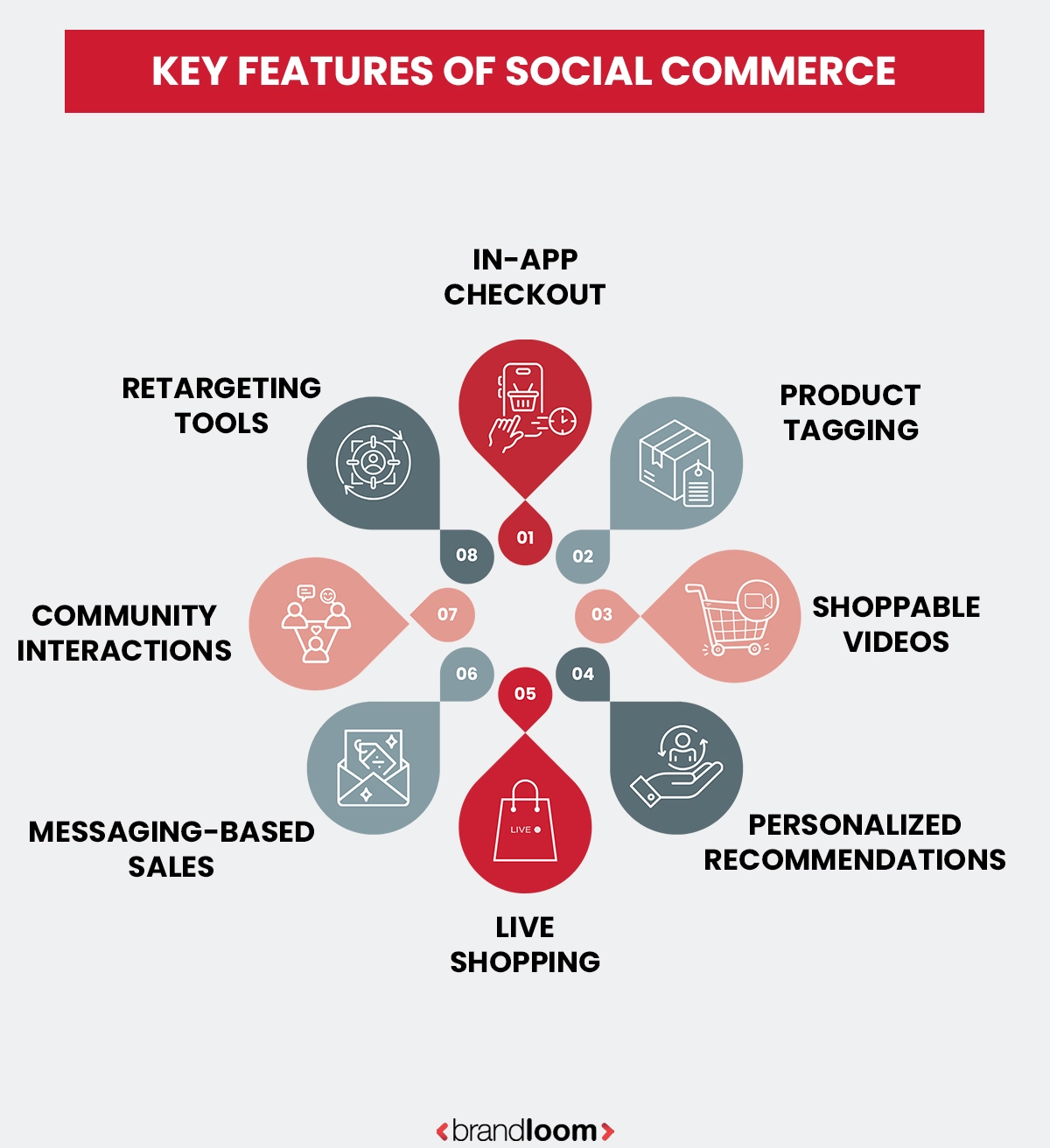
Some of the most important features include:
- In-app checkout
- Product tagging
- Personalized recommendations
- Shoppable videos
- Live shopping
- Messaging-based sales
- Community interactions
- Retargeting tools
Benefits of Social Commerce for Brands and Consumers
The benefits of social commerce go far beyond enabling purchases on social platforms. It reshapes how people discover products, interact with brands, and make buying decisions.
By merging content, community, and commerce into one environment, social platforms create a seamless path that helps brands build trust and focus on driving sales more efficiently. Here is a detailed look at how both brands and consumers gain from this model.
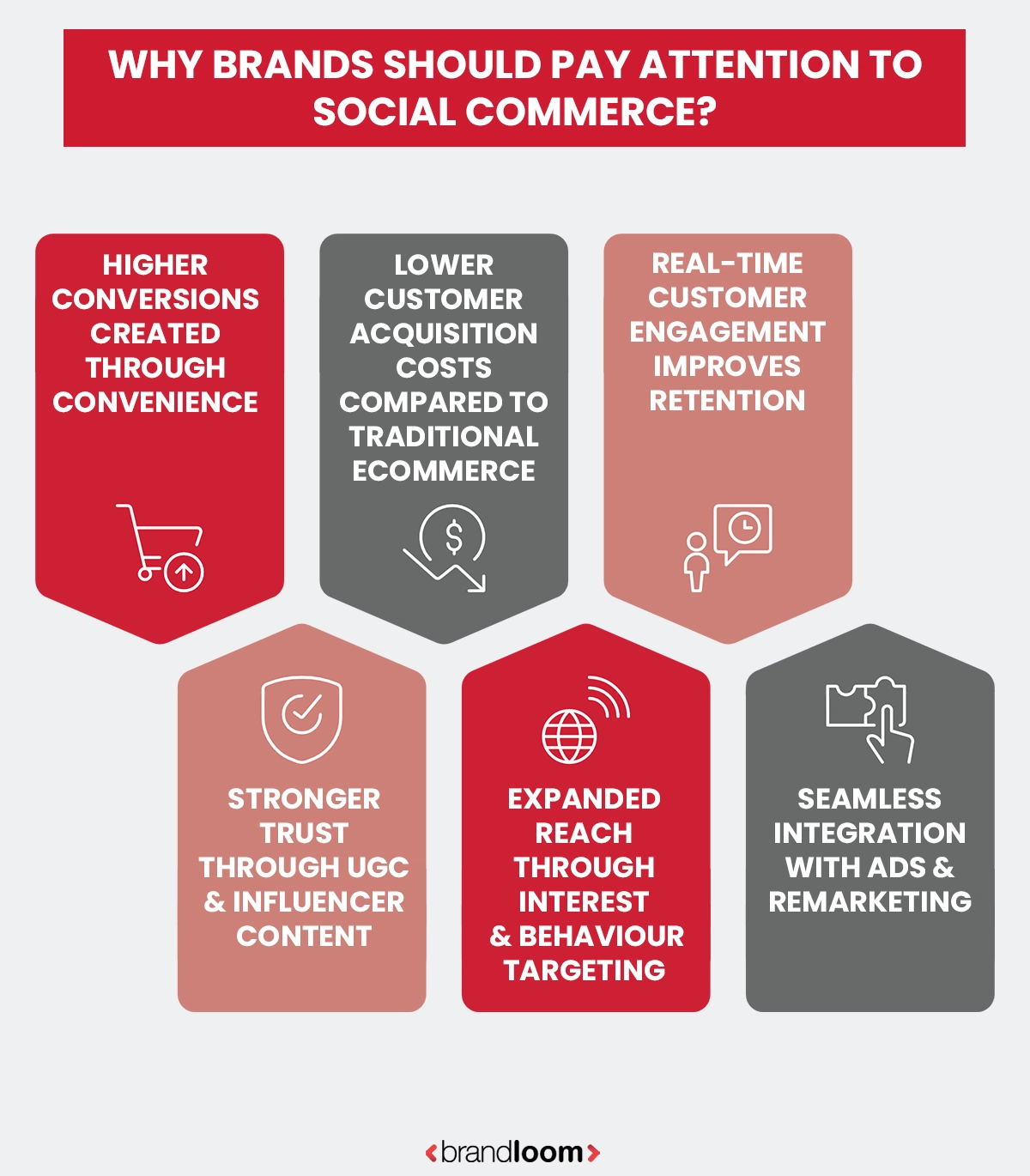
1. Higher Conversions Created Through Convenience
Social commerce removes the obstacles that typically slow down the shopping experience. Users can move from discovery to checkout in a few taps without being redirected to an external website. This level of convenience significantly improves conversion rates.
Why it works:
- Less time spent navigating between pages
- Fewer form fields and steps required
- Immediate access to product details, reviews, and pricing
The more effortless the journey feels, the quicker users are willing to buy.
2. Stronger Trust Through UGC and Influencer Content
Trust is the foundation of social buying behavior. Shoppers feel more confident when they see real people using a product or recommending it. User-generated content and influencer posts play a massive role in building credibility.
Key trust drivers:
- Authentic reviews from real customers
- Influencers demonstrating features in real-world scenarios
- Comment sections where buyers share honest experiences
These layers of validation help brands build trust faster than traditional advertising.
3. Lower Customer Acquisition Costs Compared to Traditional Ecommerce
Another major advantage is efficiency. Social commerce can reduce acquisition costs because platforms allow brands to reach warm audiences who already engage with similar products, creators, or categories.
Cost-saving elements include:
- Organic reach through creator collaborations
- UGC that reduces dependency on studio shoots
- Algorithm-driven exposure that requires fewer paid impressions
With more targeted exposure, every marketing rupee delivers a stronger impact.
4. Expanded Reach Through Interest and Behaviour Targeting
Social platforms excel at understanding user behaviour. They track what people follow, like, save, comment on, or search for. This enables brands to showcase products to users who are already interested in similar categories.
This helps brands:
- Enter new markets quickly
- Reach niche audiences
- Deliver hyper-personalised recommendations
The result is broader visibility without unnecessary effort.
5. Real-Time Customer Engagement Improves Retention
Social commerce encourages instant communication. Customers can ask questions, share feedback, or request guidance through comments, DMs, and live chat.
Benefits of real-time engagement:
- Faster responses reduce hesitation
- Improved satisfaction leads to repeat purchases
- Direct conversations create stronger brand relationships
When customers feel supported instantly, they remember the experience and return.
6. Seamless Integration With Ads and Remarketing
Social platforms provide highly advanced targeting and retargeting tools. Brands can reach users who viewed a reel, saved a post, clicked a product tag, or added something to their cart but did not complete checkout.
This leads to:
- Higher recovery of abandoned carts
- Better conversion of warm audiences
- Increased efficiency in campaign spend
With ads, catalogs, and checkout happening within the same environment, remarketing becomes far more powerful.
Social Commerce Platforms: A Complete Deep Dive
The rise of social commerce platforms has transformed how consumers discover, evaluate, and purchase products. Each platform brings its own strengths, behaviours, and audience preferences. Understanding these nuances helps brands choose the right social ecommerce platforms and allocate resources more effectively. Below is a detailed breakdown of the most influential social media platforms shaping the future of commerce today.
Instagram: The Epicentre of Visual Shopping
Instagram remains one of the most powerful social commerce platforms for brands across lifestyle, beauty, fashion, home decor, and consumer goods.
Shoppable Posts and Instagram Shop
Instagram integrates commerce directly into its content ecosystem.
Key shopping features include:
- Shoppable posts that let users tap on product tags
- Storefront-style Instagram Shop pages
- Auto-synced catalogs with product descriptions, pricing, and variants
- In-app checkout for faster conversions
These tools make product discovery feel like a natural part of scrolling.
Why Creators Dominate Instagram
Creators shape purchase decisions through reels, tutorials, GRWM content, and reviews. Their authenticity builds trust and significantly influences buying behaviour. Brands that collaborate with creators often see higher engagement and stronger conversion signals.
Adoption in India and Globally
India is one of Instagram’s fastest-growing markets, especially among Gen Z and young urban shoppers. Globally, Instagram drives billions in annual product discovery, and its Shop tab continues to influence e-commerce trends worldwide.
Facebook and Facebook Marketplace: The Community Commerce Engine
Facebook remains a cornerstone for brands targeting diverse age groups and regional markets.
Marketplace Shopping Behaviours
Marketplace is a hub for local buying and selling. Users often search for deals, pre-owned items, or quick purchases. High-intent buyers use filters to compare products and message sellers instantly.
From Business Pages to Shops and Checkout
Facebook allows businesses to:
- Create detailed Business Pages
- Add Facebook Shops synced with catalogs
- Enable in-app checkout where available
- Run targeted ads using Meta’s advanced data systems
This ecosystem helps brands move seamlessly from awareness to conversion within one platform.
TikTok Shop: The Leader in Viral and Creator-Led Commerce
TikTok has redefined how product discovery works. Its algorithm is designed to surface items users never knew they wanted.
Live Commerce and Influencer-Led Shopping
Live streams have become TikTok’s most powerful commerce tool. Influencers demonstrate products, answer questions, and share exclusive offers while the audience shops in real time.
The TikTok Algorithm’s Role in Discovery
Unlike platforms that rely heavily on follower count, TikTok pushes content based on engagement patterns. A single product video can reach millions and generate immediate sales spikes. This behaviour has made TikTok Shop one of the fastest-scaling social commerce innovations globally.
Pinterest: The Home of High-Intent Shoppers
Pinterest attracts users who arrive with clear goals. They are planning, researching, and saving ideas for future purchases.
Idea Pins and Product Catalog Syncing
Pinterest offers:
- Idea Pins for visual storytelling
- Catalog syncing for automatic tagging
- Shopping surfaces where users find curated product groups
These tools help brands reach buyers who already have purchase intent.
Why Pinterest Converts Better
Users on Pinterest are actively researching solutions. Their mindset is more decisive, which leads to stronger conversions. Home improvement, lifestyle, fashion, and DIY brands perform especially well here.
YouTube Shopping: Long-Form Influence Meets Commerce
YouTube’s combination of long-form content and strong creator communities makes it a powerful driver of product understanding.
Video-Led Buying and Creator Collaborations
Product reviews, unboxings, how-tos, and comparison videos provide context that shorter platforms cannot always deliver. YouTube now integrates shopping features directly under videos, allowing viewers to purchase while watching.
Creators on YouTube often hold deep trust, making their recommendations exceptionally influential.
WhatsApp Commerce: India’s Most Practical Social Shopping Channel
WhatsApp has become one of the most important commerce tools for small and medium businesses in India.
Chat-Based Commerce for Faster Conversions
Buyers can ask questions, view catalogs, place orders, and make payments directly within WhatsApp. This personalised interaction builds confidence and shortens decision time.
Massive SMB Adoption
Local retailers, boutique owners, service providers, and D2C brands rely heavily on WhatsApp for order confirmations, payment links, customer management, and repeat sales. Its convenience and familiarity make it a natural choice for Indian shoppers.
Social Commerce vs E-Commerce: Understanding the Difference
The conversation around social commerce vs e-commerce has grown rapidly as brands rethink how customers discover and buy products online. While both models revolve around digital transactions, the paths leading to purchase are fundamentally different. Social commerce thrives on community, content, and real-time interaction.
Traditional e-commerce relies more on structured search behaviour, SEO, and paid advertising. Understanding how these approaches differ helps brands build stronger e-commerce social media marketing strategies that match the expectations of modern shoppers.
Key Differences Between Social Commerce and E-Commerce
Below is a simplified comparison to show how the customer journey, trust signals, and discovery behaviours vary across both models.
| Feature | Social Commerce | Traditional E-Commerce |
| Discovery Pattern | Happens inside social feeds through creators, reels, UGC, and recommendations | Driven by search queries, product listings, and ads |
| Primary Trust Signals | Influencer content, comments, reviews, UGC, community validation | Website credibility, ratings, product pages, brand history |
| User Journey | Discovery to purchase happens within the same platform | Users move through multiple pages before checkout |
| Engagement Level | Real-time chats, comments, live videos, polls | Static product pages and structured navigation |
| Buying Behaviour | High impulse buying due to visual inspiration | Planned and comparison-based purchases |
| Technology Backbone | Product tags, in-app checkout, live shopping tools | SEO, SEM, catalog management, and payment gateways |
This contrast highlights why social commerce has grown so quickly. It offers immediacy, emotion, and convenience.
Why Social Commerce Drives Faster Impulse Buying
Social commerce blends inspiration and action. A user sees a creator wearing a product, taps the tag, checks the price, and completes a purchase in minutes. There is no friction and no need to open a website. The emotional influence of creators and peers also accelerates decisions.
Short-form videos, trending sounds, and UGC make products feel relatable. These signals push shoppers to buy before the moment passes. For lifestyle, beauty, and fashion categories, this behaviour creates significant sales spikes.
How E-Commerce Depends on SEO, Ads, and Search-Driven Intent
Traditional e-commerce relies heavily on structured marketing efforts. Brands invest in:
- SEO to rank for product keywords
- Google Ads and shopping campaigns
- Marketplace optimization
- Retargeting based on browsing behaviour
Users arrive with clear intent such as comparing prices, checking specifications, or searching for the best deal. The journey is more rational and research-oriented.
This model still dominates planned purchases such as electronics, appliances, and high-value goods.
Examples from India and Global Markets
In India:
- Beauty and fashion brands grow faster through Instagram Reels, WhatsApp Commerce, and creator-led content.
- Electronics and home appliances still rely on Amazon, Flipkart, and brand websites for structured e-commerce.
Globally:
- TikTok Shop has driven viral products to sell out within hours.
- Traditional e-commerce platforms like Amazon continue to dominate categories requiring detailed comparison.
Both formats have strong roles, and the most successful brands combine them strategically.
Influencer Marketing, UGC, and Creator-Led Commerce
The rise of influencer marketing and creator ecosystems has reshaped how consumers discover products online. Today, shoppers rely more on real people than traditional brand advertising.
This shift has propelled influencer commerce, UGC, and creator-led shopping to the center of modern social commerce strategies. These formats provide credibility, relatability, and community validation, which makes them powerful drivers of conversions on social media.
Why Influencers Outperform Traditional Brand Ads
Influencers outperform brand ads because they speak the language of their audiences. Their content feels native to the platform, so users do not view it as an interruption. Instead, it becomes part of their daily scrolling routine.
Key reasons they convert better:
- Audiences feel connected to creators they follow
- Recommendations sound personal and experience-driven
- Influencers demonstrate products instead of simply promoting them
- Their real-time interactions build trust faster than polished ads
Instead of telling people what to buy, creators show how a product fits into real life. This authenticity makes them significantly more persuasive.
Data-Backed Trust in Creators
Multiple studies show that consumers trust influencers more than branded content. People believe creators offer honest opinions, even when collaborations are sponsored. This trust impacts behaviour at every stage of the buying journey.
Insights include:
- Younger audiences trust creator reviews more than celebrity endorsements
- Micro and nano creators often hold higher engagement rates
- Long-term creator partnerships increase credibility over time
As trust rises, so does the willingness to purchase directly through creator recommendations.
UGC as Public Proof for Social Buyers
User-generated content has become one of the most important trust-building tools in social commerce. UGC works because it shows real customers using products in real situations. It acts as public proof that the product delivers value.
Benefits of strong UGC libraries:
- Demonstrates authenticity and reliability
- Reduces buyer hesitation
- Creates a community-driven brand narrative
- Strengthens social checkout behaviour
UGC feels unscripted and unbiased, which makes it extremely influential during product evaluation.
Live Shopping Formats on TikTok, Instagram, and YouTube
Live shopping combines entertainment with real-time engagement. Platforms like TikTok, Instagram, and YouTube allow creators to host live streams where they review products, answer questions, and share demonstration videos.
Why live formats convert strongly:
- Instant responses eliminate doubts
- Limited-time offers create urgency
- Real-time interaction builds emotional connection
- Product demos improve clarity and expectations
Creator-led live commerce is especially powerful for beauty, fashion, home goods, fitness accessories and lifestyle categories.
Types of Influencers and Their Impact
Different influencer tiers play unique roles in the customer journey.
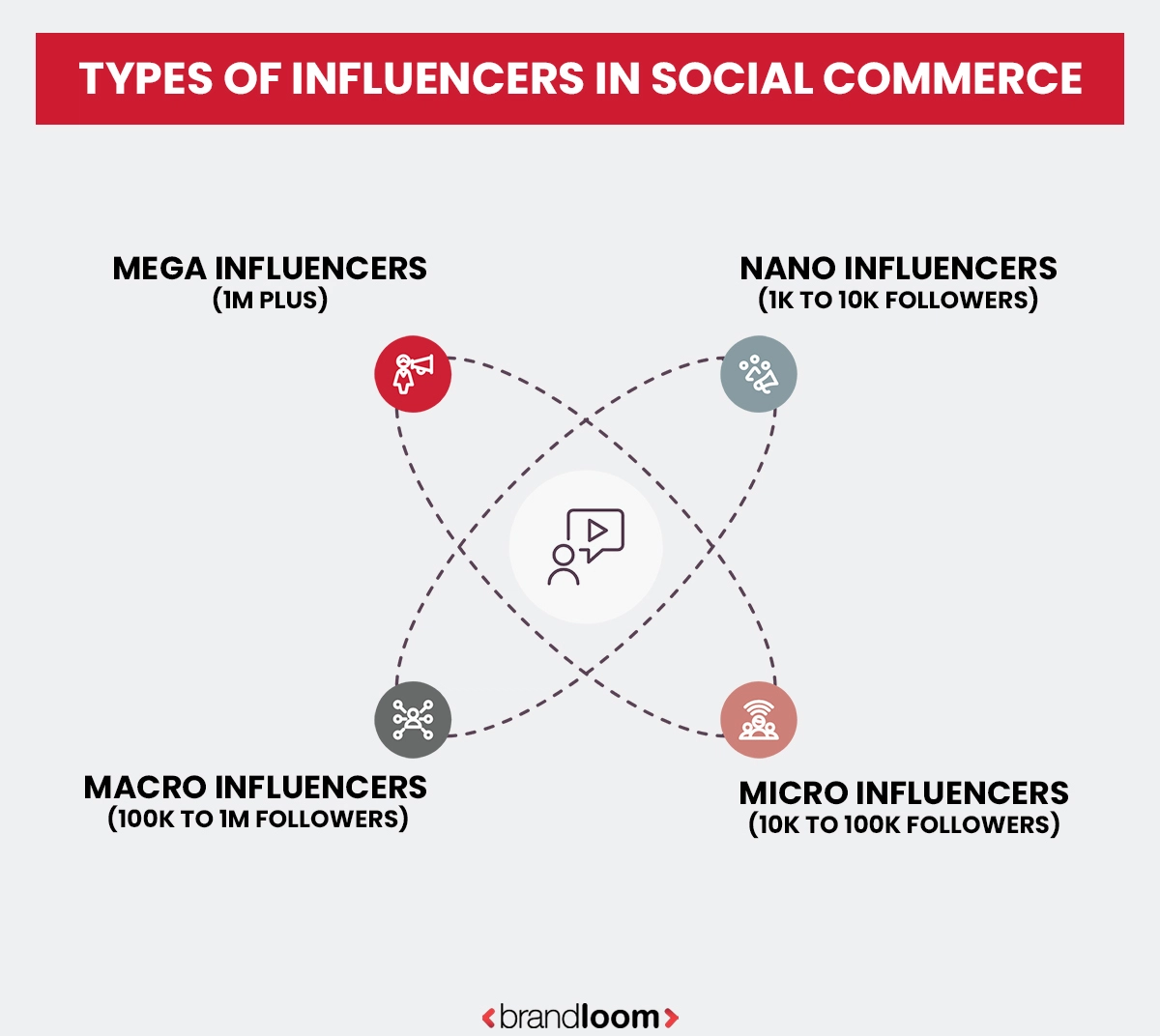
Nano influencers (1K to 10K followers)
High trust, strong engagement, great for niche communities. Ideal for storytelling and UGC-style videos.
Micro influencers (10K to 100K followers)
Balanced reach and credibility. Often, the best value is for ROI-focused campaigns.
Macro influencers (100K to 1M followers)
Strong reach, more professional content, and higher visibility.
Mega influencers (1M plus)
Useful for mass awareness and brand perception, but rarely the highest converters.
Brands often mix these tiers depending on campaign goals and audience size.
UGC vs Influencer Videos: Which Drives Better Social Checkout Behaviour
Both UGC and influencer videos play essential but distinct roles in shaping a consumer’s path to purchase. While influencer-led content excels at sparking interest and showcasing a product’s appeal, UGC provides the social validation buyers need before final checkout.
Understanding how each format contributes to conversion helps brands structure a more effective social commerce funnel.
Comparison Table: UGC vs Influencer Videos
| Format | Strengths | Where It Works Best | Impact on Social Checkout |
| Influencer Videos | High-quality visuals, strong storytelling, and aspirational appeal | Awareness, product discovery, and explaining features | Builds initial trust and motivates users to explore the product further |
| UGC Content | Authentic, relatable, looks like everyday use, real experiences | Consideration, decision-making, and last-mile validation | Reduces risk, boosts confidence, and increases conversion likelihood |
The most effective social commerce strategy layers both formats within the same funnel. Influencers spark interest and shape product perception. UGC reinforces that interest with relatable proof.
Brands that combine both create a seamless journey that maximizes reach, trust, and conversion, especially on platforms like Instagram, TikTok, YouTube, and Facebook, where social checkout behaviours are growing rapidly.
Top Winning Social Commerce Strategies
Social commerce is no longer a trend. It is a fully developed buying ecosystem powered by content, creators, and seamless checkout experiences. To win in this competitive environment, brands need a structured approach that blends discovery, trust, community, and analytics.
Below are the most effective social commerce strategies that drive product discovery, social selling, and repeat conversions across markets.
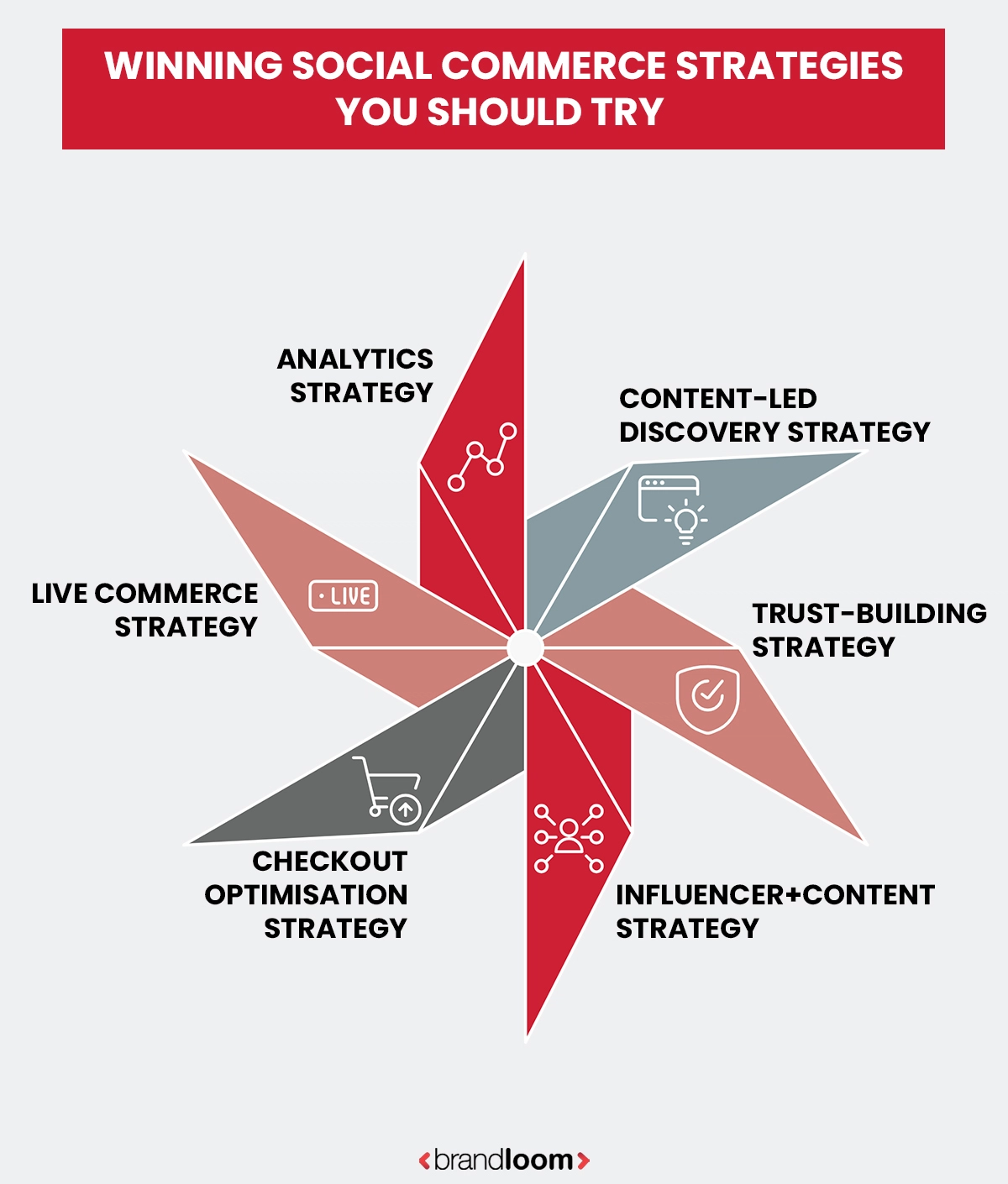
1. Content-Led Discovery Strategy
In social commerce, discovery happens before intent. Shoppers rarely begin with “I need this.” They find products while scrolling, and the right content turns passive browsing into active interest.
Short-form videos are at the heart of this shift. Platforms like Instagram Reels, TikTok, and YouTube Shorts prioritise engaging, bite-sized content that demonstrates benefits within seconds. Tutorials, transformations, unpacking sequences, quick reviews, and visual storytelling formats help products stand out in crowded feeds.
Creator collaborations further amplify discovery. When brands partner with creators who understand platform culture, they instantly tap into built-in audiences and community trust. This content feels native rather than promotional, which increases engagement and improves organic reach.
Finally, shoppable posts and product tagging make the discovery-to-checkout path frictionless. A user who likes what they see can tap, explore and buy instantly without leaving the app. High discovery potential combined with instant purchasing creates the ideal environment for impulse buying.
2. Trust-Building Strategy
Trust is the most decisive factor in social selling. Shoppers rely on people, not product pages, to guide their decisions. That is why brands must invest in a layered trust strategy built on authenticity, social proof, and transparency.
Start with UGC, which continues to outperform polished branded content. Real customer videos, organic product uses, and everyday experiences create authenticity signals that reduce buyer hesitation. When people see others like them using the product, they feel more confident about their purchase.
Layering reviews and testimonials into content helps strengthen credibility. Screenshots of real comments, reshared customer videos and step-by-step experiences all build trust.
The most effective trust-building systems combine three pillars:
- UGC for authenticity
- Influencers for expertise and authority
- Reviews for reassurance
Together, they create a multi-dimensional trust cycle that supports higher conversions.
3. Influencer + Community Strategy
Influencers are no longer just promoters. They are commerce partners. The rise of creator-led commerce has reshaped how brands launch, amplify and validate products.
Creators bring storytelling, product education and cultural context to the buying process. Their content initiates demand, while their community interactions maintain it. The key is building long-term relationships where creators evolve into ambassadors, not one-off collaborators.
Alongside creators, community engagement cycles play a crucial role. Brands that regularly engage with their audience through Q&A sessions, comments, polls, challenges and reposting customer content build tighter feedback loops. Community-driven conversations generate organic momentum that paid campaigns alone cannot replicate.
This combined strategy creates a social ecosystem where fans advocate, creators amplify and customers convert.
4. Checkout Optimisation Strategy
Even the best content fails if checkout creates friction. Social commerce requires seamless in-app or hybrid checkout flows that minimise drop-offs.
For in-app purchases, ensure:
- Product tags link to accurate, up-to-date listings
- Variants, sizes, and prices are clear
- Delivery details and return processes are transparent
For hybrid checkout (social-to-website), optimise landing pages to mirror the social experience. Consistent design, fast load times, and mobile-first layouts are essential. Add social proof such as ratings, “as seen on Instagram”, and real customer visuals to maintain trust through the transition.
Reducing steps equals increasing conversions. The smoother the process, the more likely users are to complete their purchase.
5. Live Commerce Strategy
Live shopping is one of the fastest-growing social commerce strategies. It blends entertainment, community, and real-time buying triggers.
To succeed:
- Host with a compelling personality or creator
- Promote the event early with reminders, teasers, and countdowns.
- Engage viewers through demos, polls, and exclusive offers
- Measure outcomes such as peak viewers, clicks, and conversions
Live commerce works because it collapses discovery, trust, and purchase into one interactive experience. When done consistently, it becomes a recurring revenue driver.
6. Analytics Strategy
Data is the backbone of every winning social commerce system. Each platform offers analytics that help brands track performance, understand behaviour and refine strategies.
Key metrics include:
- Conversions: number of purchases driven from posts or live sessions
- Saves: an indicator of strong interest and future buying intent
- Shares: a measure of virality and social endorsement
- Clicks: validation of content effectiveness
- View-through rates: how well content retains attention
Leverage social commerce tools, insights dashboards, and creator performance analytics to guide decisions. The brands that win are those that measure, iterate, and scale what works.
The Future of Social Commerce 2026 and Beyond
Social commerce is entering a new phase where real-time interactions, creator influence, and rapid platform innovation will shape how people discover and shop. As algorithms become smarter and social networks evolve into complete retail ecosystems, the future of online buying will be more immersive, predictive, and community-driven.
1. Predictive AI Shopping Will Redefine Discovery
The next wave of social commerce will be powered by predictive AI systems that anticipate what users want before they search for it. Platforms will analyse behaviour, purchases, watch time, and engagement patterns to serve personalised product recommendations in real time.
Instead of browsing, users will be guided through curated shopping paths shaped entirely by AI. This shift will accelerate discovery and drive more impulse purchases through high-intent content.
2. AR Try-Ons and Immersive Product Experiences
Augmented Reality will move from being a novelty to a default experience. Shoppers will use AR try-ons to check how a lipstick shade looks, view furniture in their home, or visualise outfits on their body type.
AR-powered catalogues will appear directly inside social feeds, turning Instagram Reels, TikTok clips, and YouTube Shorts into interactive storefronts. These immersive discovery tools will reduce hesitation and dramatically increase confidence during decision-making.
3. Creator Marketplaces and Affiliate Commerce Will Explode
Creators will play an even more dominant role in the future of shopping. Platforms are already building creator marketplaces, allowing brands to find talent, collaborate, and track performance seamlessly.
At the same time, affiliate layers will expand, giving creators more ways to earn through product tagging, storefronts, and automated commissions. This will accelerate creator-led commerce, making influencers central to product launches and demand generation.
4. Cross-Border Social Commerce Will Become Mainstream
With integrated payment systems and global shipping options, consumers will increasingly buy from international brands directly through social media. Social networks will simplify duties, shipping calculations, and currency conversions.
This frictionless experience will turn cross-border shopping into a natural extension of the feed, especially for categories like beauty, fashion, and electronics.
4. Web3 Payments Will Appear in Lightweight Forms
While mass adoption is still years away, social platforms will begin experimenting with Web3 features. Expect to see early pilots of crypto-based payments, tokenised loyalty programs and wallet integrations that allow secure micro-transactions. These advancements will give users more control over digital identity and reward systems without replacing traditional payments.
5. India’s Social Commerce Future: WhatsApp + Instagram Will Lead
India will continue to shape global social commerce behaviour. With WhatsApp’s massive user base and Instagram’s visual shopping ecosystem, these two platforms will dominate retail interactions. WhatsApp Commerce will drive conversational sales, appointment bookings, catalogue browsing, and instant support.
Instagram will strengthen its position as the most influential discovery engine through Reels, Shops, product tags, and creator-driven content. Together, they will form the core shopping journey for millions of Indian consumers.
Conclusion
Social commerce is no longer a trend. It is a fundamental shift in how people discover, evaluate, and buy products online. For anyone asking what is social commerce, the answer is simple: it is the new intersection of product discovery, community engagement, and seamless purchasing, all happening inside the platforms people already use every day.
Its power lies in the way it blends convenience with credibility. Shoppers no longer jump across apps or websites. They rely on creators they trust, UGC that mirrors real experiences and communities that validate their choices. This combination fuels deeper product discovery and accelerates social selling in ways traditional ecommerce cannot match.
Brands that embrace this shift now will shape the next era of digital growth. As algorithms evolve and in-app shopping strengthens, social commerce will become the primary revenue driver for consumer-facing brands. At BrandLoom, we help businesses build social-first journeys that maximise visibility, trust, and conversions because waiting too long means losing ground to competitors who adapt faster.
The future of digital commerce belongs to brands that understand people do not just want to buy. They want to be inspired, reassured, and connected. Social commerce delivers exactly that: a buying experience shaped by interaction, storytelling, and authenticity. As one of the best social media marketing agencies in India, we at BrandLoom continue to guide brands toward strategies that meet consumers where they are and how they prefer to shop.
Frequently Asked Questions
Social commerce is the blend of social media and online shopping where customers discover, evaluate, and buy products directly inside platforms like Instagram, Facebook, or TikTok. It works by combining product discovery with shoppable posts, creator content, UGC, in-app checkout, and personalized recommendations. Instead of moving users to external websites, the entire buying journey happens within the social feed.
This reduces friction and improves conversion. Businesses that combine engaging content, creator partnerships, and a seamless buying experience usually see the strongest results from social commerce.
The key difference between social commerce and traditional e-commerce is where the buyer journey happens. Traditional e-commerce relies on search, ads, or website visits. Social commerce brings the entire journey inside social media, where users discover products through influencers, UGC, and shoppable content. It also integrates social proof and community validation, leading to faster impulse purchases.
Many successful brands use both approaches together, combining search-driven traffic with social discovery to reach customers at different stages of the buying journey.
Several major platforms now offer full social commerce capabilities. Instagram and Facebook support Shops, product tagging, live shopping, and in-app checkout. TikTok Shop enables viral discovery and creator-led sales. Pinterest supports shopping through Idea Pins and catalog sync. YouTube allows product tagging and creator storefronts.
The right platform depends on your audience, product category, and overall marketing goals. Many businesses achieve better results by focusing on one or two platforms rather than trying to be active everywhere.
The benefits of social commerce include higher conversions, stronger trust, and reduced friction during purchase. Brands gain access to real-time engagement, UGC-driven credibility, and algorithm-powered discovery. Social commerce also lowers customer acquisition costs because buyers already spend time on these platforms.
It expands reach to interest-based audiences and enables seamless integration with ads, retargeting, and creator partnerships. For brands, this means faster sales cycles and increased retention. BrandLoom helps businesses leverage these benefits by building social-first strategies that focus on trust, discoverability, and conversion, ensuring consistent growth across all major social media environments.
Real examples include Instagram Shops, where users browse collections and buy with a single tap; TikTok Shop viral product drops powered by creators; and Facebook Marketplace, for local and global goods. Pinterest users save and purchase items directly from Idea Pins, while YouTube creators add product tags to their videos.
WhatsApp enables catalog browsing and direct orders through chat. These examples show how social commerce merges discovery with purchasing in one flow. These examples show how social commerce brings product discovery, engagement, and purchasing together within a single platform.
Influencers and creators are central to social commerce because they drive discovery, trust, and conversions. Their content provides relatable context, demonstrations, and social proof that traditional ads cannot match. Influencer commerce accelerates product visibility while UGC builds authenticity that reassures buyers.
Live shopping, creator-led product tutorials, and viral challenges often spark mass demand. Platforms prioritize creator content in their algorithms, increasing reach and engagement. Choosing creators whose audience aligns with your brand is often more important than simply working with influencers who have the largest following.
Products that perform best in social commerce are visually appealing, easy to demonstrate, and driven by trends. Beauty, skincare, fashion, accessories, home decor, fitness equipment, and lifestyle gadgets dominate because creators can showcase them effectively. Impulse-buy products, affordable items, and quick-use essentials also convert well due to low decision friction.
High-engagement categories like DIY tools, food, kitchen devices, and wellness products thrive with UGC and reviews. The best-performing products are those that are visually engaging, easy to demonstrate, and naturally encourage conversations and recommendations.
Setting up a store starts with converting your profile to a Business Account and uploading a complete product catalog through Meta Commerce Manager or TikTok Shop Seller Center. Once synced, you can enable product tagging, shoppable posts, and in-app checkout. The next step is building content that drives discovery, including reels, live shopping, collaborations, and UGC.
Brands must also configure messaging features, highlight collections, and set up analytics. At BrandLoom, we guide businesses through catalog integration, content strategy, creator partnerships, and optimization to ensure their Instagram or TikTok stores generate real conversions.
The biggest challenges include rising competition, algorithm changes, dependency on creators, managing UGC at scale, and ensuring consistent product availability. Brands must also maintain trust, as social shopping happens quickly and relies heavily on credibility. Another challenge is optimizing in-app checkout and tracking performance across multiple platforms.
Privacy updates and measurement limitations can complicate attribution. At BrandLoom, we help brands navigate these challenges by building data-backed strategies, strengthening communities, and creating content that keeps engagement high despite evolving platform dynamics.
Key trends include predictive AI-driven shopping journeys, AR try-ons, immersive product discovery, and real-time buying within live commerce streams. Creator marketplaces, affiliate layer, and UGC-powered social selling will continue to grow. Cross-border shopping will expand as platforms simplify payments and logistics.
Web3-driven identity and loyalty systems will emerge in lightweight forms. In India, WhatsApp Commerce and Instagram will dominate as primary shopping hubs. BrandLoom helps brands stay ahead by adopting these trends early and designing strategies that align with evolving customer behaviour and platform innovations.