Every second counts in e-commerce. When a potential customer lands on your product page, you have mere moments to capture their attention and convince them to buy. Your product page is your most important landing page, the last barrier between browsing and buying.
In today’s competitive digital marketplace, some e-commerce businesses that are thriving actually have a secret weapon, and it’s not how fast they were able to build an online store or how much money they spent setting it up. Most companies spend a fortune on driving traffic through advertising and SEO, but they leave a goldmine sitting right under their noses: optimizing the pages where actual purchasing decisions are made. BrandLoom has helped e-commerce brands across India identify and fix exactly these gaps, turning underperforming product pages into their highest-converting assets.
This comprehensive guide reveals the proven strategies, tactics, and techniques that increase conversion rates dramatically. We’ll explore everything from the psychology behind user behavior to the technical aspects that make pages load faster and rank higher in search results.
The Current State of Ecommerce Conversion Rate
Before getting into the specific strategies for optimization, let us quickly look at the reality of e-commerce today. The numbers tell a sobering story that highlights the massive opportunity for improvement.
Usually, fewer than 3 visitors out of every 100 make a purchase in your store. The rest of the 97 walk away without buying anything, taking their money and their potential lifetime value with them.
On the contrary, they are not some sort of fraudulent magicians; these businesses have simply mastered the conversion optimization of product pages. They know better than anyone how little improvements stack up into huge revenue streams.
What is Product Page Optimization?
Have a look at this product page for Manic Cherry, we can take this as a good product page example. Product page optimization means refining every element on your product pages to boost conversions and sales. You test and tweak everything from headlines and images to checkout buttons and support options.

Unlike broader website optimization, this practice focuses only on pages where customers buy. These pages sit at the end of your sales funnel, turning browsers into buyers.
Product optimization combines data analysis with customer behavior insights. You track visitor behavior, spot drop-off points, and fix problem areas using real data, not guesswork.
Core Components of Product Page Optimization
Product page optimization encompasses multiple disciplines working together:
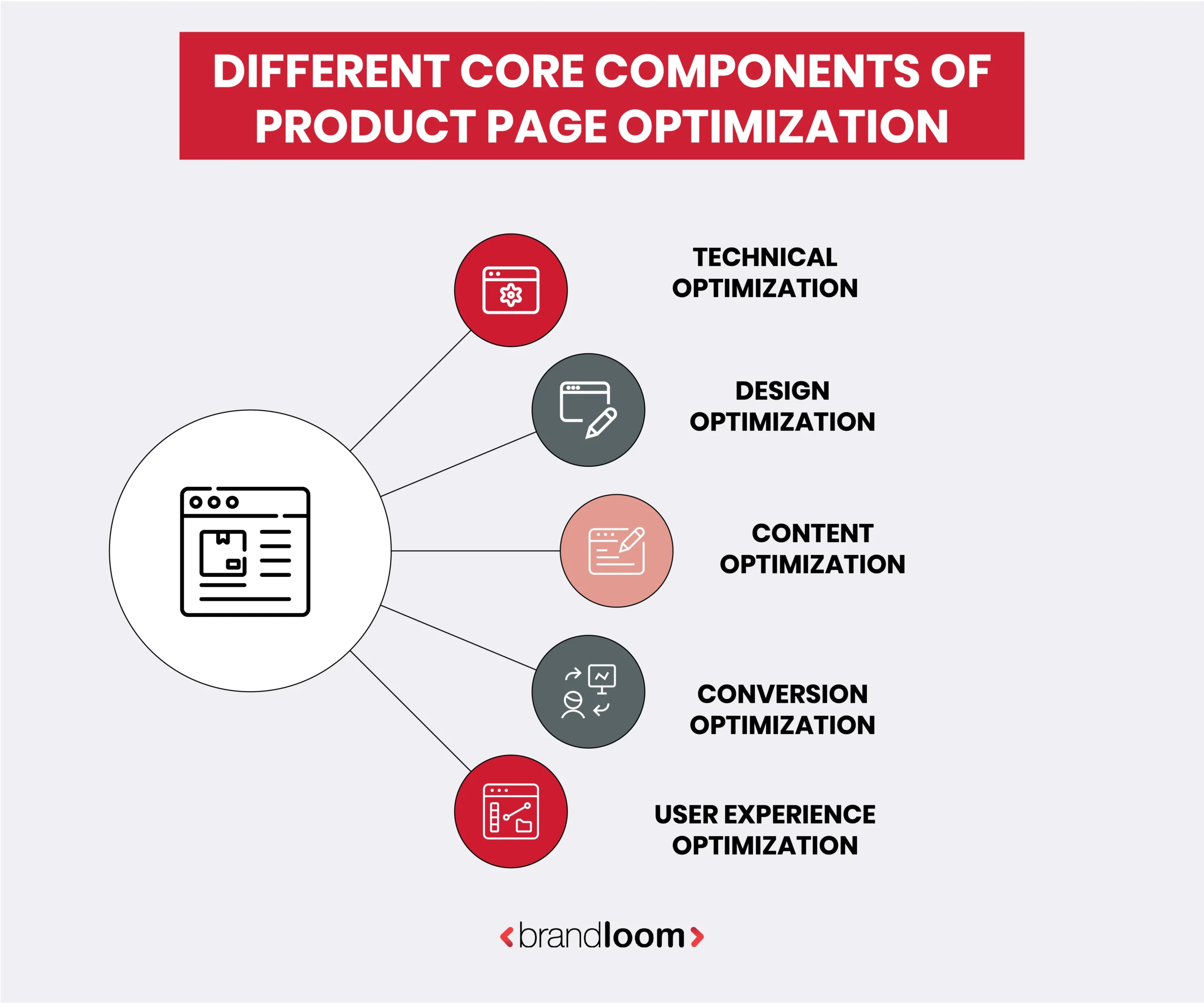
Technical Optimization: It is responsible for making your pages load fast, providing a fully functional spectrum that stands on all devices, and ranking appropriately in search engines. It includes areas like enhancing page speed, mobile-friendliness, SEO, and structural marking from the point of view of a search engine in terms of understanding your content.
Design Optimization: This works mainly on the visual aspects that influence customer behavior, changing layouts, the psychology of colors, fonts, image optimization, and the formation of visual hierarchies that naturally steer customers toward purchase.
Content Optimization: This ensures the creation of convincing product descriptions, headlines, and copy that speak the language of your target audience. It will even take care of keyword optimization for SEO, benefit-focused messaging, and addressing common customer objections through strategic content placement.
Conversion Optimization: It targets specific elements that drive purchasing actions. This includes CTA button placement and design, pricing presentation, trust signals, social proof integration, and removing barriers that prevent customers from completing purchases.
User Experience Optimization: It ensures smooth, intuitive interactions throughout the customer journey. This covers navigation improvements, form optimization, checkout process streamlining, and creating seamless experiences across mobile devices and desktop platforms.
Why Product Page Optimization Matters
Product pages act as digital salespeople working around the clock. Poor pages confuse buyers and push them toward competitors, while optimized pages build trust and guide visitors toward purchase.
Optimization also strengthens SEO. Google’s Core Web Vitals reward fast, interactive pages, so conversion improvements often boost rankings too.
Today’s buyers compare prices, read reviews, and shop across devices, especially mobile. Your pages need to perform well everywhere.
Most sites treat optimization as an afterthought. This gives you a real edge:
- Higher conversions fund more aggressive ad bidding
- Better performance improves search rankings
- Stronger pages capture market share from competitors
Product Page Optimization Checklist
Use this checklist before every product page launch or update to ensure nothing is left to chance.
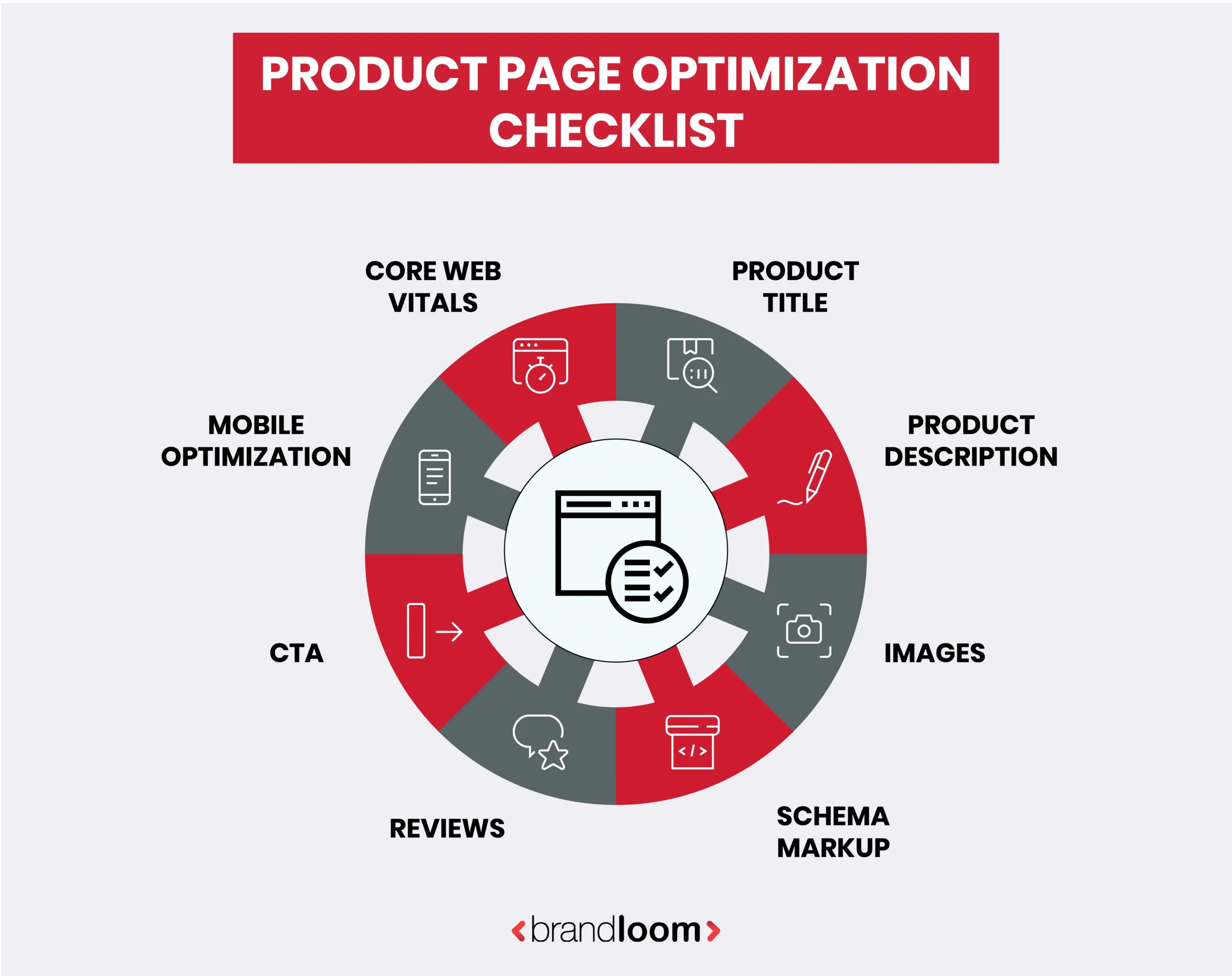
- Product Title: Keep titles clear, specific, and under 60 characters with your primary keyword included naturally. A strong title improves both search visibility and click-through rates from AI and organic results.
- Product Description: Write descriptions that lead with benefits, address common objections, and use natural language that AI systems can interpret contextually. Avoid thin or generic copy – it gives both customers and AI nothing to work with.
- Images: Include multiple high-quality images showing different angles, close-ups, and lifestyle context. Compress files for fast loading and add descriptive alt text to every image for SEO and accessibility.
- Schema Markup: Implement structured data for product name, price, availability, and reviews so AI and search engines can read your page accurately. Missing schema is one of the fastest ways to lose AI recommendation eligibility.
- Reviews: Display star ratings near the product title and show recent reviews first. Aim for volume and recency – AI shopping assistants weight review data heavily when making recommendations.
- CTA: Place your primary call-to-action above the fold with clear, action-oriented language like “Add to Cart” or “Get Yours Now.” Test button colour, size, and placement regularly to find what converts best.
- Mobile Optimisation: Ensure fast load times, readable text, and frictionless checkout on every screen size. A huge number of e-commerce traffic arrives on mobile, and a poor experience wastes every recommendation AI sends your way.
- Core Web Vitals: Monitor LCP, CLS, and INP scores regularly and optimise to meet Google’s thresholds. Strong Core Web Vitals improve both search rankings and the overall user experience that keeps customers on your page.
The Science Behind Customer Behavior on Product Pages
Understanding the behavior of customers on e-commerce product pages is very important for optimization. Research on how users behave shows some interesting trends that smart leverage can increase conversion rates.
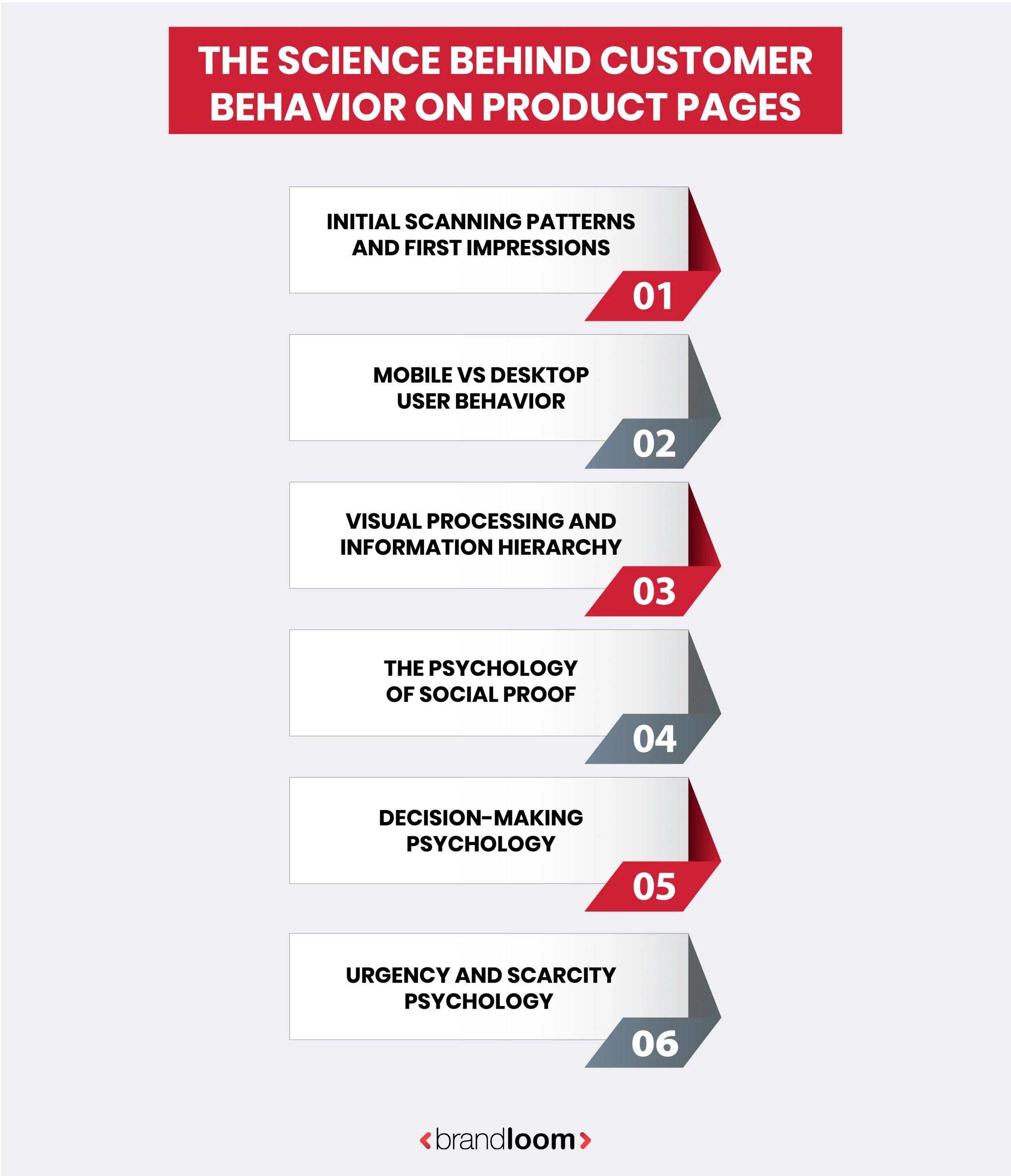
1. First Impressions and Scanning Patterns
Visitors scan for images, price, and reviews within seconds. Mobile users decide in 15 seconds, desktop users in 30. Every element must communicate value fast.
2. Mobile vs Desktop Behavior
Mobile shoppers scroll faster and lose patience quickly. Heat mapping shows they focus on the top third of the page, so titles, images, pricing, and CTAs must sit above the fold.
3. Visual Processing
Brains process images far faster than text, making strong visuals critical early on. Banner blindness reduces engagement, so weave offers naturally into the page instead of using promotional banners.
4. Social Proof
Reviews, ratings, and purchase activity satisfy the need for validation. Recent reviews and live purchase notifications carry more weight than older ones.
5. Decision-Making Psychology
Too many choices overwhelm buyers, too few frustrate them. Clean, curated layouts reduce cognitive load and guide purchase decisions.
6. Urgency and Scarcity
Genuine scarcity and time-limited offers trigger FOMO. Authenticity matters, since fake urgency damages trust.
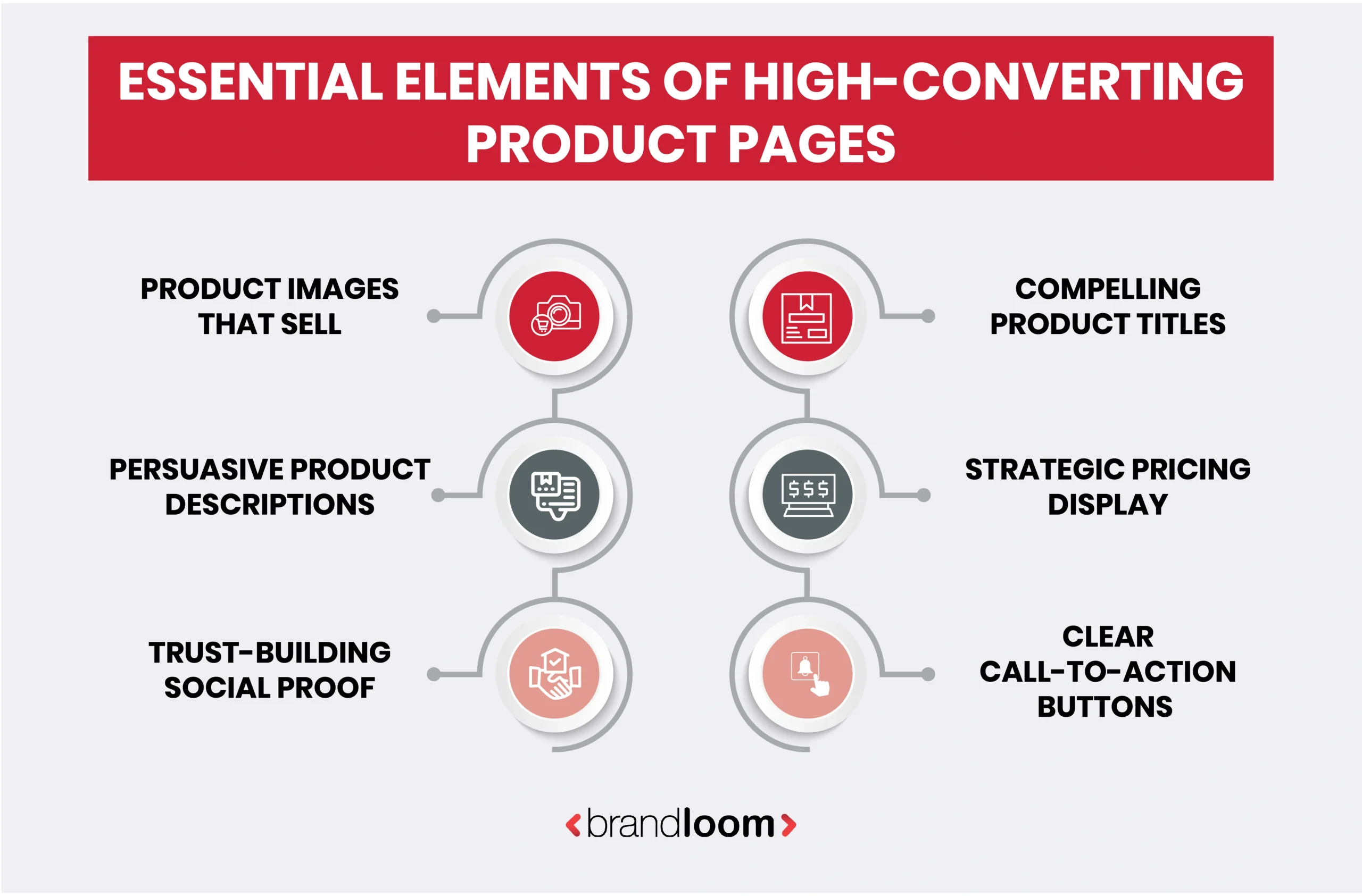
Essential Elements of High-Converting Product Pages
1. Product Images That Sell
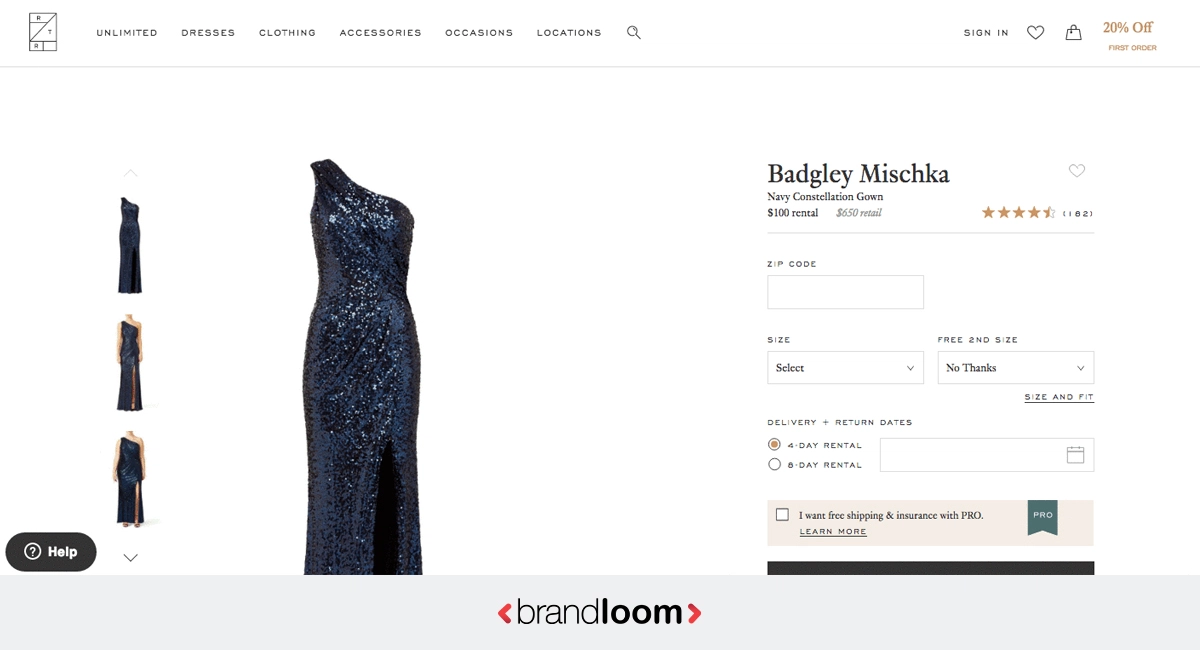
Here is a sample product image from Badgley Mischka. Take this as an example. As per this, we need to show products from multiple angles, including close-ups and lifestyle shots. Zoom and 360-degree views replicate the in-store experience. User-generated review images add authenticity that boosts conversions.
2. Compelling Product Titles
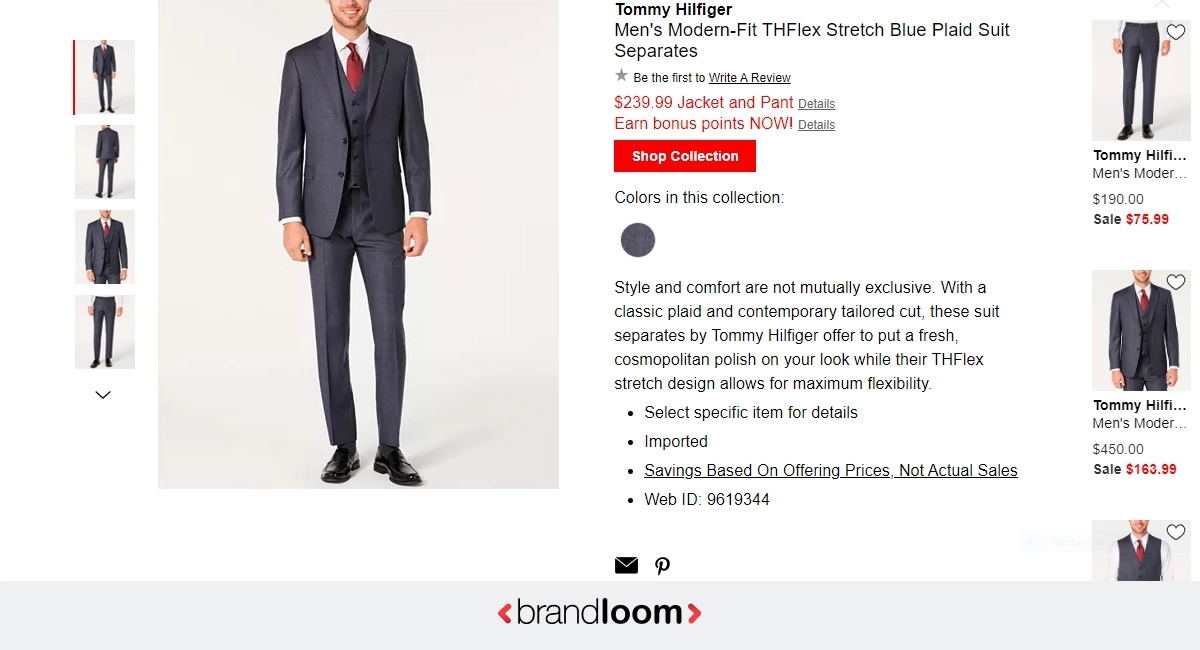
Let’s have a look at this Product page title. As per this, we must keep titles clear and under 60 characters. Use target keywords naturally and highlight core value. Add specs like size or color for relevance. BrandLoom runs A/B tests on titles to find what converts best.
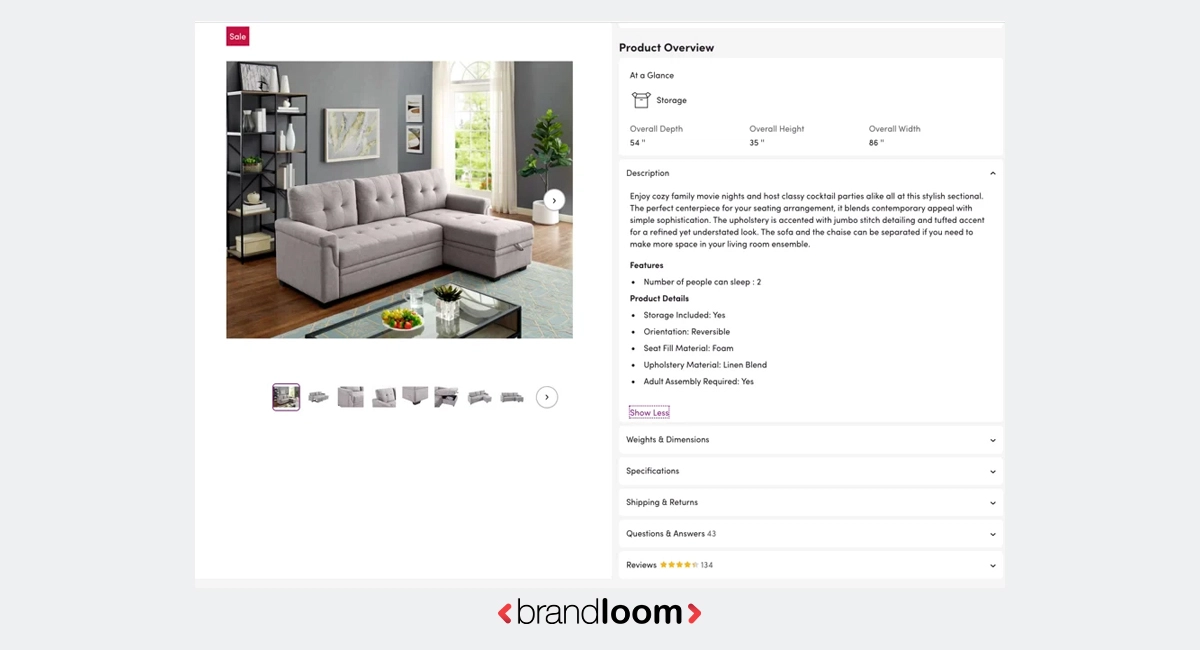
3. Persuasive Product Descriptions
As per this example, we must lead with benefits, not just features. Use bullet points for readability and weave in keywords naturally. Emotional storytelling helps buyers picture themselves using the product.
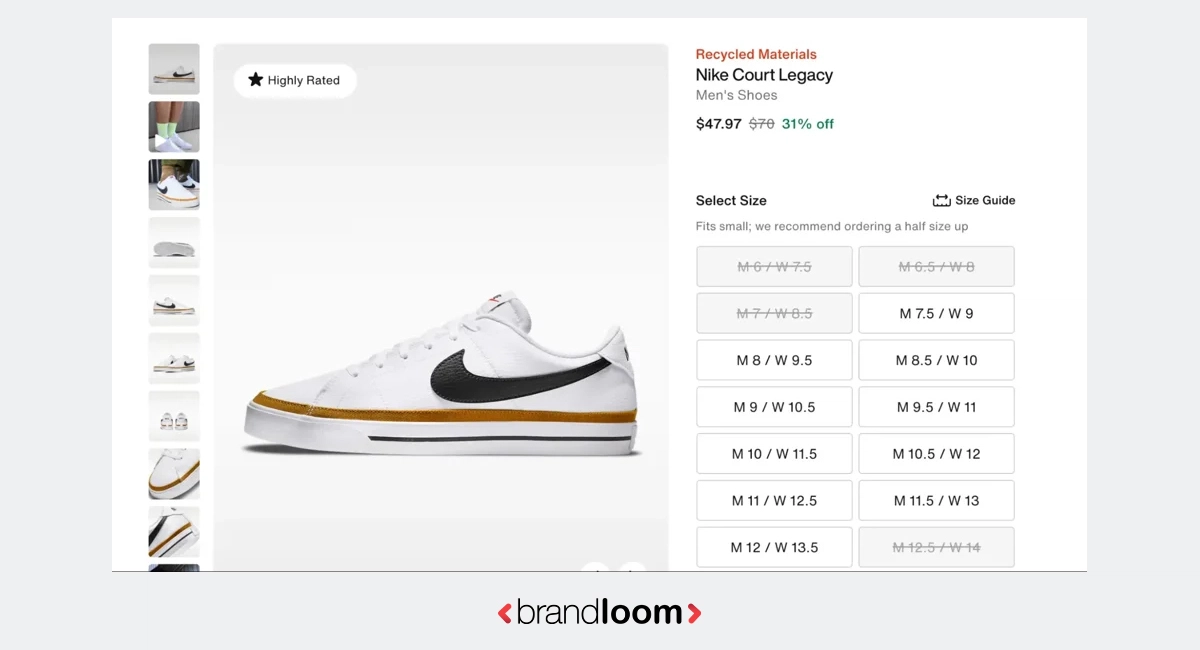
4. Strategic Pricing Display
This picture includes a clear pricing details. Show original prices next to discounts. Use psychological pricing like $9.99 instead of $10. Display payment options clearly and remove friction around cost.
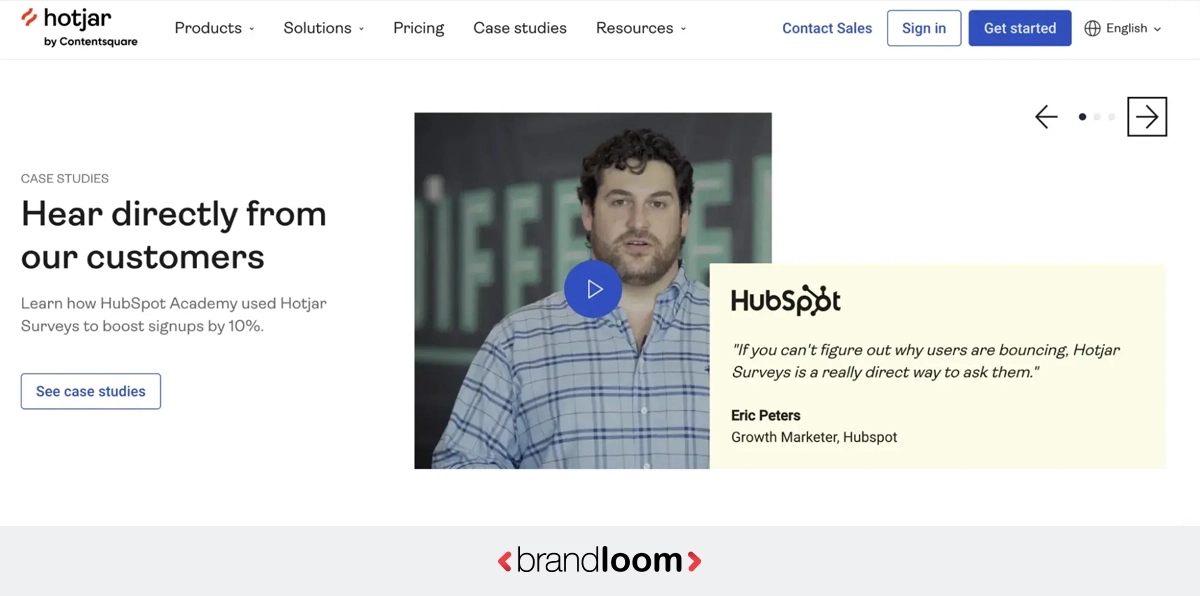
5. Trust-Building Social Proof
Take this picture as an example of how trust-building social proofs are important for product pages. Feature star ratings and recent reviews prominently. Include review photos and respond courteously to negative feedback. Testimonials, client logos, and purchase notifications strengthen credibility.
6. Clear Call-to-Action Buttons
Take this picture as and example and make CTAs prominent with contrasting colors and mobile-friendly sizing. Use action words like “Add to Cart.” Place the primary CTA above the fold, and A/B test colors and copy regularly.

How to Measure Product Page Performance
Product page optimization is a process; it cannot be carried out one time. For one to determine whether or not adjustments made are bearing results, one must be able to consistently measure the appropriate performance metrics. At BrandLoom, we assist our clients in creating custom dashboards and reports that track every meaningful interaction.
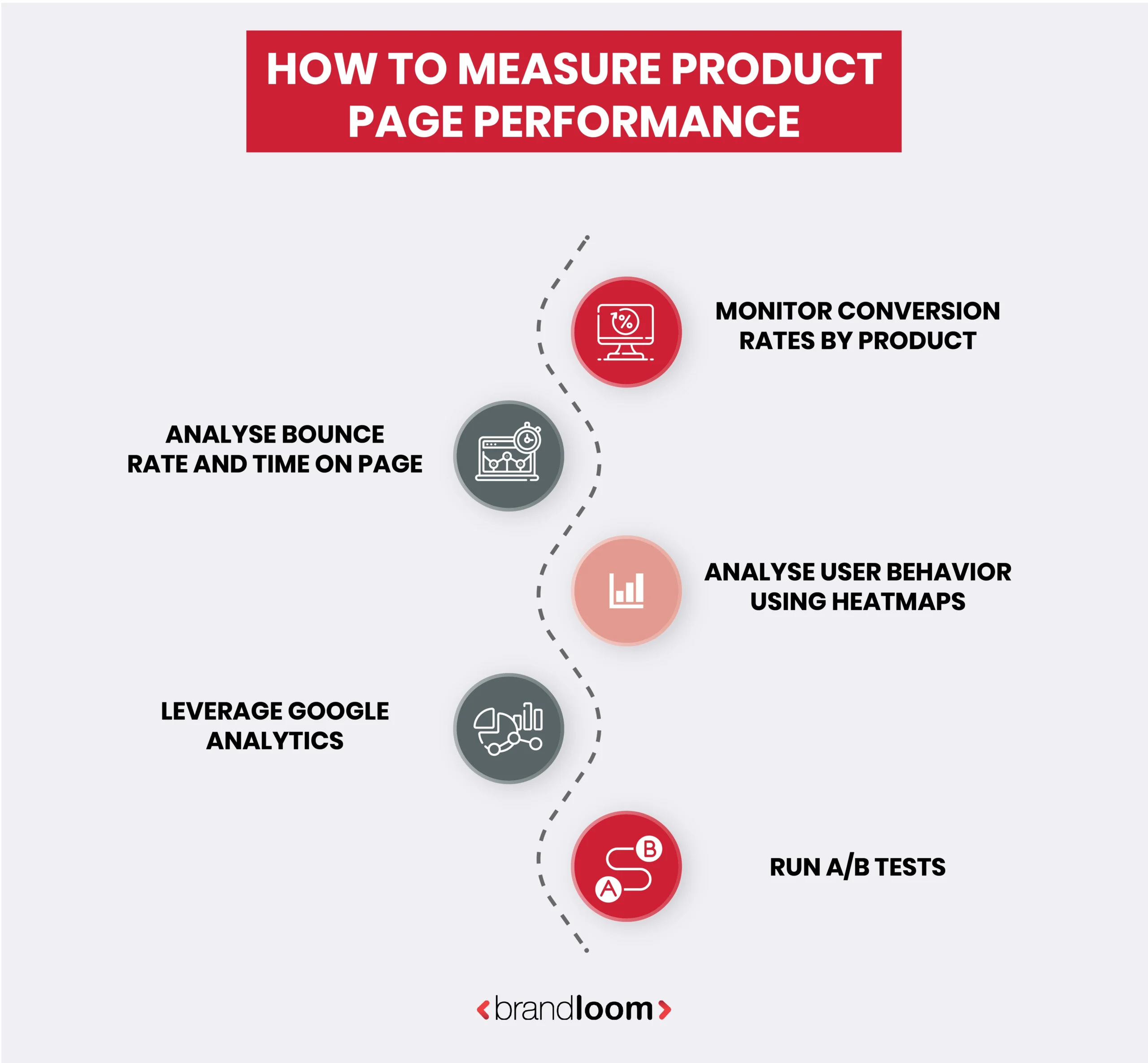
1. Monitor Conversion Rates by Product
Start by tracking conversion rates by product. This tells you how many visitors actually end up making a purchase. Identify top-performing pages and look at what they’re doing right. Likewise, identify low-conversion products and start considering issues of layout, copy, or pricing.
2. Analyze Bounce Rate and Time on Page
A high bounce rate indicates that users leave the page without taking action. If users exit quickly, your page might not be engaging or trustworthy enough. Meanwhile, time on page shows how long visitors stay and interact. Ideally, you want a low bounce rate and higher time on page. If users spend more time but still don’t convert, that could indicate confusion or a lack of compelling calls to action.
3.Analyze User Behavior Using Heatmaps
Heatmaps by Hotjar or Crazy Egg provide visualizations of clicks, scrolls, and hovers on your product page. These insights clarify whether the users interact with the most important sections.
You can immediately pinpoint potential problem areas and, more importantly, take corrective action when perhaps the CTAs are ignored or the product details go unnoticed.
4.Leverage Google Analytics
Google Analytics is one of the most powerful tools for e-commerce analysis. Establish goal tracking to directly measure conversions from product pages. User flows should be watched to observe how visitors bounce around between different pages. It’s also worth checking out key traffic sources to observe where your users who convert better are coming from, whether it’s organic search, social media, or paid ads. With the knowledge in your grasp, you can now optimize your marketing efforts.
5.Run A/B Tests
Test different variations of your product pages to see what performs best. A/B testing tools can help you compare headlines, images, pricing formats, and CTA buttons. Small changes, when guided by data, can lead to big improvements in conversion rates.
Technical Optimization for Product Pages
The technical optimization of your product pages is important for a better user experience and higher search engine performance. From the usability point of view, a technically sound page will load quickly, and moreover, it will rank better and convert more efficiently. To ensure that your product pages are technically optimized, consider the following:
1. Page Speed Optimization
The faster a page loads, the higher the conversion rate and the lower the bounce rate. In today’s world, every second matters. Visitors bounce off a page if it takes too long to load. Speed is also the most crucial factor when it comes to search engine rankings: Google ranks websites higher that are faster, while slow loading places a dent in your SEO and revenue.
To improve page speed:
- Compress your images: Use tools that reduce file sizes while maintaining image quality. WebP is an excellent choice for balancing quality and compression.
- Use content delivery networks (CDNs): Content gets distributed through a set of servers across the globe; the farther away a user is from a given server, the more latency is incurred in fetching content from that server. CDNs help reduce latency, so the content is served faster, regardless of user location.
- Minimize HTTP requests: Combine CSS and JavaScript files as much as such possibilities are present. Remove unused scripts or styles.
- Eliminate unnecessary plugins: Audit your plugins and extensions regularly. Disable or uninstall those that add bloat or aren’t critical to performance.
- Choose reliable and fast hosting providers: Invest in a hosting service that guarantees high uptime, fast server response time, and scalability to handle traffic surges.
2. Mobile Optimization
Here is an example of a mobile page of Glints, we can take these as an example. With mobile devices accounting for the majority of internet traffic, mobile optimization is no longer an option—it has to be done. A smooth mobile experience has a considerable effect on user satisfaction, time on site, and eventually conversions.

To ensure a well-mobile-optimized site:
- Be responsive: Make sure your design changes fluidly depending on device screen sizes – from a smartphone to a tablet.
- Design for touch: Huge buttons and links that can be easily tapped are always preferred. Do not place clickable elements too close to each other.
- Simplify mobile navigation: Mobile navigation needs to be clean and straightforward; it should work well whether you use one hand or two. Hamburger menus, sticky nav bars, and collapsible filters work best.
- Streamline mobile checkout: Eliminate anything that might cause friction during checkout. Just ask for the essentials, down to name, address, and payment information.
- Enable guest checkout: Not every mobile shopper wants to create an account. Allowing them to check out as guests increases conversion rates.
3. Search Engine Optimization (SEO)
A highly optimized product page ensures that organic traffic flows, which in turn bestows better visibility in search engines. When performed accordingly, on-site SEO aids in both discoverability and usability.
Some of the SEO techniques to consider are
- Use SEO-friendly URLs: Use clean, readable URLs including target keywords. (e.g., /black-leather-jacket-women). Avoid parameters and session IDs where possible.
- Write compelling meta descriptions: Make each product’s meta description truly unique and persuasive, containing keywords plus a strong call to action.
- Alt text for all images: Include an accurate description of what is in the image along with the keywords if possible. This approach aids accessibility and can influence image search rankings.
- Develop unique product descriptions: Avoid using manufacturer-provided text. Write original, engaging descriptions that naturally include your primary keywords.
- Use internal links: Link related products together and create a logical category structure. For example, a product page for a running shoe will link to relevant accessories such as socks or sportswear.
- Organize category hierarchies: Make sure the categories and subcategories are arranged logically to help users and search engines understand the relationship between different pages.
How Product Schema Improves Rankings and Conversions
Schema markup tells search engines and AI systems exactly what your product is, what it costs, and whether it is available — turning raw page content into structured, actionable data that drives both visibility and sales.
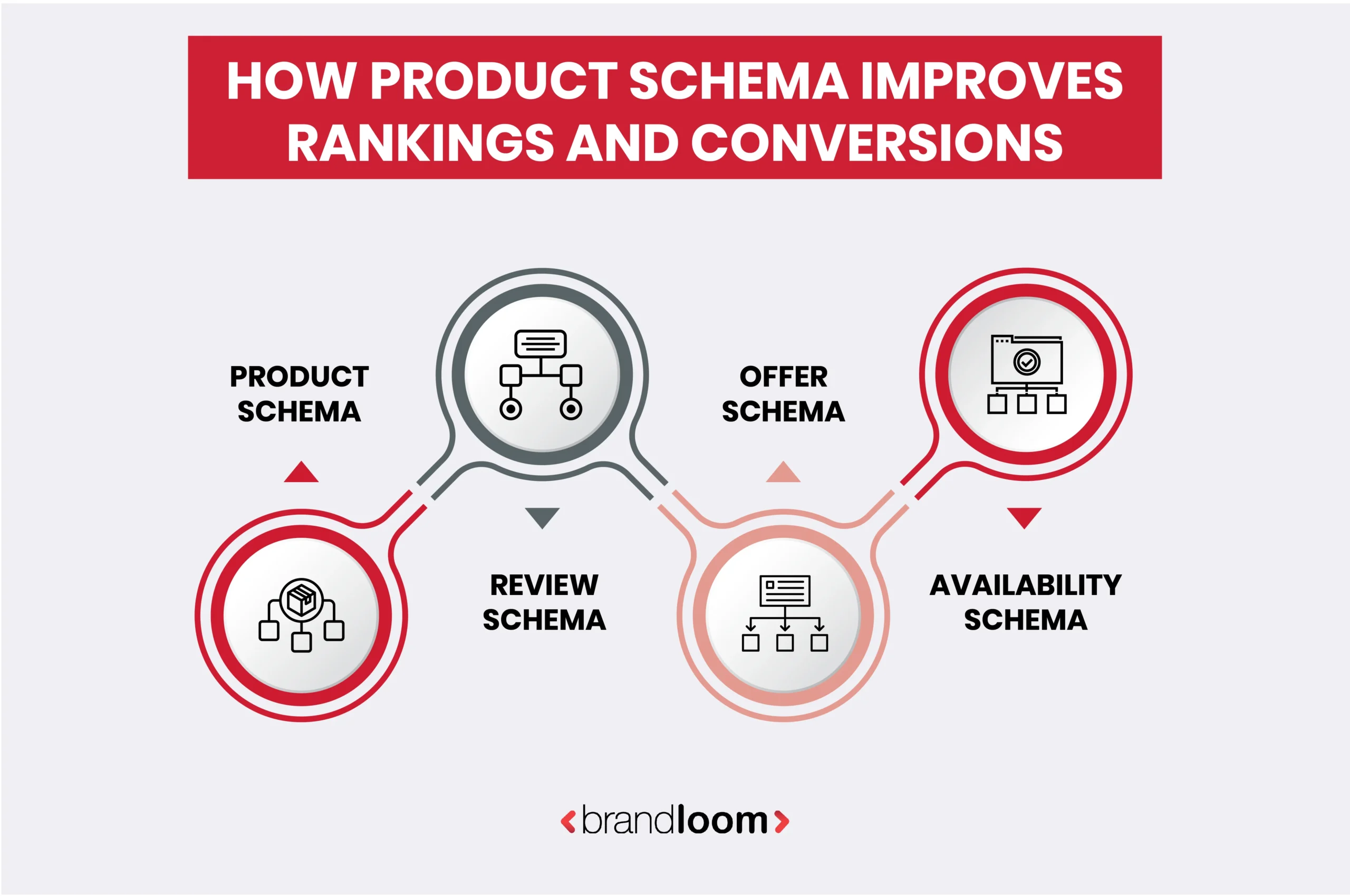
- Product Schema: Product schema communicates the core details of your listing – name, brand, description, and category – directly to search engines and AI recommendation engines. Without it, these systems have to guess, and they often get it wrong or skip your product entirely.
- Review Schema: Review schema surfaces your star ratings and review count directly in search results, giving shoppers social proof before they even click. Pages with visible ratings consistently outperform those without on both click-through rate and conversion.
- Offer Schema: Offer schema communicates your pricing, currency, and any active promotions to search engines in a structured format. This is what enables price information to appear in AI-generated shopping results and Google Shopping carousels.
- Availability Schema: Availability schema tells AI and search systems whether your product is in stock, out of stock, or available for pre-order in real time. Recommending an unavailable product damages AI platform trust, so keeping this schema accurate and synced is non-negotiable.
Advanced Strategies for Conversion Rate Optimization
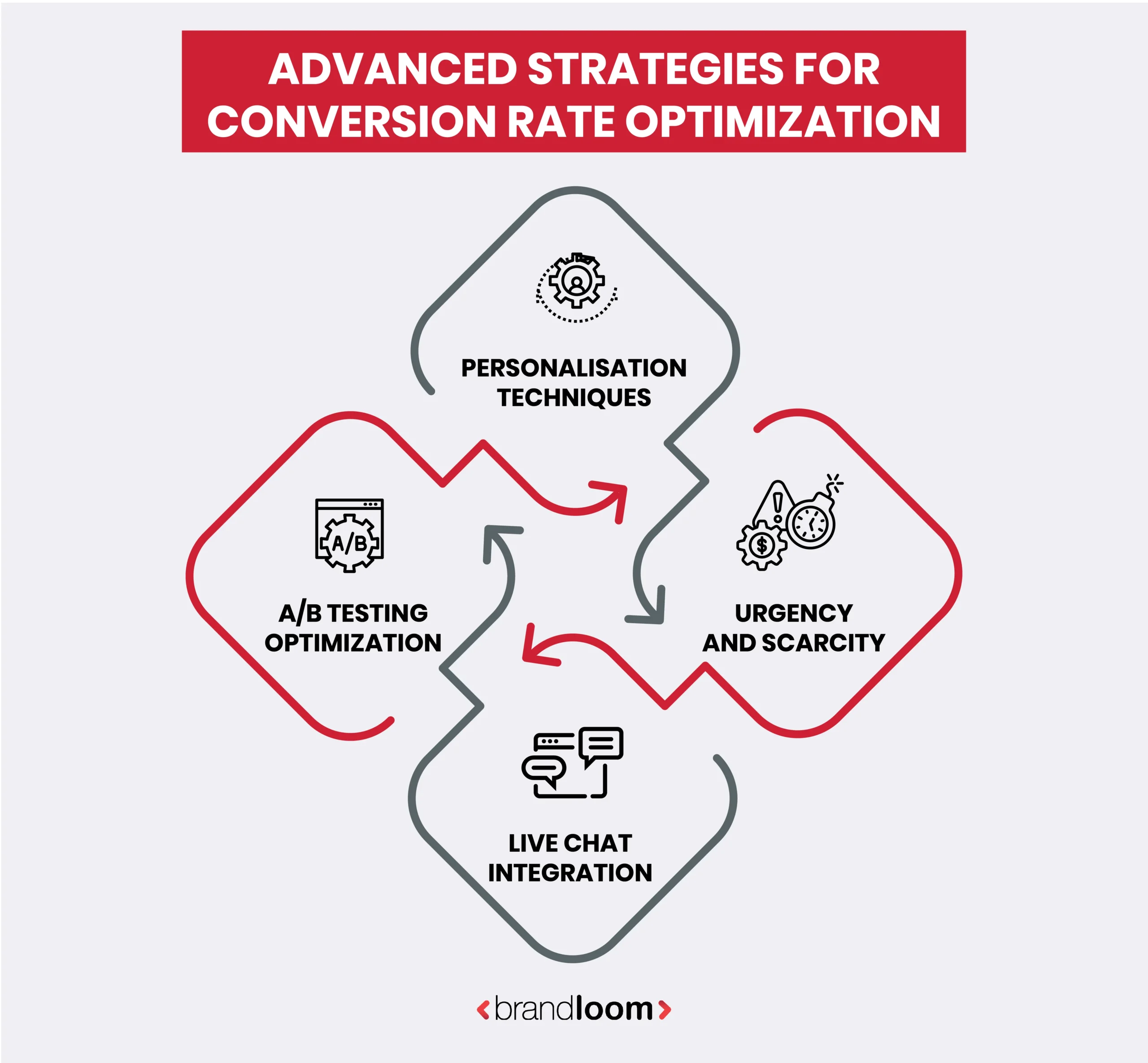
1. Personalization Techniques
An optimized experience is proven to increase conversion rates. Show recently viewed products. Recommend based on browsing history. Use geolocation for proper offers. Show inventory levels locally. Modify content according to users’ preferences.
2. Urgency and Scarcity
Limited-time offers create urgency. Show countdown timers for sales. Display low stock notifications. Social proof amplifies scarcity. Show how many people are viewing products. Display recent purchases by location.
3. Live Chat Integration
Live chat can diminish abandonment rates. Resolve queries in real time. Provide customer support at once. Train agents on product knowledge. Use chatbots to handle frequently asked questions. Offer chat during high traffic sessions.
4. A/B Testing Optimization
Systematically test different page elements. Compare headlines, images, and CTA buttons. Use statistical significance for decisions. Test only one element at a time. Allow tests to run long enough for data to be reliable. Record all results for later reference.
Optimizing Product Pages for AI Search
Here is a sample from Hubspot, how we can optimize product pages for AI search. Traditional SEO is no longer enough, AI-powered surfaces now influence buying decisions before a user ever lands on your page.
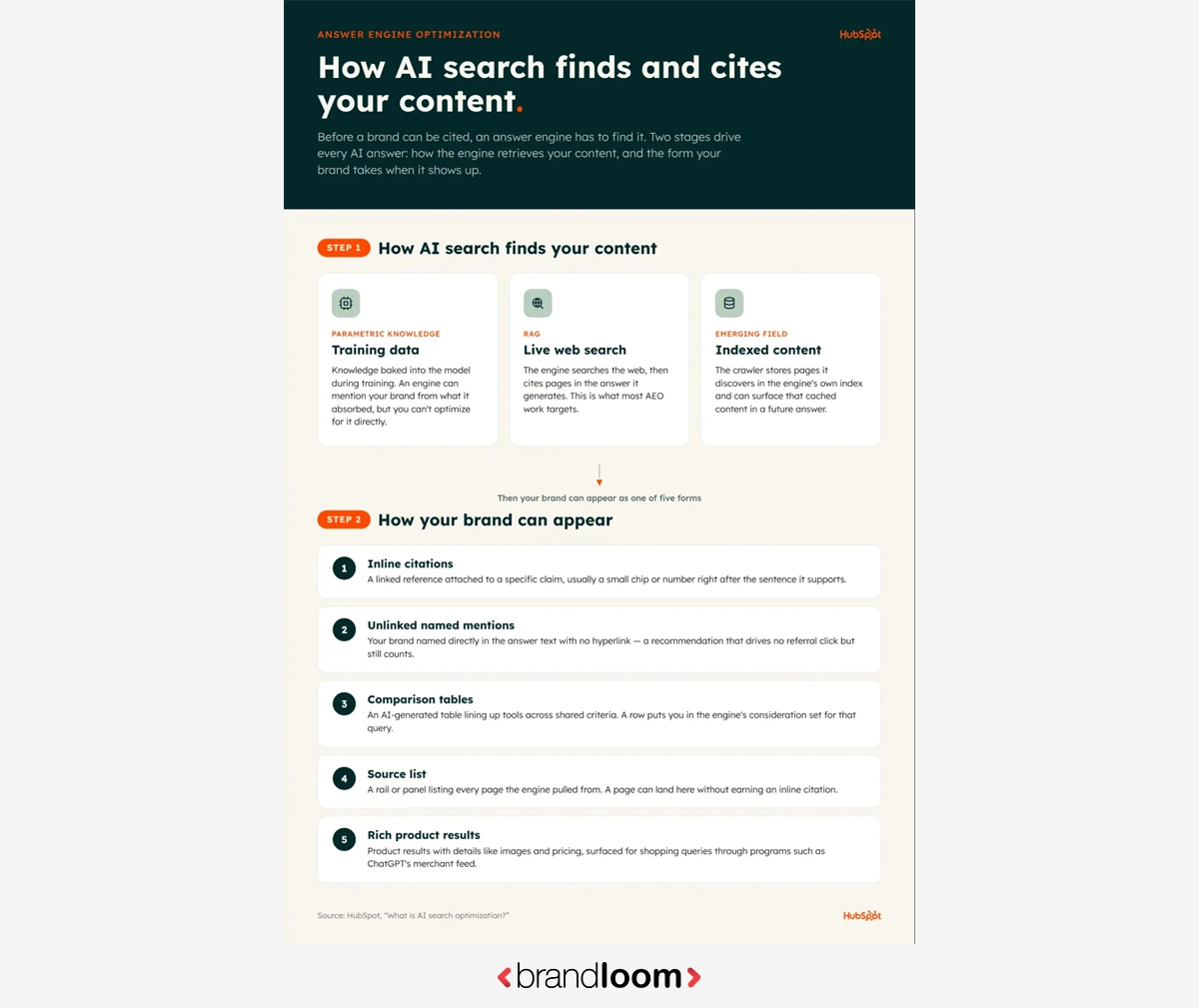
Search has fundamentally shifted. Shoppers increasingly get product recommendations directly from AI answers, bypassing traditional results pages altogether. A well-optimized product page still needs strong keywords and structured data, but it also needs to be written in a way that AI models can parse, trust, and cite, clear factual claims, authoritative product descriptions, and schema markup that makes your data unambiguous.
In 2026, product pages must also be optimized for:
- AI Overviews- Google’s AI summaries at the top of search; your page must earn a citation here.
- ChatGPT recommendations- users ask ChatGPT what to buy; factual, well-structured pages get surfaced.
- Perplexity citations- Perplexity pulls cited sources into answers; authoritative copy wins placement.
- Gemini shopping results- Gemini surfaces product carousels; clean schema and pricing data are essential.
Common Product Page Mistakes to Avoid
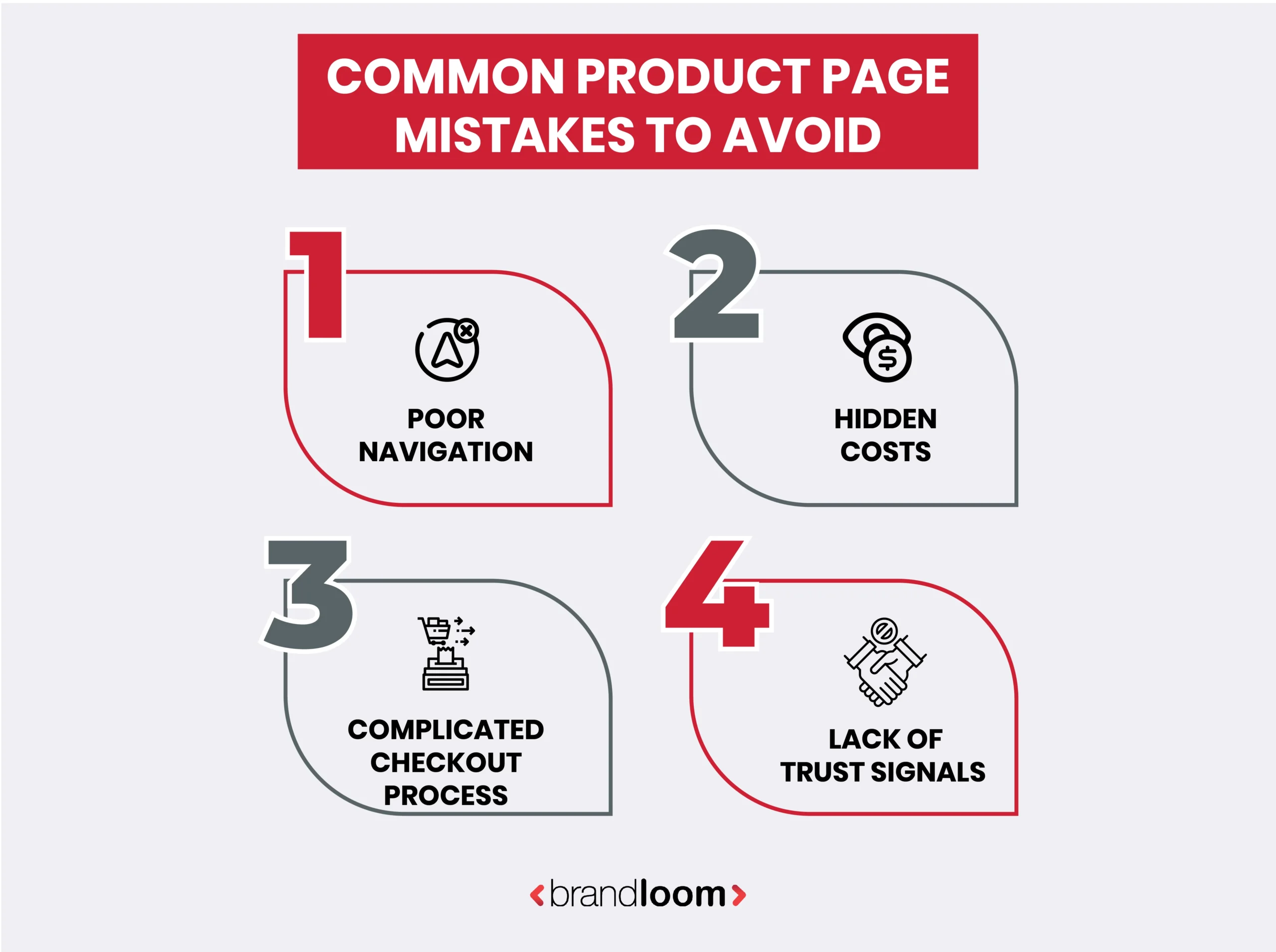
1. Poor Navigation
Confusing menus and broken links frustrate visitors fast. Use breadcrumb trails, logical category structures, and a reliable search bar. BrandLoom helps brands rebuild navigation flows that move users smoothly from discovery to checkout.
2. Hidden Costs
Surprise charges at checkout destroy trust instantly. Show shipping costs, taxes, and fees upfront on the product page. Highlight offers like free shipping to build confidence and encourage purchases.
3. Complicated Checkout Process
Long checkouts lose customers quickly. Skip forced account creation and unnecessary fields. Offer guest checkout and a progress indicator instead. BrandLoom has boosted client conversions simply by simplifying checkout flows.
4. Lack of Trust Signals
Shoppers hesitate without visible security cues. Add SSL badges, payment logos, and verified reviews near checkout. State your return policy clearly and keep contact details visible. Trust-building is core to BrandLoom’s product page strategy.
Product page optimization is ongoing work, not a one-time fix. Customer behavior shifts, technology advances, and competitors improve constantly. Staying ahead means continuing to test and refine your pages.
Turn Clicks into Conversions
Product page optimization never stops. Customer behavior shifts, technology advances, and competitors keep improving, so your pages need constant attention too.
Start with the fundamentals. Prioritize page speed and mobile performance, since most shoppers browse from their phones. Then build trust fast through reviews, security badges, and visible return policies. These signals cut cart abandonment and boost buyer confidence.
Test everything. Don’t guess, use data. BrandLoom recommends starting with high-impact, low-effort fixes like CTA placement, sharper titles, and clearer descriptions.
Your product pages deserve real attention if you want to scale. Small changes, from faster load times to stronger CTAs, drive measurable results. Start optimizing today. Every detail counts in winning the customer.
Frequently Asked Questions
Clean design, fast load times, and mobile responsiveness are the foundation. Optimise page speed and layout first, especially for mobile. Add high-quality images and videos, clear titles, compelling descriptions, and trust signals like reviews and return policies. Place CTAs prominently at the top. Use heatmaps and Google Analytics to understand user behavior, then refine based on what the data tells you. Keep keywords natural. Product page optimization is never finished — the more informative and trustworthy your page feels, the higher your conversions will be. BrandLoom helps brands build and continuously improve product pages that turn traffic into revenue.
High conversion rates come from meeting customer expectations quickly and clearly. Ensure your product page loads fast and works smoothly on all devices. Use strong product images, videos, real customer reviews, and honest, benefit-driven descriptions. Display prices clearly and avoid hidden charges. Keep your layout clean and easy to navigate. Highlight CTA buttons so customers know exactly what to do next. Build trust through visible return policies and security badges. Test different elements like titles, images, and CTA placements to find what works best. Regularly monitor performance and make small improvements. High conversions come from a user-first mindset and ongoing, data-driven adjustments.
Clean design, fast load times, and mobile responsiveness are the foundation. Start with page speed and layout, then layer in high-quality images and videos, clear titles, compelling descriptions, and trust signals like reviews and return policies. Place CTAs above the fold. Use heatmaps and Google Analytics to understand user behavior and refine continuously. Keywords used naturally improve search visibility without hurting readability. Product page optimization is never finished — the more user-friendly, informative, and trustworthy your page feels, the higher your conversions will be. BrandLoom helps brands build and continuously improve product pages that convert browsers into buyers.
Several key elements boost product page conversions. First, strong visuals matter; high-quality images and videos, zoom features, and lifestyle shots create interest. Second, product titles and descriptions should be clear, keyword-rich, and focused on benefits, not just features. Third, trust signals like reviews, ratings, and security badges help customers feel safe buying from you. Fourth, place CTA buttons in visible, logical spots like above the fold. Fifth, show pricing clearly, with any discounts or offers marked out. Sixth, simplify the layout and avoid clutter. And finally, ensure the page loads fast, especially on mobile devices. Combining these elements creates a seamless shopping experience that encourages conversions.
Focus on benefits when writing product descriptions that sell, not on features. Explain how the product alleviates life’s stresses, solves a problem, or adds value to an ordinary life. Use simple, persuasive language and short sentences. Make it easy to scan with bullet points and highlight the most important benefits first. Use sensory words like “soft,” “smooth,” and “crisp” to help customers imagine the experience. Address common questions about size, materials, or usage. Keep your tone friendly and helpful. Include keywords naturally to help with search visibility. Good descriptions connect emotionally with customers while giving them enough factual information to feel confident making a purchase.
Product imagery plays a crucial role in conversions. Customers form first impressions within seconds, and visuals often decide if they stay or bounce. Use multiple high-quality images and videos, including zoomable close-ups, different angles, and real-world lifestyle shots. These visuals help customers imagine owning and using the product. For complex items, consider 360-degree views. Visuals replace the in-store experience of touching and inspecting a product. Professional photos increase trust and show that your brand is reliable. User-generated photos in reviews also help build authenticity. Strong product imagery builds interest, removes doubts, and supports faster decision-making, leading to higher conversions on your e-commerce site.
Most of the customers read reviews before buying. Display star ratings near the product title, show recent reviews first, and allow negative feedback — transparency builds trust. Photo reviews convert best. BrandLoom helps brands build review systems that increase confidence and conversion rates significantly.
Mobile-optimized product pages have a big impact on conversions. If your page doesn’t load fast or display well on mobile, users will leave. A mobile-friendly design means fast load times, easy scrolling, large tap targets, and simple navigation. CTA buttons must be easy to find and use on small screens. Text, images, and videos should be responsive and readable without zooming. Mobile users often make decisions quickly, usually in 15 seconds, so your page must deliver information clearly and fast. Optimizing for mobile ensures a smooth user experience that directly improves sales and conversions.
Product videos help customers to better understand your offering so they can reach a decision faster. Include brief, high-quality videos of the product being demonstrated. Let the videos show how it works, its key features, and its benefits. A lifestyle video, the very context in which the product is used, helps buyers to picture it in their own lives. For fashion, include try-on videos. For gadgets, show how they function. Keep videos under 2 minutes for the best engagement. Add captions for silent viewers and make sure videos load quickly on mobile. At BrandLoom, we’ve found that adding clear and authentic product videos significantly boosts engagement and conversions.
Yes, SEO is crucial for helping your product pages rank higher and convert better. Start by using relevant keywords in product titles, meta descriptions, and product descriptions. Include long-tail keywords that match how real customers search. Add structured data like schema markup to help search engines display rich results like star ratings and prices. Optimize your image alt tags and URLs too. Fast load speed, mobile-friendliness, and internal linking all support SEO. When your page ranks higher, it gains more visibility. BrandLoom uses these SEO strategies to help businesses drive qualified traffic that converts into paying customers.