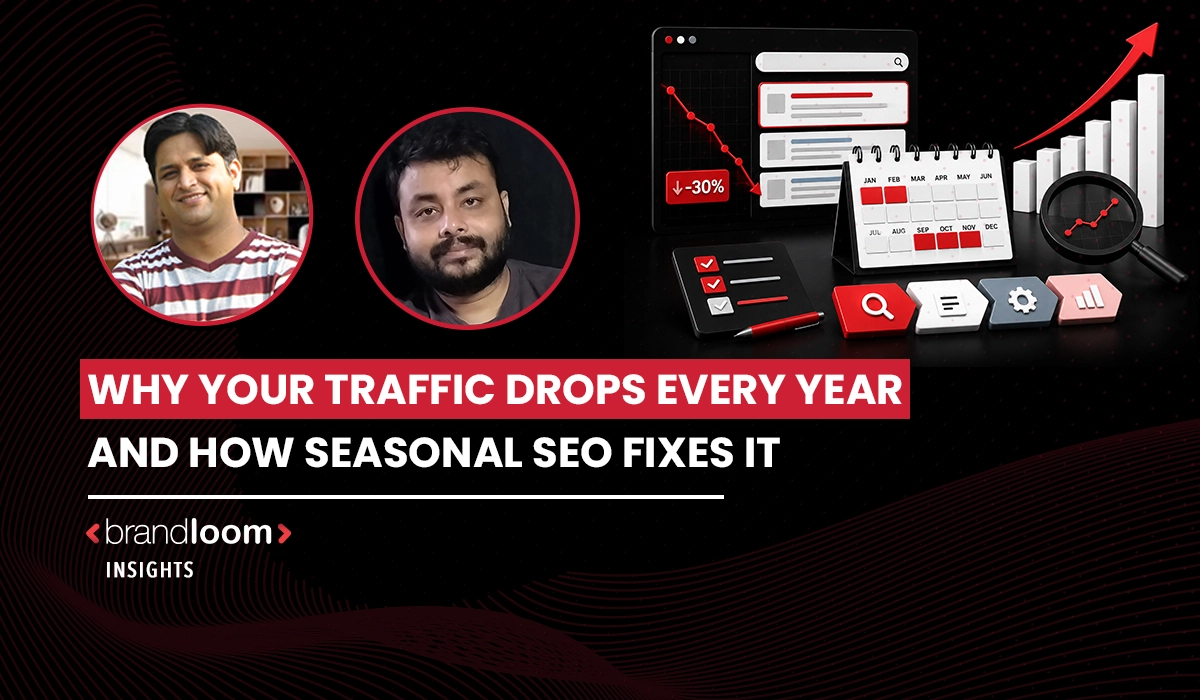
Imagine this- You open your analytics in January. Traffic is down 30% from October. You wonder if Google penalized your site, if a competitor stole your rankings, or if your SEO content optimization has stopped working. Before you brief your team for an emergency audit, here is the truth: for most businesses, this is not a crisis. It is a calendar event.
Seasonal SEO is the practice of planning, optimizing, and publishing content ahead of predictable search demand cycles so your brand ranks when it matters most. Understanding SEO seasonality is how you turn recurring traffic drops into a predictable growth engine.
We have worked with brands across industries that made this mistake and then fixed it with a structured seasonal SEO strategy.
What Is Seasonal SEO?
Seasonal SEO means optimizing your content before demand spikes, not after.
Search engines need two to four months to index and rank new pages. So if you publish a Diwali gift guide in October, you’ve already missed it. The brands showing up at the top were published in August.
The core idea is simple: forecast when your audience starts searching, create content well ahead of that window, and let the algorithm catch up before the rush hits.
This applies far beyond retail. B2B companies have budget cycles. Healthcare brands see flu-season surges. Real estate tracks wedding and relocation patterns. Any business with predictable peaks can benefit; the only question is whether you plan for them or scramble through them.
Not Every Traffic Drop Is a Google Penalty
Month-over-month comparisons are misleading for seasonal businesses. A traffic drop from October to November may reflect seasonal behavior, not a ranking problem. Year-over-year SEO reporting is the correct lens — if your November 2024 traffic matches November 2023, the pattern is seasonal. If it dropped significantly against the same month last year, then you have a real problem worth investigating.
Air conditioning companies peak in March and April. Tax consultants spike between March and July. Travel businesses surge around holiday planning periods. None of these is an SEO failure — all are predictable patterns that smart brands plan around.
Two Types of SEO Seasonality
Time-Based Seasonality SEO
Time-based seasonality follows recurring demand patterns tied to longer periods rather than specific dates — summer travel, monsoon care, wedding season, back-to-school. Brands can build evergreen seasonal frameworks and refresh them annually, benefiting from longer lead windows and gradual content build-up.
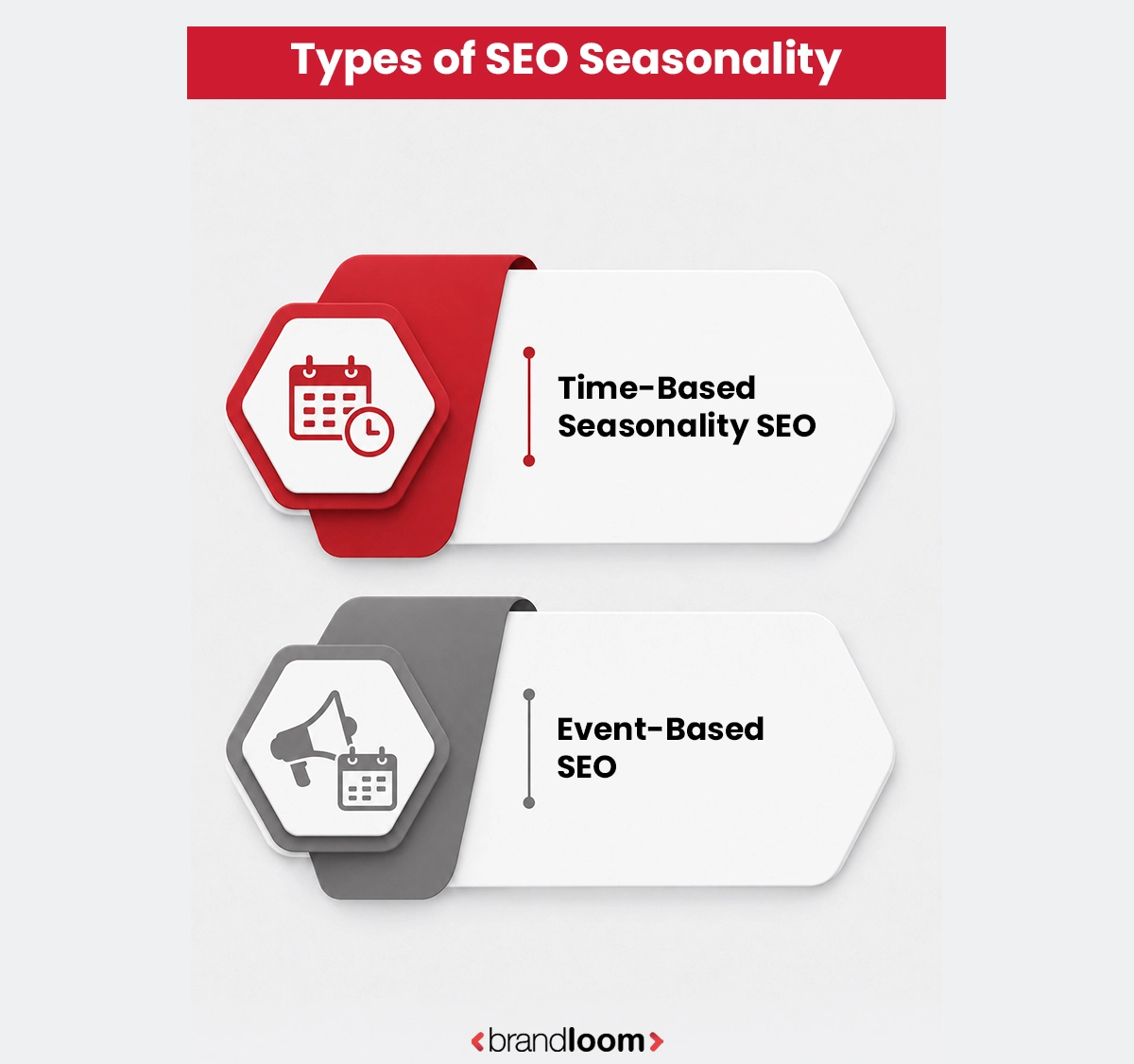
Event-Based SEO
Event-based SEO targets specific annual occasions- Diwali, Black Friday, IPL, Christmas, Eid; each generating sharp, competitive search spikes. Brands that start optimizing three to six months ahead gain a clear edge, while SERP shifts toward shopping carousels, local packs, and rich snippets, making format optimization just as critical as rankings.
Seasonal SEO vs Evergreen SEO
Seasonal SEO targets time-sensitive demand tied to festivals, events, and buying cycles. Traffic spikes during peak windows and drops outside them. Evergreen SEO targets topics with consistent year-round demand, building steadily over time.
The two strategies work best together. High-authority evergreen pages pass ranking signals to seasonal landing pages, helping them climb faster when demand rises.
| Seasonal SEO | Evergreen SEO | |
| Timing | Time-sensitive | Year-round |
| Traffic pattern | Spikes at peak | Consistent |
| Content driver | Event-driven | Topic-driven |
How to Identify Seasonal SEO Trends
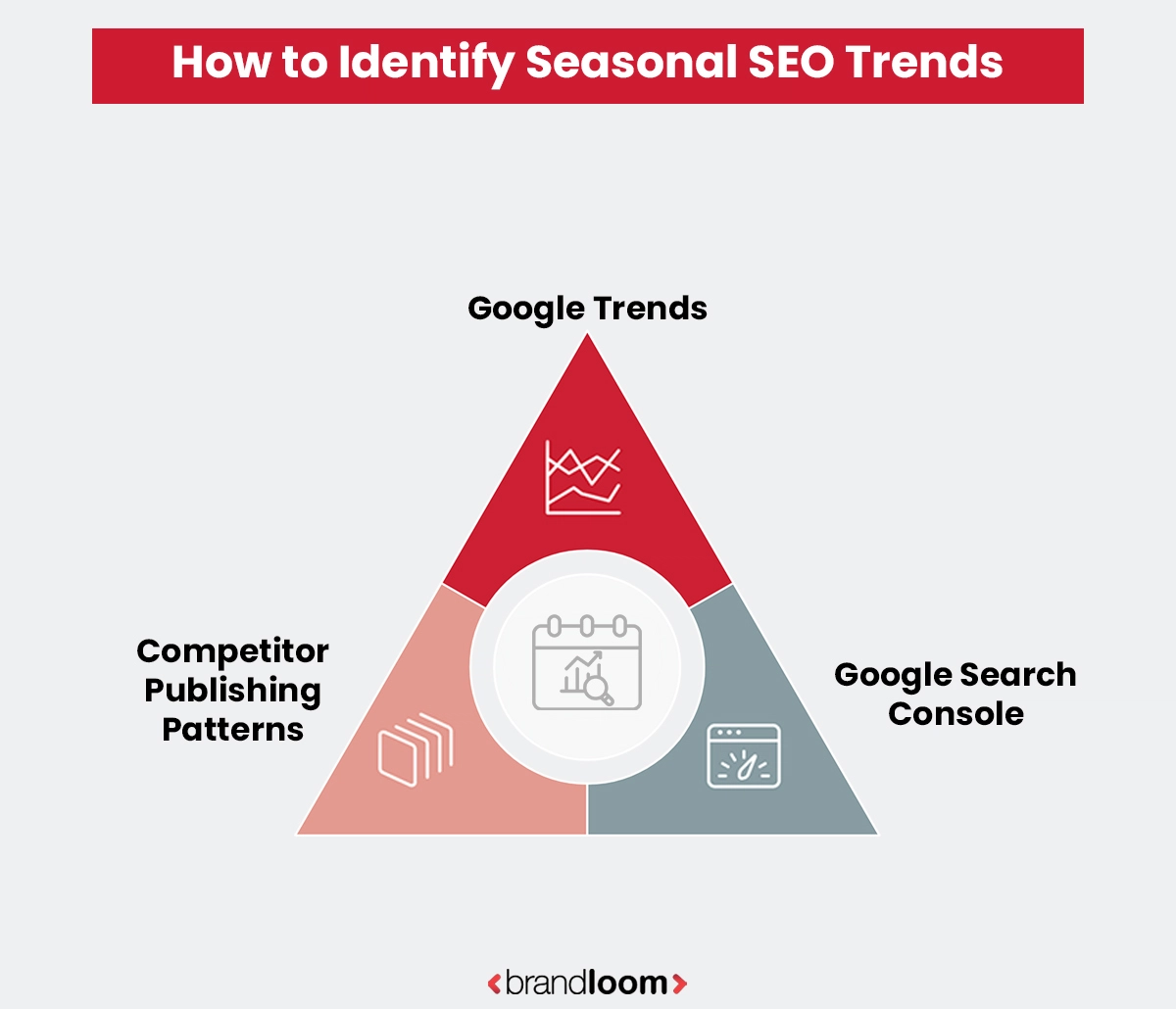
Three tools will show you exactly when demand rises and whether you are ready for it.
- Google Trends: Set the view to five years. Consistent annual spikes confirm seasonal demand. Compare keywords, filter by region, and spot trends before they peak.
- Google Search Console: Filter by top seasonal keywords over 16 months. Recurring impression drops followed by recoveries at the same time each year confirm seasonal behaviour.
- Competitor Publishing Patterns: Check when competitors publish seasonal content. If they go live in August for an October peak, the search window opens earlier than you assume. Match their timing or beat it.
Why Businesses Lose Traffic During Peak Seasons
Most seasonal SEO failures come down to timing and consistency, not content quality.
1. Publishing Too Late
A page published in October for a Diwali keyword peaking in late October will not rank in time. Brands that publish in August earn rankings through accumulated signals.
2. Ignoring Search Intent Seasonal Shifts
A user searching “running shoes” in January is making a resolution purchase. The same user in May is preparing for a marathon. If your content does not reflect that shift, pages will underperform even when they rank.
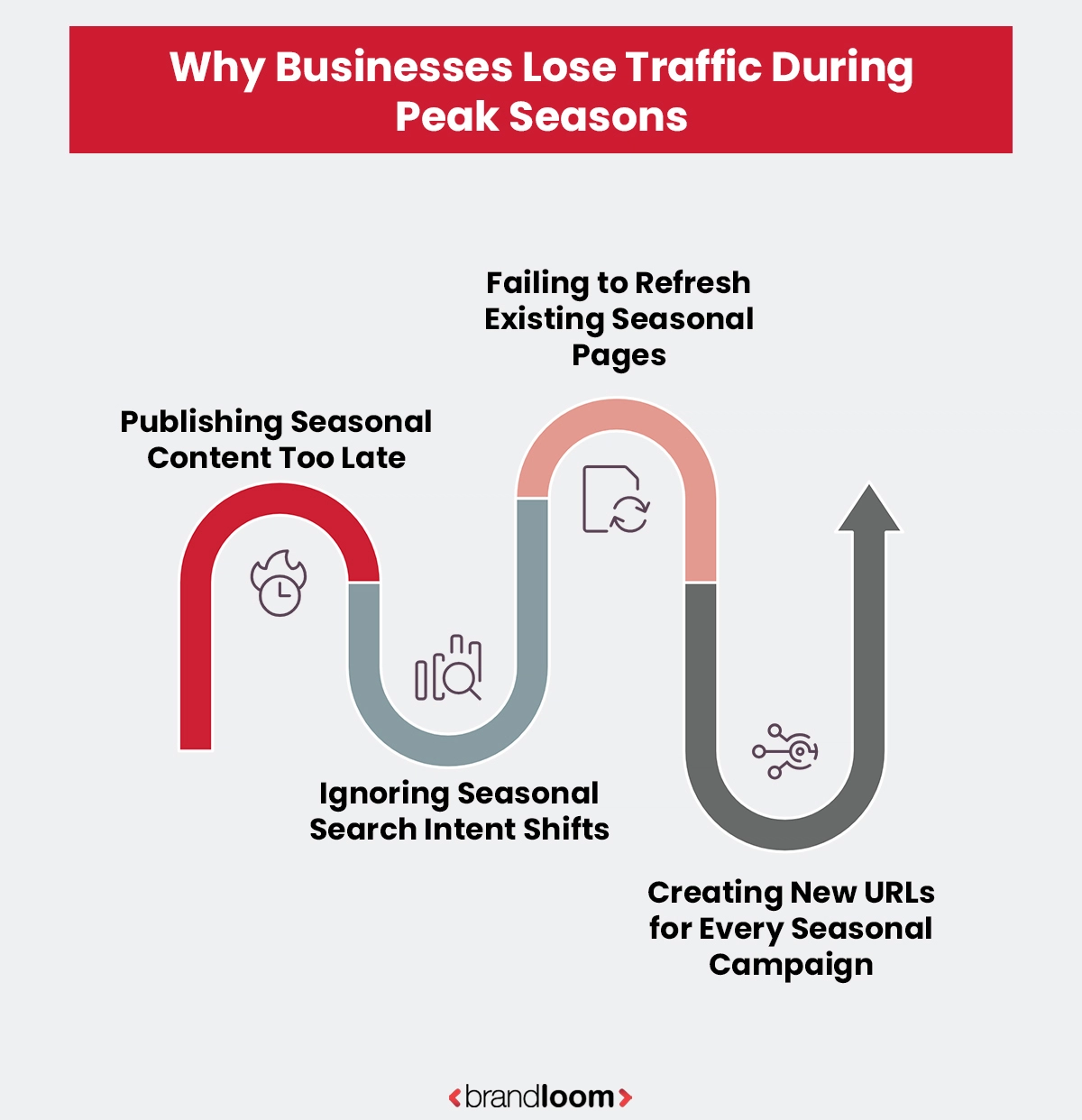
3. Failing to Refresh Existing Seasonal Pages
A Christmas gift guide written in 2023 and never updated has stale content and no new signals for Google to evaluate. Refresh seasonal pages annually without changing the URL.
4. Creating New URLs Every Season
Pages like /diwali-2025 and /diwali-2026 each start from zero authority. A stable URL like /diwali-sale accumulates backlinks and ranking authority across multiple cycles that a new URL can never replicate.
How Seasonal SEO Fixes Recurring Traffic Drops
The solution isn’t more content; it’s better timing, smarter planning, and building on what you already have.
1 Build a Seasonal SEO Content Calendar
A seasonal SEO content calendar maps high-demand periods across 12 months, assigning content types, publish dates, and keyword targets to each opportunity. Without this structure, last-minute rushes will keep you publishing after demand has already peaked.
2 When to Start Seasonal SEO Content
Lead time is the foundation of seasonal SEO. How early should you start seasonal SEO? For major events like Black Friday or Diwali, three to six months is standard. For smaller regional events, two to three months is typically enough. Factor in your category’s competitiveness, your domain authority, and how long your content usually takes to rank. New websites need longer lead times. Established sites have more flexibility, but last-minute preparation is never advisable.
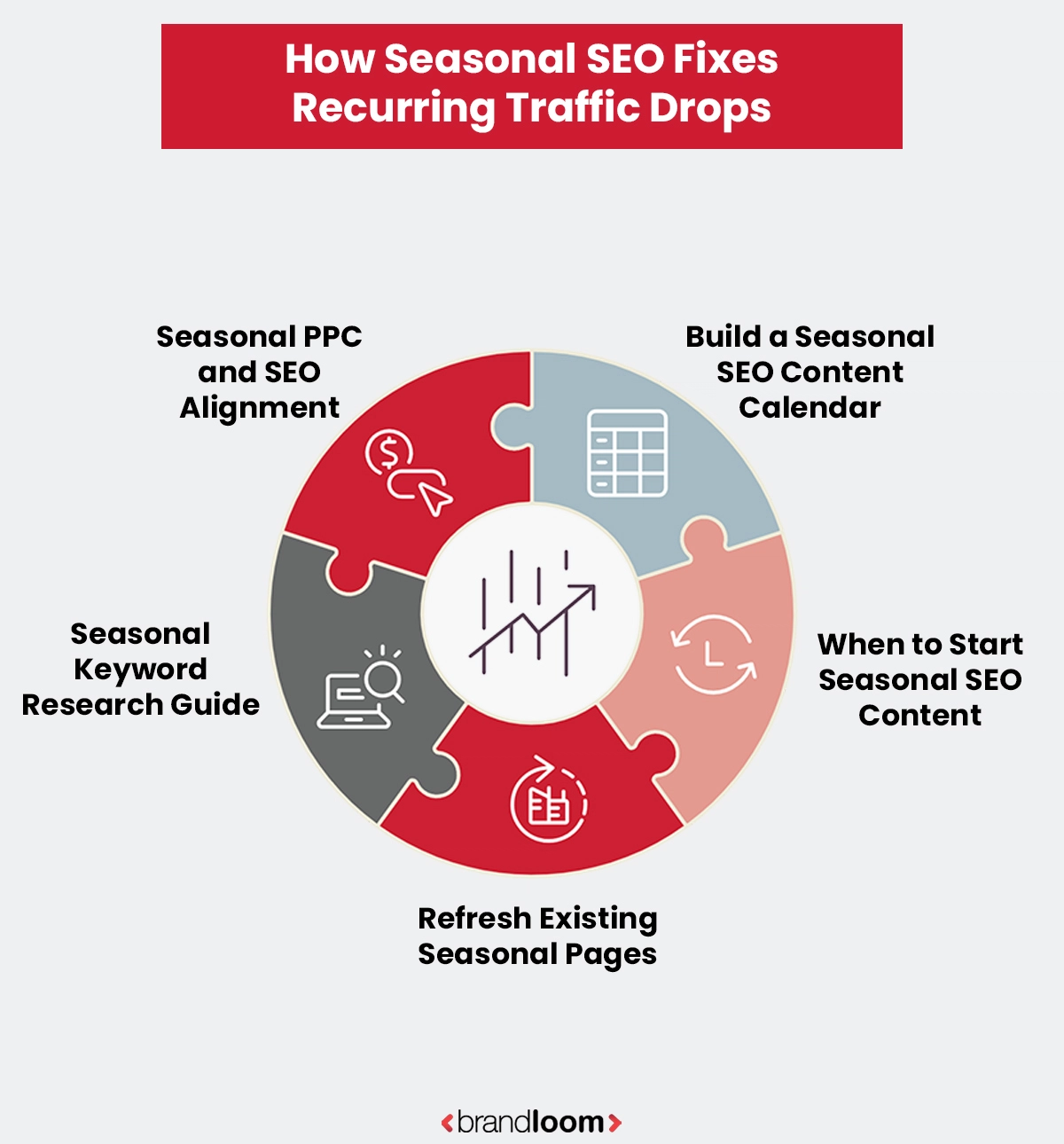
3 Refresh Existing Seasonal Pages
Rather than building new pages for recurring events, invest in updating your existing seasonal pages each cycle. A content refresh strategy for seasonal content includes: updating product listings, revising statistics and references, adding new FAQs, improving internal linking, and refreshing meta titles and descriptions. These updates signal to search engines that your content is current and improve user experience, which supports rankings indirectly.
4 Seasonal Keyword Research Guide
Seasonal keyword research should start before content planning begins. Identify which keywords spike during your target periods, map peak versus off-peak volume, and prioritize long-tail variations where competition is lower. Clustering content around multiple seasonal keywords gives you more ranking opportunities than targeting a single term.
5 Seasonal PPC and SEO Alignment
Running paid and organic campaigns together during peak seasons gives your brand more visibility on the SERP. When ads and organic content target the same seasonal keywords, you occupy more search real estate and capture demand even when rankings haven’t fully matured.
How to Use Google Trends for Seasonal SEO Keyword Research
Google Trends is one of the most reliable free tools for understanding how search demand shifts across seasons, regions, and time.
1. Comparing Keywords Year-Over-Year
Reveals whether a keyword’s seasonal pattern is consistent or a one-time spike — separating reliable opportunities from trends not worth building a strategy around.
2. Identifying Peak Months
Shows exactly which months drive the highest search volume so you can time content publishing and campaign launches for maximum visibility.
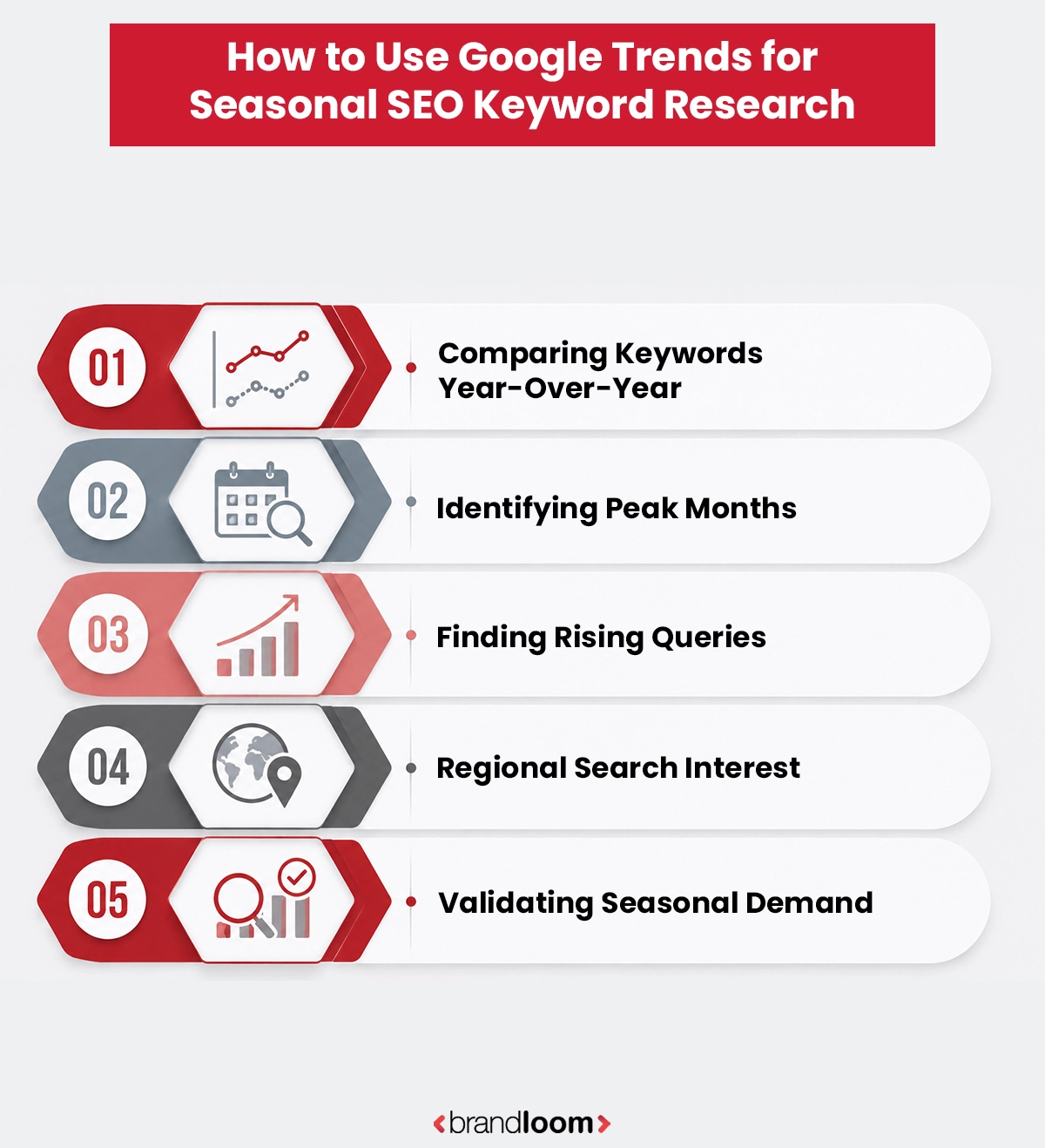
3. Finding Rising Queries
The “Rising” filter surfaces queries gaining momentum before they reach mainstream volume, giving your brand a first-mover advantage.
4. Regional Interest
Breaks down search interest by geography so you can prioritise local landing pages and geo-targeted campaigns where seasonal intent is strongest.
5. Validating Seasonal Demand
Confirms whether real demand exists for a topic before you invest in content production. It separates assumption from actual user behavior.
6. Using AI for Seasonal SEO Research
AI accelerates seasonal SEO work by synthesizing Trends data, building internal linking plans, and generating performance reports in a fraction of the time.
Seasonal SEO Strategy for Indian Businesses
India’s search calendar is dense with high-stakes seasonal windows. Missing your lead time on even one means ceding ground to competitors for an entire year.
1. Diwali SEO Strategy
Diwali is the most commercially significant seasonal shopping event in India. E-commerce brands, jewelry companies, gifting platforms, home decor retailers, and consumer electronics brands all compete for surging search volume across thousands of keywords. A strong Diwali SEO strategy begins in August. Seasonal SEO tips for Diwali include targeting gift guides, collection landing pages, offer roundups, and comparison content. Festival SEO India also demands localized keyword research since search behavior varies significantly by region and language. Publishing Diwali content in September or October is almost always too late for competitive categories.
2. IPL Season
IPL drives one of the largest annual search spikes across sports, fantasy gaming, streaming, food delivery, and apparel. Content planning should begin three to four months before the season, with landing pages and keyword-rich blogs built and indexed well before the first match.
3. Christmas and New Year
December drives strong search demand across gifting, travel, fashion, and food categories. Brands should begin optimizing Christmas and New Year content by October, targeting gift guides, year-end sale pages, and travel roundups before the holiday rush compresses competition and ad costs simultaneously.
Seasonal SEO Calendar for Indian Businesses
Here is a seasonal SEO calendar for your business-
| Month | Key Event | SEO Focus |
| January | Republic Day, Winter Sales | Clearance offers, patriotic campaigns |
| February | Valentine’s Day, Budget Season | Gifting guides, financial planning content |
| March | Holi, Financial Year End | Festive offers, tax-saving investment content |
| April | IPL Season, Gudi Padwa | Sports, fantasy gaming, regional festive content |
| May | Summer Peak, Mother’s Day | Summer essentials, gifting, travel content |
| June | End of Season Sale, ITR Season | Clearance content, tax filing guides |
| July | Monsoon Season, School Reopening | Monsoon care, back-to-school content |
| August | Independence Day, Raksha Bandhan | Patriotic campaigns, gifting guides |
| September | Navratri, Onam, Pre-Diwali | Festive collections, regional content |
| October | Diwali, Karwa Chauth, Dhanteras | Gift guides, offers, jewelry, ecommerce |
| November | Black Friday, Children’s Day | Deals content, kids products |
| December | Christmas, Year-End Sales | Gift guides, travel, clearance campaigns |
SEO + PPC Coordination Framework
Most brands run SEO and PPC as separate workstreams. During seasonal peaks, that disconnect costs visibility and budget efficiency.
When both channels target the same seasonal keywords at the same time, your brand occupies more search real estate. Organic rankings build long-term authority. Paid ads capture immediate demand. Together, they create double visibility on the SERP during the windows that matter most.
Here is how to coordinate them effectively.
| Phase | SEO Action | PPC Action |
| 3 to 6 months before peak | Publish seasonal content, build internal links | Research seasonal keywords, plan ad copy |
| 1 to 2 months before peak | Refresh pages, strengthen metadata | Launch awareness campaigns, test creatives |
| Peak window | Monitor rankings, fix technical issues | Scale budget, retarget organic visitors |
| Post-peak | Analyze performance, update content | Pause campaigns, review cost per conversion |
Seasonal SEO Case Studies
These brands built visibility before demand arrived, not after.
- Tanishq published Dhanteras collection pages in August, capturing a 10x search spike by October through early indexing and accumulated ranking signals.
- Coca-Cola released World Cup-themed bottles in May 2026, generating organic buzz well before tournament demand peaked.
The principle is the same across these two: publish early, let rankings mature, and widen the gap before competitors begin planning. You can read more about case studies on our website.
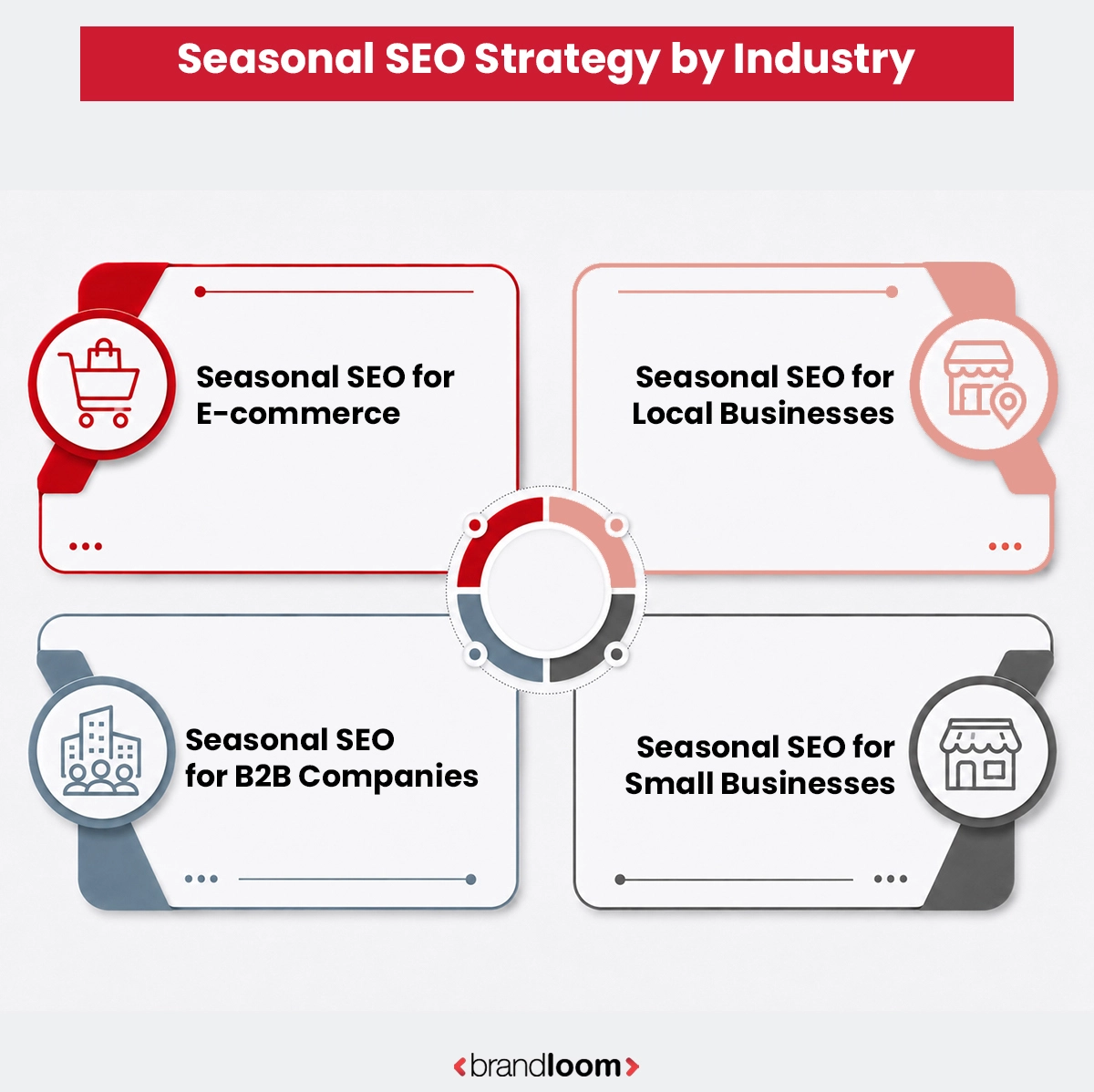
Seasonal SEO Strategy by Industry
Seasonal search behavior looks different depending on what you sell and who you sell it to. Here’s how to approach it by business type.
1 How to Do Seasonal SEO for E-commerce
Map every major shopping event- Diwali, Black Friday, Republic Day, Holi, Eid, and build dedicated landing pages for each. Use evergreen URLs refreshed annually and add seasonal keyword variations to category page metadata during peak windows.
2 Seasonal SEO for Local Businesses
Local seasonal SEO wins on immediate, location-based intent. Google Business Profile updates, local landing pages, and hyper-local keywords give smaller businesses a strong edge where national competition thins out.
3 Seasonal SEO for B2B Companies
B2B seasonal SEO follows budget cycles and procurement calendars rather than consumer holidays. Publish whitepapers, solution guides, and comparison pages before Q3 and Q4 decision windows open.
4 Seasonal SEO for Small Businesses
Small businesses win by targeting hyper-local, long-tail keywords over broad national terms. Ranking for “custom Christmas cake delivery Bandra” is far more achievable than competing for “Christmas cakes” against established players.
How AI Helps Forecast Seasonal Search Demand
AI accelerates seasonal SEO research in ways that manual analysis cannot match at scale. It synthesizes large volumes of Google Trends data, identifies emerging seasonal patterns before they peak, and generates content briefs aligned to shifting search intent.
Beyond research, AI builds internal linking plans, flags content gaps across seasonal keyword clusters, and produces performance reports that would otherwise take hours to compile. Used alongside Google Trends and Search Console, AI gives your seasonal strategy a sharper, faster foundation.
Seasonal SEO Mistakes to Avoid
Most seasonal SEO failures are predictable and preventable. These are the patterns that quietly cost brands traffic every year.
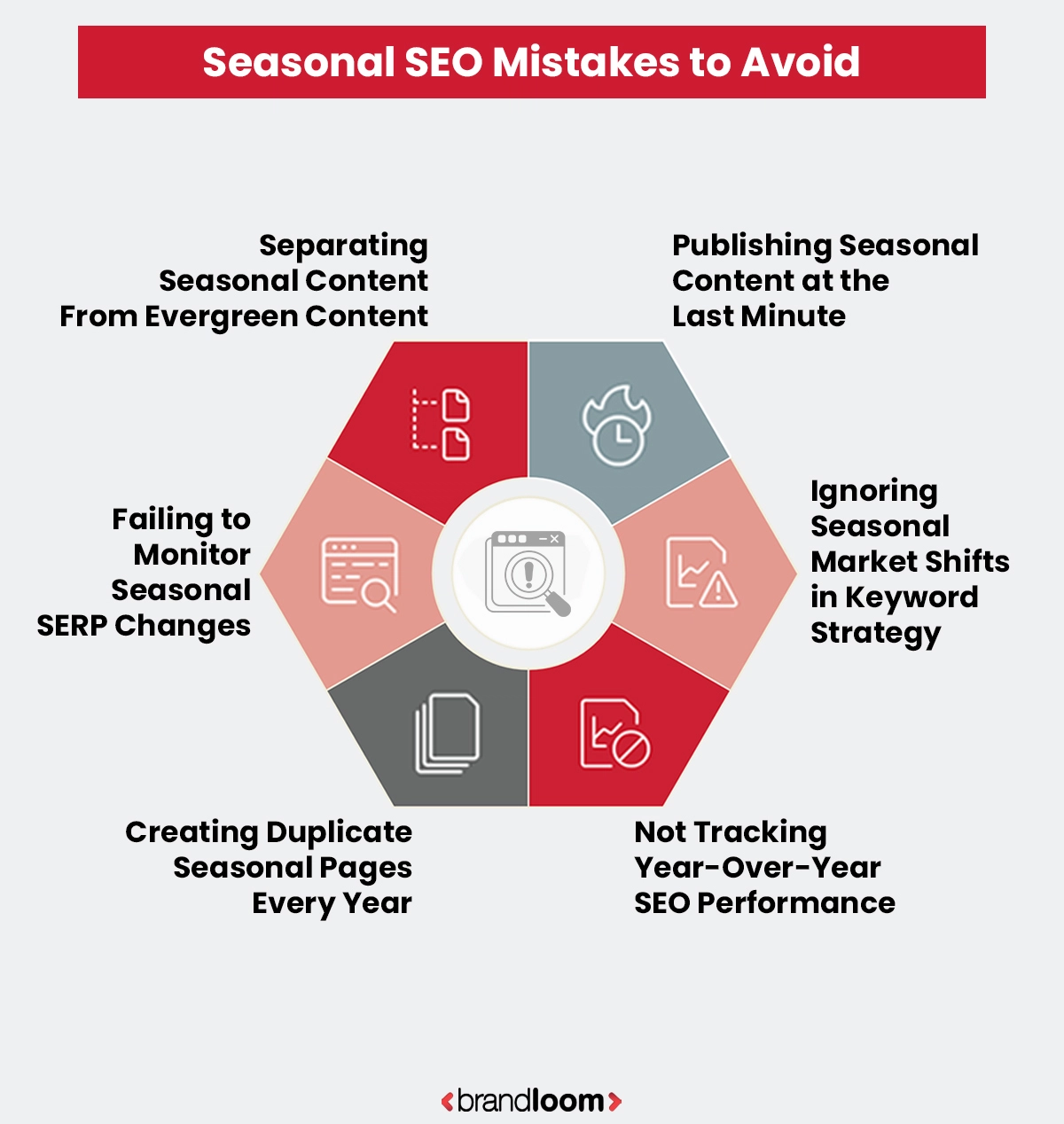
- Publishing at the last minute: Build a 12-month content calendar and enforce lead times of two to six months. Treat seasonal content deadlines as non-negotiable.
- Ignoring seasonal market shifts in keyword strategy: Audit your keyword targets each quarter. Seasonal search trends change, and your content must reflect those shifts to remain relevant.
- Not tracking year-over-year SEO comparison: Compare seasonal periods year-over-year rather than month-over-month. Year-over-year SEO reporting reveals whether your seasonal strategy is improving, stagnating, or declining.
- Creating duplicate event pages every year: Adopt the evergreen URL strategy for seasonal pages. Keep URLs stable, refresh content annually, and allow authority to accumulate across multiple cycles.
- Failing to monitor seasonal SERP changes: Check SERP layouts for your target keywords during peak periods. Seasonal SERP changes often introduce shopping carousels, knowledge panels, or local packs that shift where organic results appear.
- Treating seasonal and evergreen content as entirely separate: Link your seasonal pages from high-authority evergreen content. This internal linking structure passes authority to seasonal pages and helps them rank faster when demand rises.
Seasonal SEO Optimization Checklist for Every Business
Use this checklist to stay ahead of seasonal demand rather than scrambling to catch up with it.
- Identify seasonal keywords relevant to each peak period
- Analyze previous-year traffic and ranking performance
- Create or update evergreen URLs before demand rises
- Publish and index content at least six to eight weeks ahead of peak
- Optimize internal links to surface seasonal pages during relevant windows
- Monitor performance during the season and adjust where needed
- Refresh and improve content after each season closes
KPIs to Measure Seasonal SEO Success
Tracking the right metrics tells you whether your seasonal strategy is working, or just producing content that never peaks when it should.
- Visibility: Organic impressions for seasonal keywords during peak periods, year-over-year impression growth, SERP position at peak versus off-peak times, share of voice against top seasonal competitors.
- Engagement: Organic click-through rate on seasonal landing pages, average time on page for seasonal content, bounce rate on seasonal entry pages.
- Conversion: Organic conversion rate during seasonal peaks, revenue attributed to seasonal organic traffic, and goal completions from seasonal landing pages.
- Technical health: Crawl rate and indexation speed for new seasonal pages, Core Web Vitals scores on seasonal landing pages, and internal link equity flowing to seasonal content.
The BrandLoom Framework for Seasonal SEO
BrandLoom is a leading SEO and digital strategy agency that applies a five-step framework for building seasonal ranking authority.
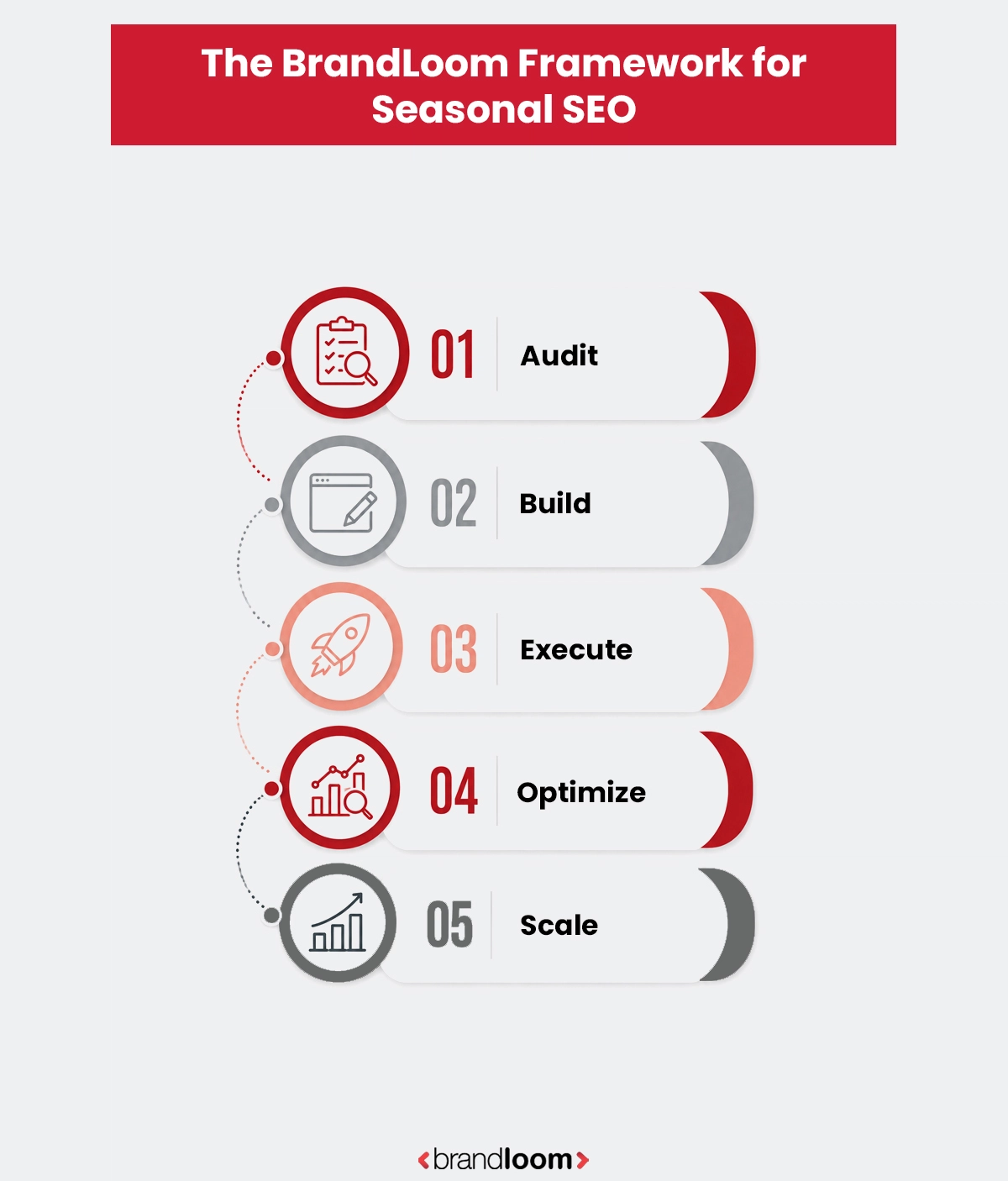
Audit:
Our team maps historical organic traffic against your industry’s seasonal demand calendar, identifies which peak periods you currently capture, and locates gaps where competitors are outranking you using Google Search Console seasonal analysis and search demand forecasting.
Build:
With audit data in hand, our team constructs your seasonal keyword universe, covering primary terms, long-tail variations, and localized queries for each relevant peak period, paired with an SEO content calendar that assigns publishing windows two to six months before each demand spike.
Execute:
Content creation and technical optimization happen simultaneously. Evergreen landing page SEO principles guide URL structure and on-page elements, including titles, headers, meta descriptions, schema markup, and internal links. Pages are submitted for indexing immediately upon publication to maximize crawl speed.
Optimize:
As each seasonal period approaches, we monitor rankings, seasonal SERP changes, and competitor movements. Content is refreshed based on performance data. PPC campaigns are aligned to support organic rankings during the peak window.
Scale:
After each seasonal cycle, we conduct a post-peak review comparing rankings, traffic, and conversions against the previous year. Insights from one season inform the strategy for the next. Over successive cycles, your seasonal authority compounds and existing pages already hold ranking positions heading into each new peak.
Conclusion
The traffic drop you see every January or post-Diwali is not a mystery — it is a pattern, and patterns can be planned for. Brands that rank during peak periods are not the fastest reactors. They are the earliest preparers.
Every industry has seasonal rhythms your customers follow. Businesses that map these cycles and build content around them consistently outperform competitors who still treat traffic drops as emergencies rather than opportunities they could have seen coming.
BrandLoom can help your brand identify seasonal demand windows, build a content calendar that captures them, and rank before your competitors even begin planning. Connect with our SEO experts to build a seasonal SEO strategy tailored to your business.
Frequently Asked Questions
Yes. Seasonal SEO relies on historical search data from tools like Google Trends and Google Search Console to identify recurring demand patterns. By studying year-over-year search volume trends for your target keywords, you can forecast when customers will search, what they will search for, and how competitive those windows are likely to be.
Regional festivals create highly localized search spikes that national competitors often miss. A brand that optimizes for Pongal gift searches in Tamil Nadu or Durga Puja decor in Kolkata captures highly intent-driven traffic with less competition than broad national terms. BrandLoom builds localized seasonal keyword strategies that target these regional demand windows specifically.
Seasonal content does not have to go dormant after peak periods. Convert high-performing seasonal blog posts into email newsletters, social media content, or downloadable guides. Update and republish them as resource pages during the off-season to maintain link equity and keep the URL active. This extends the content’s lifetime value without additional production cost.
Off-season traffic requires a deliberate evergreen content strategy running alongside your seasonal planning. Build comprehensive guides, how-to resources, and comparison content that attract year-round searches. Use the off-season to earn backlinks, improve page authority, and refresh seasonal pages so they are ready before the next demand cycle begins.
Significantly. New websites have no ranking history and require longer lead times, often six months or more before a seasonal event. Established websites with strong domain authority can rank faster, but they still need two to four months of preparation for competitive events. BrandLoom tailors seasonal SEO timelines based on each client’s current authority and category competitiveness.
Consumer behavior evolves, and seasonal search trends shift with it. Events like the COVID-19 pandemic changed travel and retail search patterns permanently. Inflation affects peak season spending behavior. New platforms change where consumers discover products before they search. Monitoring year-over-year data rather than relying on fixed assumptions keeps your seasonal strategy aligned with how your audience actually behaves today.
Track organic impressions and rankings for seasonal keywords during peak windows, click-through rates on seasonal landing pages, conversion rates from organic traffic during the seasonal period, and year-over-year comparison of all three. Revenue attributed to seasonal organic traffic is the ultimate measure of whether your seasonal SEO investment is delivering returns. BrandLoom recommends building a simple seasonal dashboard that surfaces these metrics side by side so your team can act on performance data in real time, not after the peak has passed.
Seasonal SEO research improves every channel that relies on understanding what your audience wants at a specific time. The keyword and demand data from your seasonal SEO strategy informs which topics to feature in email campaigns, which content to amplify on social media, and which offers to highlight in paid campaigns. BrandLoom integrates seasonal insights across SEO, PPC, email, and content to ensure your marketing channels reinforce each other during peak periods.
Export performance data from Google Search Console for the last 16 months and identify which keywords drove traffic spikes during seasonal periods in prior years. Cross-reference this with Google Trends data to confirm whether those patterns are consistent across multiple years. Use the confirmed patterns to set your content calendar, keyword targets, and publishing windows for the upcoming cycle.
If the event is less than four to six weeks away and your pages have no existing authority, it is likely too late for organic rankings. In that scenario, prioritize paid search to capture immediate demand and begin building seasonal organic content for the following year. BrandLoom recommends treating missed seasonal windows as the starting point for next year’s planning rather than a reason to wait until the following cycle begins.