SEO has evolved significantly, and Businesses are moving away from outdated tactics like keyword stuffing or focusing solely on backlinks. SEO in 2026 focuses heavily on understanding user intent and adapting to the AI search optimization measures. As AI systems become central to search engine functionality, content addressing end-user intent clearly is getting ranked on top.
The statistics also point to the growth of intent-driven SEO. According to HubSpot’s State of Marketing research, over 90% of marketers say SEO plays a critical role in achieving their marketing goals, and many are increasing investment to adapt to AI-driven search changes.
The unprecedented growth of AI and machine learning in search results is making it tough for brands to get organic visibility. Those lagging behind with an older SEO content strategy fare worse in getting both traffic and conversions.
Regardless of the size and niche of your brand, you must embrace an AI SEO strategy to stay relevant and competitive in 2026 and beyond. To adapt your SEO strategy to industry changes, you need the assistance of expert, trusted SEO service providers. Choose BrandLoom, an agency with proven expertise in AI SEO technologies and digital marketing, and a growing clientele in India and abroad.
In this blog, we will explore the nuances of SEO in 2026, the growing role of AI in the sector, ways to adapt your brand to the sector-wise changes, and ways to bring more traffic, leads, and sales.
What are the Changes in SEO in 2026?
The SEO landscape is evolving fast, and AI technologies are playing an integral role in it. In 2026 and beyond, AI won’t just influence ranking factors. It is transforming how content is created, structured, and optimized. AI-powered algorithms have moved beyond simple keyword matching, and they focus on understanding user intent and the semantic context of searches.
This shift means SEO professionals must adopt AI-aligned strategies to improve content visibility and get more traffic.
The Role of AI in SEO
This is the era of AI-first search optimization. McKinsey research data shows 50% of consumers now use AI-powered search. Almost 50% of Google searches now end up in AI summaries. If your business fails to optimize for these evolving AI systems, it will get overshadowed by competitors acting earlier and implementing robust AI SEO measures. AI systems prefer content that answers end-user queries clearly, rather than relying on keywords.
User Experience is a Ranking Factor
As AI search optimization continues to affect SEO strategies, user experience takes the center stage. Aspects like mobile-first indexing and page load speed were already a part of SEO, but now brands must focus on developing a seamless, fast, and interactive experience. Approx 53% users leave websites that take more than 3 seconds to load, and 66% of users dislike websites that are not mobile optimized.
| SEO Focus | Pre-2026 SEO (Traditional) | SEO in 2026 and later (AI & User Experience) |
|---|---|---|
| Focused on | Keywords & Backlinks | AI & User Intent |
| Key Ranking Factors | – Keyword Density- Backlinks- Content Quality | – Semantic Search- Core Web Vitals- Page Speed |
| User Experience | – Basic Mobile Optimization- Slow Load Times | – Mobile-First Indexing- Fast Load Speed- Engaging Content |
| Key Stat | AI-driven search predicted to be 40% | 66% of users will leave if a site isn’t mobile-friendly. 53% will abandon if it’s slow to load |
The Simple SEO Formula for 2026 and Future
SEO in 2026 is no longer keyword-focused like it was even a few years back. Your business must adapt to a new SEO formula that focuses on creating user intent-based content. Then it will find traction with AI-driven algorithms.
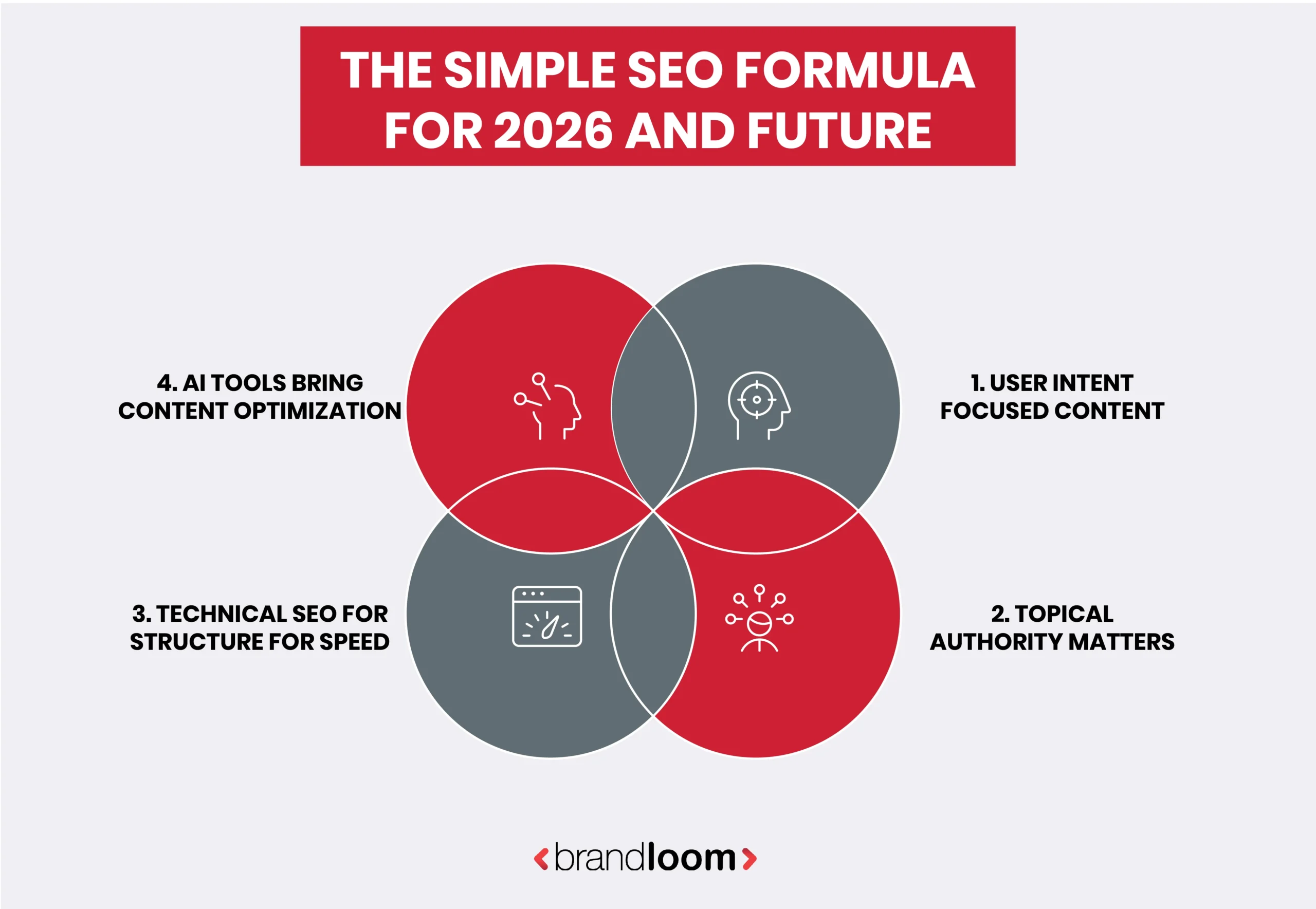
1. Content Creation for User Intent
In 2026, the on-page SEO strategy will be based on catering to user intent. AI-powered search engines analyse user needs deeply using their advanced algorithms. So, your brand must focus on answering specific user questions, rather than targeting a specific set of keywords.
Your site content must be comprehensive and relevant for target users. You must focus on creating contextual content that directly addresses user problems in a conversational, easy-to-understand manner. You will gain by using sections like answers to frequently asked questions in your content. Google’s ranking systems increasingly prioritize E-E-A-T (Experience, Expertise, Authoritativeness, and Trustworthiness) signals in content evaluation.
2. Topical Authority is Important
You must focus on topic authority building. The goal is to establish your brand as the go-to resource in your niche for specific topics. You have to create a strong and interlinked content ecosystem around the subjects. For example, a digital marketing and branding agency like BrandLoom has several blogs and newsletters on its site on the services it provides. There are blogs on AI SEO services, entity SEO, and email marketing, which help form a content cluster.
3. Technical SEO for Speed and Structure
Apart from using contextual, user-intent-focused content, technical SEO must be a part of your SEO content strategy. AI tools now rely on Core Web Vitals and structured data to understand user experience. So, your website content must be technically solid.
A. Core Web Vitals – There are 3 vital metrics – visual stability, loading performance, and interactivity that influence ranking. Google’s algorithms will prioritize websites that offer users a smooth, fast experience. Websites performing poorly will not stand a chance against competitors deploying well-designed technical SEO measures.
B. Structured Data – You must focus on implementing schema markup in all your site pages. SEO in 2026 thrives on structured data. These help AI search systems understand and display your content in rich results like featured snippets and knowledge panels.
C. Internal Linking – Internal linking is a must, even in the era of AI search optimization. When your site pages have proper internal linking, it improves navigation and creates a positive impression for the search engines, too.
4. Using AI Tools for Content Optimization
AI is not just useful for content generation, but you can also use it to optimize the content of your brand website. Use AI-powered tools to optimize your existing content for both user intent and AI algorithms. Such AI-enabled SEO tools can be useful for analyzing search patterns and helping businesses understand the type of content performing the best.
You can use tools like SurferSEO, Frase, and Jasper to improve on-page SEO. They can help you choose semantic keywords, optimize content structure, and reduce loopholes. With AI SEO tools, you can create content resonating well with both humans and search engines.
How do you develop the right SEO strategy for sales growth? Partnering with experienced SEO professionals can help brands adapt faster to AI-driven search changes.
What are the SEO Tactics to Drive More Traffic in 2026?
As the SEO landscape keeps evolving fast, your brand must develop and implement an effective AI SEO strategy. That is a prerequisite to attract AI systems and get more traffic, naturally. You need an SEO content strategy focused on creating user intent-centric content. That ensures your content becomes easily discoverable by AI engines.
Here are some actionable SEO tactics you can use to get real, measurable results.
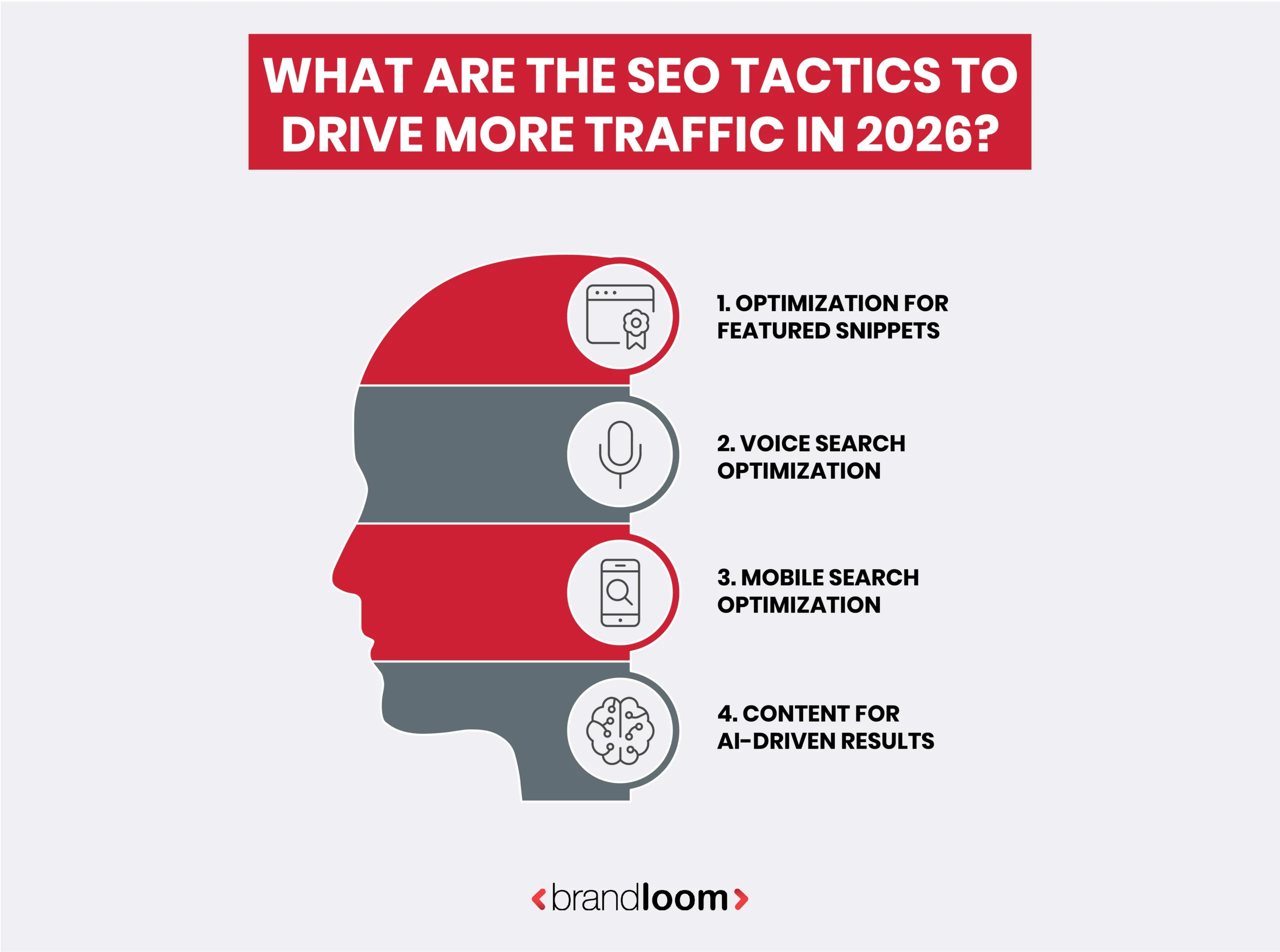
1. Optimizing for Featured Snippets
For better online visibility, your SEO efforts must include Featured Snippets. So, optimizing content for these will be on your priority list for SEO in 2026. As AI systems adapt and evolve, featured snippets appear in more online searches. These help capture user attention and bring more organic traffic to your site.
To optimize for featured snippets, you can:
- Structure your site content in a Q&A format and answer specific questions concisely in bullet points or numbered lists. This helps AI systems find your content easily.
- Use clear headings throughout your content. The H1 and H2 tags should clearly indicate the main topic to match common web search queries.
- Use apt schema markup and structured data to help Google understand your content and display it as a featured snippet.
2. Optimizing for Voice Search
Voice search is rising, and you must optimize your website for voice search queries. Now, 27% of mobile users worldwide use voice search for daily tasks. To optimize the site for voice search, you can:
- Use natural, conversational language simulating the way average web users speak when they look for anything. Using long-tail keywords and phrases people use, like best places for coffee near me,” works.
- Voice search is mostly regional, so make sure that your company is listed correctly on Google My Business. Keep the details and contact information updated across GMB and other online profiles.
- Voice search results often pull content from featured snippets, and so you should follow the same strategy to capture these positions.
3. Mobile Optimization Strategies
With the number of mobile users overtaking PC users globally, you should optimize your website and content for mobile devices. If your site misses the mobile-first indexing game, it will get overshadowed by competing ones, soon.
To make your website mobile-optimized, do the following:
- Focus on mobile-first design because a responsive website enhances users’ experience, and it also scores high in SEO.
- With Core Web Vitals becoming important for better ranking, you must focus on improving your site’s page speed. This involves compressing images, reducing code, and using lazy loading features to give your users a faster browsing experience.
- Ensure the site layout is mobile-friendly. It must render smoothly across a multitude of smartphones and tablets.
4. Content Creation for AI-Driven Results
AI and machine learning are altering the SEO scene visibly. Your brand must focus on creating high-quality, contextual content to match intent-driven SEO needs.
To optimize your site content for AI systems:
- Pay attention to user queries. Conduct detailed keyword research to identify common questions and concerns within your niche. Then you can create and optimize content accordingly.
- With Google prioritizing content adhering to its EEAT protocols, you must focus on EEAT signals for SEO. Getting quality backlinks from reputable sites helps, and including authentic user reviews and proofs of achievements also works in your favor.
- Use content optimization tools like SurferSEO and Frase to optimize content for both user intent and AI-powered engines.
How to Utilize AI Tools for SEO Success in 2026?
With AI becoming an integral part of SEO, your brand must utilize relevant AI tools to get a competitive edge. You can use such AI-enabled tools for structured data optimization and technical SEO as well. Here’s how you can use specific AI tools to implement intent-driven SEO.
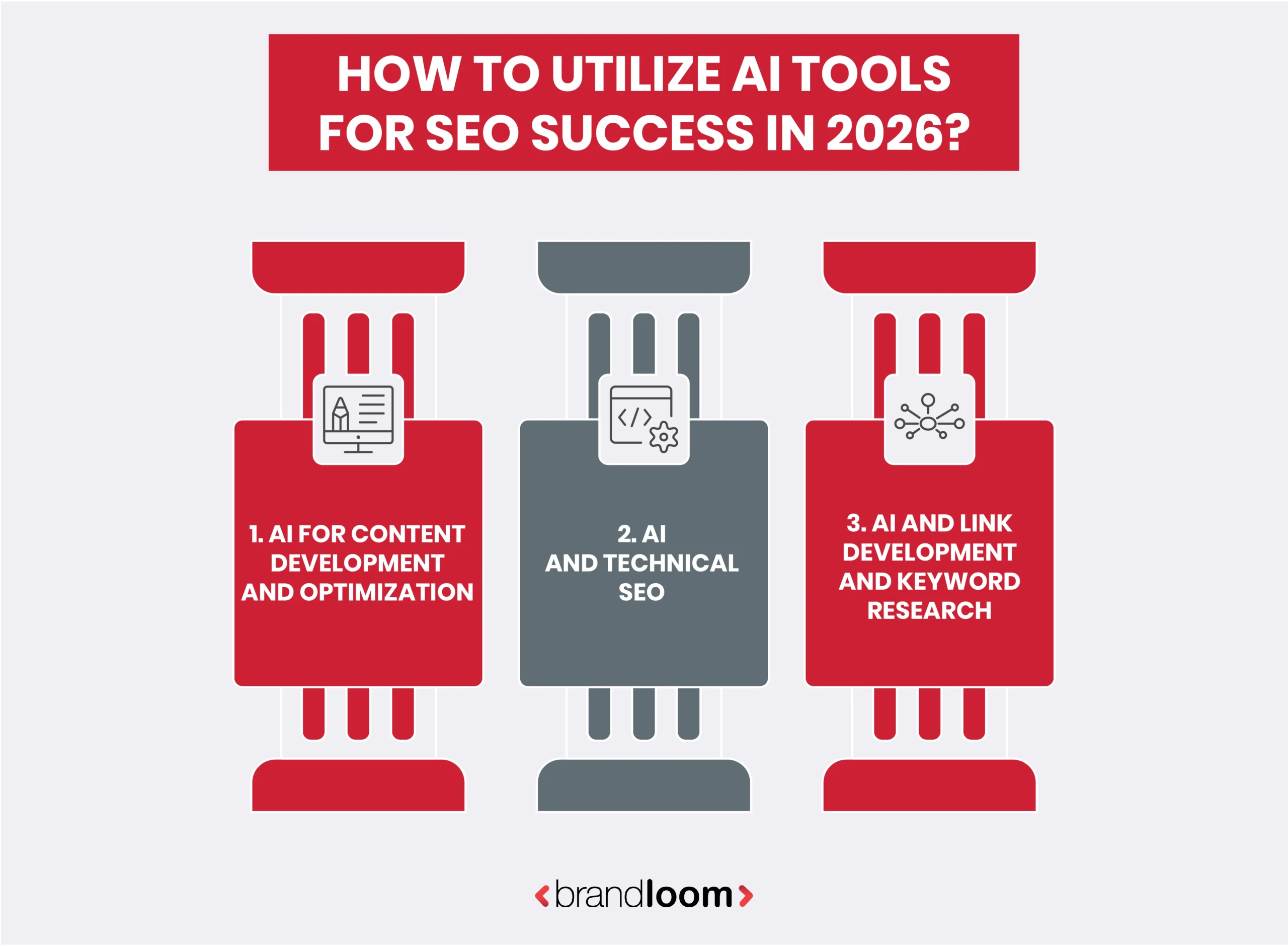
1. AI for Content Creation and Optimization
Use AI-powered content creation tools like Jasper and Frase to streamline content writing and optimization. They help you analyse search trends, user intent, and existing content and suggest keyword optimizations and content improvements. You can use them for content creation, too.
Such AI tools help you develop SEO-optimized content faster than the manual method. They suggest semantic keywords, related phrases, and content structure to align better with AI ranking factors. After content creation, these tools let you analyze for readability, structure, and semantic relevance.
2. AI for Technical SEO
AI is also transforming technical SEO, and you can optimize the website faster and better. Tools like SurferSEO and SEOmatic can conduct automated site audits and find issues like broken links, duplicate content, and page speed problems.
You can use these AI tools for automated site audits, and they offer real-time analysis and actionable insights. You can then improve technical SEO elements like internal linking, Core Web Vitals, and schema markup. They also offer automated SEO reporting, helping you make data-driven decisions.
3. AI for Keyword Research and Link Building
Take keyword research and link building to the next level by using apt AI SEO tools. Tools like Ahrefs, SEMrush, and SurferSEO use advanced AI algorithms to identify link-building opportunities, long-tail keywords, content gaps, etc.
With these tools, you can find high-converting keywords aligning with searcher intent and find high-authority websites for backlink opportunities. Their ML capabilities help focus on the most relevant and authoritative sites within your domain.
To choose and use AI tools for SEO success, rely on BrandLoom, the award-winning agency with expertise in developing killer SEO strategies for clients across multiple sectors.
How to Optimize for User Intent in 2026?
To taste success in SEO in 2026 and beyond, focusing on user intent is a must. AI engines prioritize understanding the reasons behind search queries, going beyond the exact words. Understanding and optimizing for user intent will help you rank higher.
What is User Intent?
User intent denotes the purpose behind a search query. Users may seek information on a product or service, want to buy something immediately, or seek reviews. There are three main types of user intent: informational, navigational, and transactional. You must tweak your content to match SEO relevance signals.
- Informational intent: Users seek answers or information (e.g., “Where is a vegan eatery near me?”
- Navigational intent is when users try to find a specific website or page, like the BrandLoom About Us Page.
- Transactional intent is when users plan to buy anything, like a summer cap.
The Importance of User Intent
Search engines now use AI technologies, and they focus on meeting user intent. If your content can’t address user intent, ranking will go down. AI models like Google’s BERT and MUM can analyze content relevance based on semantic context.
How to Optimize for User Intent
- Align your content with searcher goals by answering specific questions and providing a clear solution based on intent.
- Regularly review and optimize content based on queries used by your target users.
- Optimize your content for long-tail keywords as they indicate precise user intent.
How to Develop Links in 2026?
In the AI-first era, link building will no longer rely solely on the quantity of links. You should focus more on getting high-quality, authoritative backlinks from relevant websites in your domain. Search engines prioritize contextual relevance and authority when evaluating the value of a link.
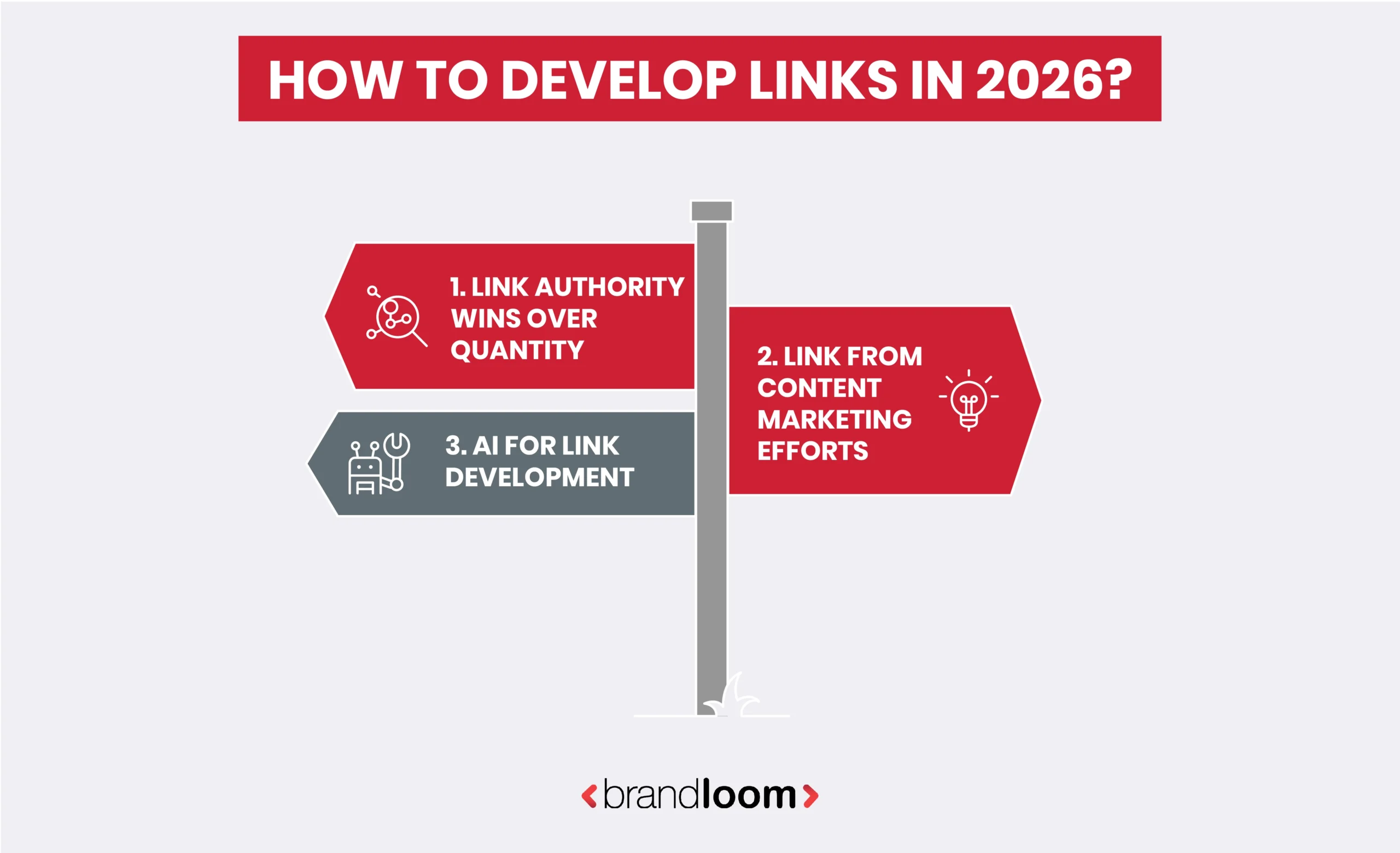
1. Authority Over Quantity
AI-driven search engines check the authenticity and trustworthiness of backlinks in large quantities. High-quality links from authoritative, relevant sources will signal your website’s domain authority. So, focus on getting backlinks from industry leaders or trusted sources. For a digital marketing agency, backlinks from top sources like SproutSocial or HubSpot will be useful.
2. Earning Links Through Content Marketing
The days of traditional guest posting or directory submissions are gone. You can use content marketing to earn high-quality links. Develop content clusters to establish your credibility and get natural backlinks from other reputable sites. A SEO and digital marketing company can create blogs and newsletters on organic lead generation strategy, future SEO trends for 2026, and AI topics to build such clusters.
You can share Infographics, case studies, and research reports to naturally attract backlinks as well.
Another useful method is using relationship-building with influencers, journalists, and industry leaders who can link back to your content.
3. AI and Link Building
Use AI tools like Ahrefs and SEMrush to identify link-building opportunities and track competitor links. Analyzing the backlink profiles of your segment rivals helps you find high-quality sources you may not have considered.
| Traditional Link Building | Link Building in 2026 |
|---|---|
| Focus: Quantity over quality | Focus: Quality & Authority |
| Guest Posting: Writing articles for backlinks | Content Marketing: Creating valuable, shareable content |
| Directory Submissions: Submitting sites to directories | Relationship Building: Establishing connections with influencers and industry leaders |
| Mass Link Exchanges: Exchanging links with other websites | Earned Media: Acquiring natural backlinks through brand mentions and PR efforts |
| Low Authority Links: Getting backlinks from low-quality sources | High Authority Links: Securing backlinks from trusted, authoritative sources |
Conclusion
For 2026 and beyond, SEO content strategy is not limited to keywords and backlinks. Using relevant long tail keywords and quality backlinks does matter, but this is the era of intent-driven SEO. To stay competitive and rank higher, focus on creating a holistic SEO strategy that blends AI technology, content optimization, and technical excellence.
Your AI SEO strategy must be based on this simple formula for success:
- Content matching user intent closely
- Using AI-powered optimization to streamline content creation and technical SEO
- Enhancing user experience (Core Web Vitals and mobile optimization) for ranking and engagement boost
- Developing link-building authority through content marketing and content clusters
To develop a strong SEO content strategy, choose the digital marketing and SEO agency with vast experience of aiding numerous clients in India and abroad, with an unmatched success rate- BrandLoom.
FAQs
SEO in 2026 is no longer limited to optimizing for keywords or securing backlinks. The AI systems have taken over, and they affect how people find your brand and its services/products online. This is the age of intent-driven SEO, and AI systems that look for websites that have user intent-focused content. SEO in 2026 prioritizes semantic search and AI interpretation of content. Machine learning algorithms like Google’s BERT and MUM prefer high-quality content that answers specific questions, rather than simply matching keywords. Also, user experience is a major factor for ranking. To adapt to evolving SEO needs and align your brand’s SEO roadmap with AI search optimization, choose veteran and trusted SEO agencies.
In 2026, the key SEO trends your brand must follow are mobile-first design, AI search optimization, and user intent alignment. Tools like Frase and SurferSEO will help you create content aligning with both user search queries and AI-driven algorithms, at the same time. Now, intent-driven SEO is crucial, and your brand must create content that answers specific questions in detail. Additionally, you must optimize for long-tail keywords and semantic content. Developing a content cluster is another aspect you must focus on. With a majority of users switching to mobiles, mobile-first indexing is a must for SEO success.
AI is transforming SEO in 2026 in unprecedented ways. You will find AI-powered search engines choosing content by analyzing user intent and context, overlooking keyword density and link quantity. AI algorithms try to find the meaning behind content. AI tools like Google BERT and MUM help search engines interpret queries in a more human-like way. Brands must create content that answers specific questions clearly, provides better relevance, and aligns with user intent well. You can also use AI tools for tasks like content generation, site audits, and keyword analysis. This helps make SEO content strategy implementation more efficient and scalable.
The best SEO strategy for more traffic in 2026 includes aligning content with user intent, improving user experience, and using AI tools for optimization.
You should develop high-quality, user-centric content that directly answers common questions and offers actionable insights.
Optimize your website for mobile-first indexing and Core Web Vitals for better ranking.
Structure your website content in the appropriate ways to make the content discoverable for AI systems.
Finally, utilize AI-driven tools like Frase and SurferSEO to streamline content creation and boost the site’s technical SEO.
Your brand needs optimized content for Search Generative Experience in 2026. To develop an SGE SEO strategy, it must prioritize creating contextually relevant, user-centric content. AI search systems focus on understanding user intent over keyword density in content. So, align your content with the real needs of target users. You should use structured data and semantic keywords to make things simpler for search engines. To optimize for SGE, use content that answers common user queries, has clear headings, and includes rich media like images and videos. Content sending clear EEAT signals for SEO gets a better ranking. Use AI-powered SEO tools to automate content analysis and adapt to evolving AI algorithms.
Content is the pillar of SEO success in 2026. Now, brands that use valuable, comprehensive content align with AI-driven search algorithms. Your content must answer real user questions, offer handy solutions, and offer in-depth information. It must also have structured data optimization to be easily accessible for AI systems. Using Long-tail keywords and natural language will help your brand. Your brand must develop content clusters around topical authority so that the website becomes a go-to resource on specific topics. Developing your content is a crucial part of the SEO roadmap for success in 2026 and beyond.
In 2026, businesses can generate more leads using SEO when they focus on optimizing content for user intent and AI engines. Begin by aligning your brand content with the specific user needs. Focus on informational and transactional searches to capture users at different stages of the buying journey. When you use long-tail keywords reflecting buyer intent (like free accounting software for small businesses), it will fetch visitors who are ready to take action. Optimize website content for conversion by using clear, compelling CTAs. Use local SEO strategies to target potential consumers. With apt AI tools, you can analyze user behavior and identify high-converting content. Also, optimize content for voice search for better visibility through AI-powered search results.
In 2026, you must use AI-powered SEO tools to stay competitive:
Use AI Content Optimization Tools Frase, SurferSEO, and Jasper to create content aligning with user intent and AI algorithms.
Choose Technical SEO Tools like SEMrush, Ahrefs, and Google Search Console to get SEO insights on factors like Core Web Vitals, backlink analysis, and perform site audits.
Use top Keyword Research Tools like Moz, Ahrefs, and Ubersuggest to identify the right long-tail keywords and semantic search opportunities.
Choose Analytics Tools, including Google Analytics and Hotjar, to track user behavior, bounce rates, and conversion rates.
BuzzSumo and Hunter.io are tools that help you build high-quality backlinks through content marketing and relationship-building.
Zero-click results are changing the way people find brands and products online. So, AI-first search optimization is taking centerstage. A lot of users find their answers through AI overviews and featured snippets, and they do not browse websites in detail. As Google continues to prioritize user convenience and speed,zero-click search trends will gain momentum in the coming days. You must create content that directly answers common questions in a concise, structured format. Zero-click results may lower website traffic, but they still improve brand visibility and establish authority. It is what your business needs for enhanced AI search visibility.
For small businesses, SEO in 2026 comes with both new opportunities and challenges. To improve their rankings and sales, they can focus on local SEO. Updating the GMB profile and using target location-based keywords can help. This helps improve visibility in regional search results, attracting regional buyers. Then they must focus on creating high-quality content that aligns with user intent. Using optimized content for long-tail keywords and featured snippets will help get the desired local traffic. Technical SEO is also vital, as fast-loading, mobile-friendly websites attract more users. They should also use AI tools like Frase or SurferSEO to streamline content creation.