AI is now everywhere, and it has fundamentally transformed the SEO landscape. AI-based generative tools like ChatGPT and Google AI Overviews are reshaping how you find information, brands, and solutions online. Now, up to 60% of web searches end without a click, often bypassing websites entirely. This has prompted SEO analysts to redesign their strategies- both on-page and off-page, for better AI visibility.
The reality is, you need more than a revamp of a traditional keyword-based SEO roadmap for your brand. AI systems evaluate and prioritize brands based on trust, authority, and entity recognition signals across the web. You will need to refine existing off-page SEO to support AI visibility. While off-page SEO signals like quality backlinks to brand mentions and third-party recognitions serve as the foundation, you need clarity on the ways to utilize them.
This blog explains the importance of off-page SEO for AI visibility, shows how off-page SEO works in the AI era, and what brands can do to improve audience reach and conversion.
For mastering the nuances of off-page SEO in AI search and implementing it in your brand’s SEO roadmap, you need an expert ally. BrandLoom, with a decade-plus experience in SEO and proven expertise in AI technologies, fits the bill perfectly.
What Off-Page SEO Really Means in an AI-Driven Search Landscape?
In 2026, off-page SEO is no longer just about getting backlinks. AI-powered search features are increasingly influencing how search engines rank and display content, and that has changed how people discover your brand and its services/products online. The notable thing is that off-page SEO in the AI era plays a crucial role. It helps build the trust signals that AI systems look for.
Traditionally, off-page SEO was all about getting relevant and quality backlinks to boost brand authority, along with social signals for a visibility boost. After the growth of AI, the SEO game has changed drastically. AI models, like Google’s BERT and MUM, use advanced algorithms to assess brand credibility beyond the backlink volume, according to BrightEdge. They look for AI search trust signals like brand mentions, content relevance, and contextual signals on the web. These play key roles in deciding whether your brand will feature in AI overviews and AI tool answers.
Google’s MUM can now look for search queries contextually across multiple languages and figure out the intent behind a search better than traditional algorithms. So, relevant brand mentions on authority websites can serve as entity SEO off-page signals- showing its relevance and expertise.
Why Off-Page SEO Matters More in AI Search Than Traditional SEO?
Traditional SEO was a page-level game where the focus was on optimizing content, using the right keywords, and getting relevant backlinks. That playbook is still there, but in the AI-first search landscape, it is no longer enough. Here’s why:
1. Beyond Crawling, AI Tools Look for Entities
The main reason is that while AI still relies on crawled content, it analyses entities and their relationships. When your target users submit a query to Google or ChatGPT, or Perplexity, the underlying models don’t only scan your webpages. They seek entity SEO off-page signals and pull relevant information from trusted online resources, including social media forums, community posts, etc. So, off-page SEO has become more important nowadays.
2. AI Reads the Entire Web — Not Just Your Site
When your brand or products get mentioned in high-authority sites, a podcast, or a niche industry blog, it attracts AI systems. These tools synthesize such entity signals to figure out the authority and relevance of your brand. So, brands with strong off-page presence across credible sources will consistently outshine others with well-made websites but little external validation.
3. Trust Has Overtaken Keywords
Traditional search rewarded brands that aced the keyword infusion game in their website content. AI search rewards brands that are talked about consistently and by credible online sources. The shift is major- from optimizing what you say about yourself, to actively shaping what the broader web thinks of you.
How AI Systems Assess Trust, Authority, and Credibility?
AI-powered systems like Google’s BERT and MUM look for the context and relevance beneath keywords and search queries. They evaluate and rank web pages based on certain trust signals from across the web. If your brand’s off-page SEO strategies give such strong trust signals, it will appear on AI overviews and AI tool answers.
AI systems use several sources to form contextual understanding about your brand. For effective AI Overviews optimization, your brand must have mentions in different credible online sources. Canvas PR’s 2025 analysis highlights that unlinked mentions in authority sites like Wired or The Wall Street Journal can enhance off-page SEO to support AI visibility. For example, high-authority sources like Forbes, Business Insider, and SemRush mentioning your brand without a link sends a credible and strong signal to AI systems.
One crucial thing about authority signals for AI is consistency in brand mentions. If AI systems find consistency about your brand mentions in varied platforms like GMB, social media circles, and niche portals like Reddit and Quora, they will regard it as trustworthy and important.
To establish the credibility of your brand and make it more visible to AI models, you need strategic planning and expertise from industry leaders. BrandLoom fits the bill with its unmatched expertise in the AI and SEO realms.
How Off-Page SEO Signals Influence AI Visibility
Your brand needs off-page SEO to support AI visibility in an AI-driven search landscape. It must focus on developing trust and authority signals through off-page SEO that AI engines can process, evaluate, and leverage. These, in turn, will feature your brand in AI Overviews optimization and answers generated by top AI tools like Claude and Perplexity.
The Strategic Framework for Off-Page SEO Signals Affecting AI Visibility
AI systems follow a strategic flow and rely on specific off-page signals to analyze and understand brand trust and authority. These are:
1. Off-Page Activities
Actions that take place outside of your website but cover your brand, such as guest blogging, social media activity, and brand mentions across digital PR outlets, matter a lot. These off-page activities send strong signals of trust to AI systems.
2. Authority & Trust Signals
AI algorithms, including Google MUM and BERT, depend on these entity SEO off-page signals to analyze and compare your brand to segment contenders, for trust and relevance. Mentions across reliable, high-authority platforms make AI engines consider your brand as a leading one in its industry.
3. AI Understanding/ Entity Recognition
AI models do more than just read your brand website. They process all relevant signals from the web to determine your brand as an entity. They delve deeper than simple keyword matching to analyze the context. If they consider your brand to be one with expertise and credibility, it will feature in overviews and search results, like Google AI Overviews, and even ChatGPT responses.
4. From Visibility to Conversions
Your brand needs off-page SEO to support AI visibility, and that paves the way to enhanced conversions. AI visibility makes your brand more accessible to target buyers, even without traditional rankings. With higher AI search results and overview visibility, the clicks and conversions shoot up.
Off-Page SEO Elements Feeding AI Visibility Directly
Now, let’s have a deeper look at the off-page SEO elements that directly feed into AI visibility. They are crucial for developing the right strategy for off-page SEO in the AI era.
- Backlinks: Backlinks remain important for SEO and help your brand build authority. However, the quality and context matter more than sheer volume.
- Digital PR & Thought Leadership – Third-party validation through press coverage, industry interviews, and expert positioning enhances your brand’s credibility and value for AI systems.
- Brand Mentions – Unlinked brand mentions are crucial to develop authority signals for AI engines. Press articles, social media posts, and guest articles are prioritized by AI engines.
- Social Signals – AI systems also look for brand mentions on different social media circles. These SM interactions convey brand engagement and relevance to AI engines.
- Structured Data & Contextual Relevance – Schema markup in external content like articles, videos, andpodcasts helps AI tools understand entities and relationships better.
Here is a visual representation of the relative importance of off-page SEO elements in developing AI trust signals:
Entity-Based SEO: How Off-Page SEO Trains AI to Understand Your Brand
As AI-based search engines evolve, entity recognition has become a must inoff-page SEO for AI visibility. Here are a few things to keep in mind.
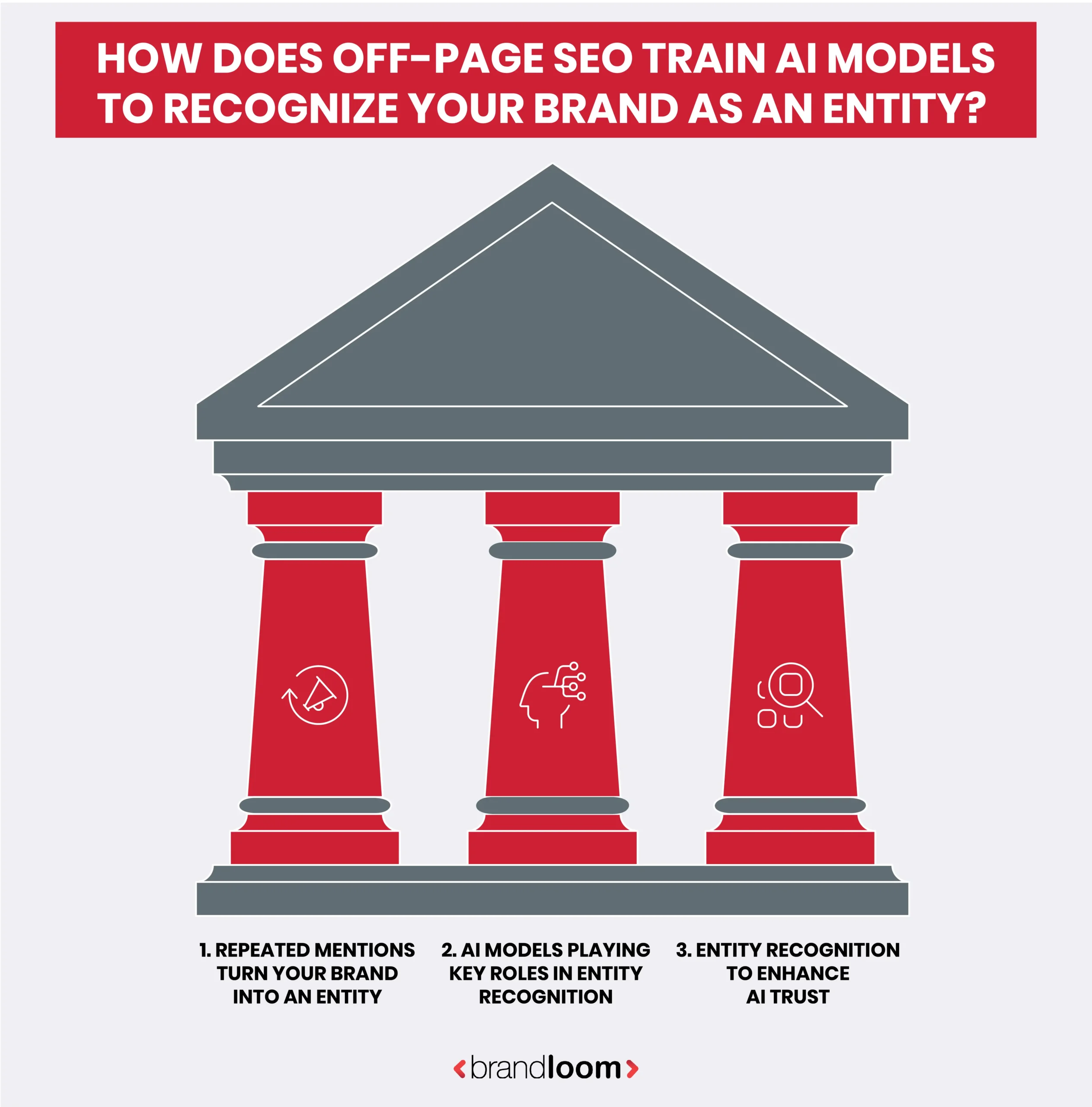
1. Repeated Mentions Establish Your Brand as an Entity
How do the AI systems learn about your brand? They look for repeated and consistent mentions of the brand across different online sources. Now, these brand mentions may include social media discussions, guest posts, news articles, and many other online platforms. Then, AI models are more likely to include your brand in their overviews.
2. The Role of AI Models in Entity Recognition
AI search engines are designed to understand the context behind user queries. They also analyze the relationships between different entities online and use these relationships to interpret user queries. For example, they analyze whether a user is looking for apples for snacking or seeking Apple consumer products.
These make AI systems regard it as an expert and authoritative entity in its niche. Then your brand appears more in AI-generated overviews and other AI-driven content formats.
3. Improving AI Trust with Entity Recognition
Once AI models recognize your brand as an entity, they start linking it to all relevant topics and queries. This eventually increases your brand visibility without relying much on traditional ranking factors. Entity-based SEO trains AI systems to recognize and trust your brand when referencing and ranking.
Rely on the expertise of BrandLoom, the award-winning digital marketing and SEO agency, to develop a customized and fitting entity SEO strategy for your brand.
Content Collaboration Tactics to Enhance AI Visibility
In the AI-powered search era, you must focus on content collaboration to enhance your brand’s AI visibility. These tactics go much beyond traditional link-building. The focus is on building brand authority, trust, and relevance through collaborative efforts. It helps AI engines fathom your brand’s place in the digital ecosystem.
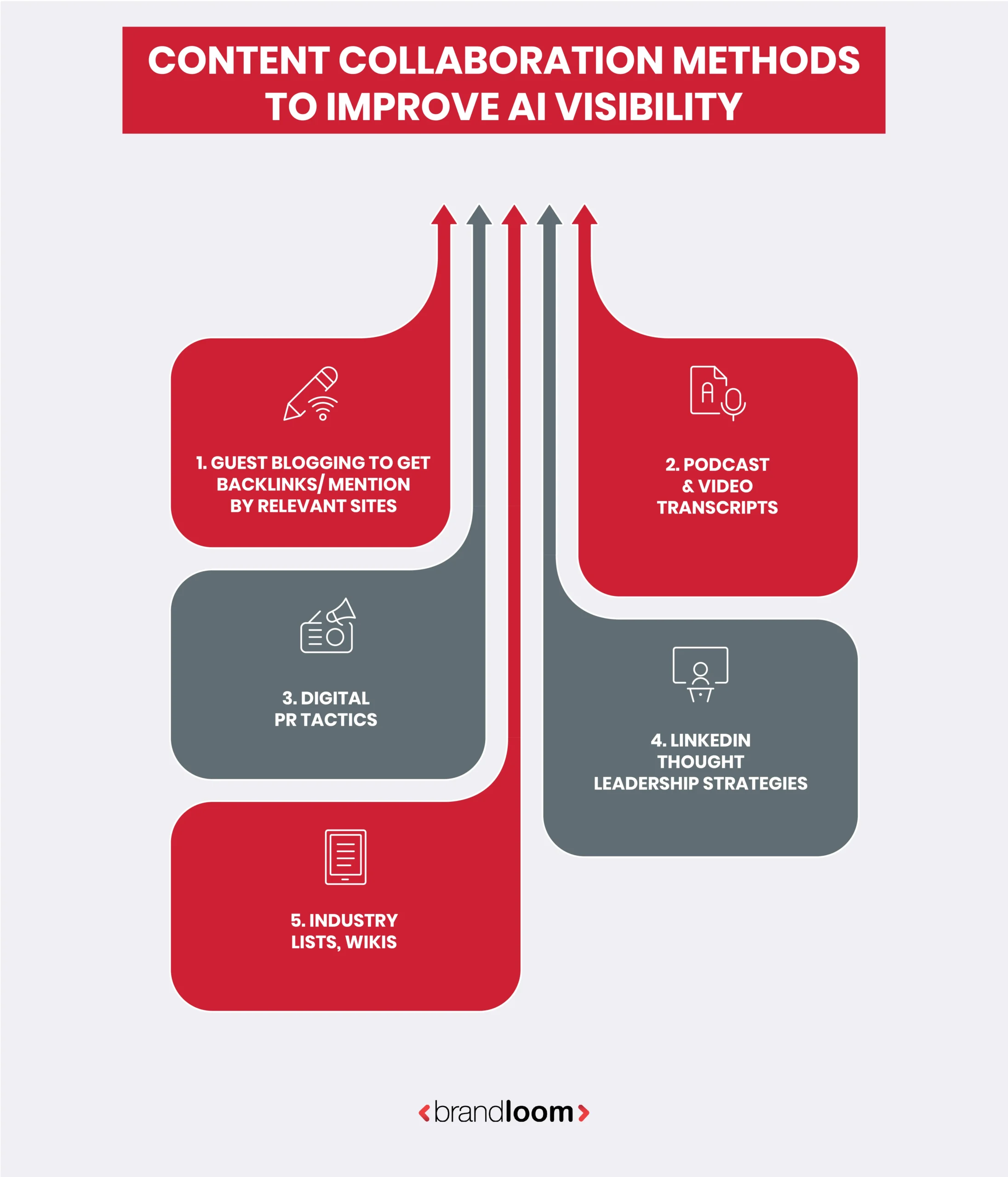
1. Guest Blogging for Backlinks and Mentions from Relevant Sites
Guest blogging is one powerful method to improve brand and AI visibility effectively. When you submit high-quality content to industry-related blogs or high-authority websites, it fetches you valuable backlinks and brand mentions. Such collaborations enhance your backlink profile and, at the same time, improve AI visibility SEO. AI systems think your brand is credible, and that improves its AI visibility prospects.
2. Podcast & Video Transcripts for Entity Recognition
For entity-based SEO, Podcasts and video content offer plenty of opportunities. AI systems can analyze transcripts from these content formats. Then they extract the required data to analyze brand relevance and expertise. This also improves your brand’s AI visibility SEO.
3. Digital PR for Brand Mentions
Digital PR tactics like HARO, press releases, and interviews help enhance your brand visibility in the AI –first era. These unlinked brand mentions are important for recognition by leading AI systems. If your brand gets mentioned in press coverage or industry interviews, AI tools like Claude and Perplexity treat these as strong trust and third-party validation signals. So, it starts appearing in AI tool answers and Google AI overviews.
4. LinkedIn Thought Leadership
LinkedIn thought leadership remains one of the underused content collaboration tactics. When you engage on LinkedIn consistently and interact with posts, create polls, or host live sessions, AI models perceive your brand as an authoritative entity in its niche. LinkedIn’s social signals help strengthen your brand’s image. As industry peers share your insights, your entity’s strength receives a boost.
5. Industry Lists, Wikis, and Curated Sources
To ensure your brand’s AI visibility gets better, try to get it covered by industry lists, Wikis, or similar curated sources. AI models rely a lot on structured data from trusted sources like Wikis and industry directories. They use these sources for brand credibility and authority assessment.
How do you plan and develop a feasible content collaboration roadmap for your brand for better AI visibility? Choose the agency with proven mastery in the AI and SEO realms, BrandLoom. Let our SEO analysts do the needful.
AI Visibility KPIs: What Brands Should Track?
In the age of AI search, how do you track the success of your semantic off-page SEO efforts? It’s time you align your brand’s performance metrics with AI visibility outcomes. Here are the KPIs you should track to understand the efficacy of off-page SEO for AI visibility.
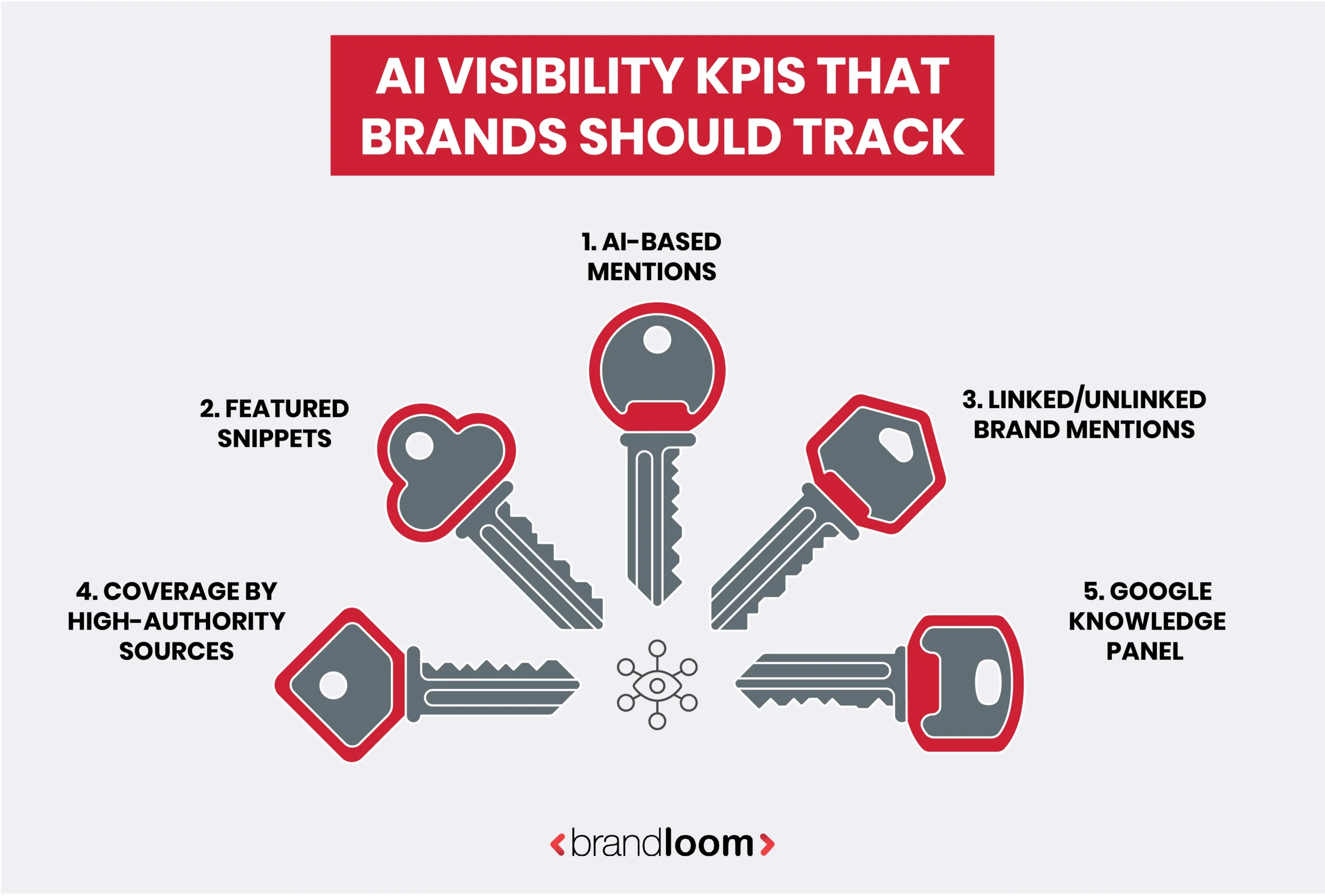
1. AI-Generated Mentions
The first sign of success in AI-driven search is your brand getting mentioned by AI tools frequently. It will be referred to a lot by top AI tools, and Google AI overviews will bring it up, too.
2. Featured Snippets Appearances
Featured snippets are a traditional search feature. However, they have a role in impacting AI-generated summaries. Brands appearing in such snippets prove that AI systems regard them as authoritative entities. So, when your brand appears a lot in these snippets, it proves your off-page SEO supports AI visibility.
3. Brand Mentions
Track your brand mentions online, both linked and unlinked. Those offer insights into how AI is recognizing your brand online. Again, AI systems use these mentions to assess your brand’s authority and relevance.
4. High-Authority Domain Coverage
Suppose your brand is covered by high-authority websites in a niche, which serves as a big signal for AI models. For example, if your brand is covered by leading websites like Forbes, SemRush, SproutSocial, Huffington Post, AI systems will pay attention.
5. Google’s Knowledge Panel
Your Google Knowledge Panel serves as the brand’s proof of entity recognition. AI models use the data in these panels to analyze their context and relevance.
AI Visibility KPIs Comparison Table
| KPI | Importance of AI Visibility | How to Track |
|---|---|---|
| AI-Generated Mentions | Checks brand authority in AI answers | Monitor AI search platforms |
| Featured Snippets | Shows inclusion in AI-driven content | Track snippets in search results |
| Brand Mentions (Linked + Unlinked) | Reflects entity recognition by AI models | Use social listening tools |
| Coverage in High-Authority Domains | Shows trustworthiness across trusted sources | PR and media coverage monitoring |
| Entity Strength (Google Knowledge Panel) | Measures brand recognition as an entity | Check Knowledge Panel accuracy |
Conclusion
The world of SEO has undergone a massive shift in the last few years. You definitely need off-page SEO to support AI visibility across different web platforms. AI-driven search systems assess brand trust, relevance, and entity recognition and use a number of off-page signals. So, your brand must focus on establishing itself as an entity for the AI systems.
Off-page SEO for AI visibility is not a one-off campaign. It is an ongoing process, and developing AI visibility and AI trust signals may take time. The same applies to developing digital PR for AI search. You will have to give consistent effort across multiple platforms.
To develop and implement an apt AI-driven off-page SEO strategy for your brand, you will need the assistance of a veteran SEO strategist and AI analysts. That is where BrandLoom fits in. Let our veteran SEO team members and AI experts take your brand to the zenith of success in the AI-first digital landscape.
Frequently Asked Questions
Off-page SEO in the AI era has evolved from building backlinks to creating a network of trust signals that AI models depend on. AI frameworks like Google MUM and BERT use such trust signals to assess brand credibility and relevance in different domains. For off-page SEO to support AI visibility, brands must focus on their entity recognition across trusted, authoritative digital platforms. These comprise- social signals, brand mentions, digital PR, thought leadership, etc.
Yes, off-page SEO is important for AI search visibility. Top AI engines rely on signals beyond your website to analyze the relevance and credibility of your brand. The importance of link building in the AI era is still there, but that will not be enough. You have to focus more on off-page strategies like brand mentions (both linked and unlinked) and third-party validations. Social signals, digital PR, and expert content collaborations improve your company’s chances of being cited by AI models.
Backlinks still play an important role in AI-generated search results. However, brands can’t rely solely on them for reaching out to target buyers and improving their credibility. They have to use off-page SEO to support AI visibility strategically. As Agency Analytics notes, AI systems like Google’s MUM and BERT models now check the quality of backlinks, including aspects like context, relevance, and trustworthiness. If you get backlinks from high-authority sites, that will work in your favor. However, AI tools analyze how those links reinforce your brand’s entity and expertise in its sector. Backlinks now act as one of the trust signals in the off-page SEO ecosystem.
Yes, brand mentions are increasingly becoming more important than links in the AI-powered SEO landscape. Earlier, SEO analysts focused on getting backlinks and used keywords to get a higher ranking and better visibility. AI models like Google BERT and MUM have changed the game. Now brands must rely on semantic off-page SEO to hit the sweet spot. These AI systems check how often and in what context your brand gets mentioned across different online sources. Even unlinked brand mentions, like social media threads and industry blogs, help AI tools recognize your brand as an entity.
Digital PR is an effective tool to improve AI visibility. Your brand must leverage digital PR for AI search in the right ways. Digital PR helps establish your brand’s credibility and authority across the web. That affects AI systems like MUM and BERT. They rely heavily on third-party validation from high-authority sources, including industry leader interviews, press releases, media coverage, etc. They include your brand in AI-generated answers more. To figure out how your brand can use digital PR for better AI visibility, you can contact BrandLoom. Our SEO analysts and AI experts can develop a custom strategy.
Google AI Overviews use a wide range of off-page signals to decide brand credibility and relevance for inclusion in AI-generated answers. The major ones are:
Linked and Unlinked brand mentions across different platforms, including trusted sources like news articles and blogs, work in your brand’s favor.
Digital PR and Press Coverage also serve as strong signals for AI trust.
Quality backlinks from authoritative websites (HubSpot, Forbes, SemRush, etc.) signal your brand’s credibility to AI systems.
Consistent engagement on social media platforms affects AI’s recognition of your brand.
Off-page SEO plays a major role in supporting entity SEO. It reinforces your brand’s identity and context across multiple digital platforms and sources. Entity SEO focuses on making your brand recognized as a specific entity, and it can be about a person, product, or service, etc. Off-page SEO activities like brand mentions, guest blogging, and digital PR activities send strong trust signals to AI systems. They recognize your brand as an entity when it gets regularly cited by authoritative websites, industry blogs, and other trusted sources. For deeper insights on using off-page SEO to support AI visibility, contact leading digital marketing agencies with proven expertise in SEO methodologies.
Yes, social media activity can impact AI visibility for a brand. Social signals do not work as direct ranking factors for your brand. However, they affect how AI systems perceive their real-world relevance and engagement. Active social media engagement — including mentions, shares, and discussions- makes AI models think your brand is relevant and trusted by end users. These social validation signals add to their overall evaluation of brand authority. Engaging with your audience on platforms like Twitter, LinkedIn, or Instagram can eventually enhance AI visibility. When you choose a company with considerable expertise in both Social media marketing and AI technologies, you get the desired results.
In the AI-driven search era, older off-page SEO tactics have become less effective, although not obsolete altogether. Here’s what doesn’t work anymore:
Focusing too much on link building in AI era does not pay off. AI models now focus on the quality and relevance of links rather than sheer volume.
Using keyword-centric anchor text in an excessive way does not yield results anymore.
AI algorithms can easily detect if you are buying links or using link farms. Such practices can hurt your brand credibility in the eyes of AI models.
AI-driven search prefers authenticity and relevance over quantity or manipulative off-page SEO strategies.
Brands must focus on developing quality, consistency, and trust for off-page authority. That makes top AI engines choose them over other contenders:
Link building in the AI era is not dead, but you must get high-quality backlinks from relevant, authoritative websites. They must align with your brand’s entity and expertise.
Brand mentions in online articles, podcasts, and social media circles help build trust even without links.
Engaging in digital PR — such as press releases, interviews, and guest posting- helps enhance your brand’s credibility in the eyes of AI engines.
Social media engagement and content sharing are crucial for building off-page authority. Regular engagements on platforms like LinkedIn, Twitter, and Instagram send trust signals to AI engines about your brand.