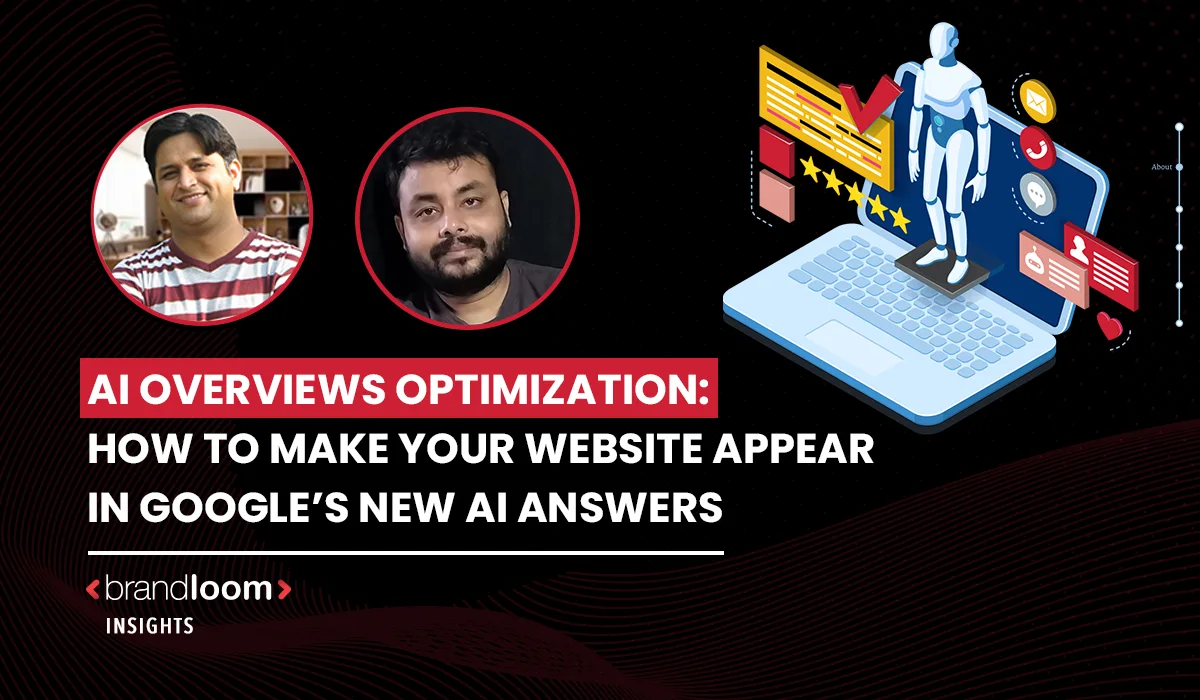
The most significant change in Google search history is currently underway, and the majority of brands are oblivious to the fact that they are fading from search results. The new AI-generated answers of Google are replacing the top of the page, and the traditional rankings have been left behind.
Unless your site is showing up within these summaries, you are already losing traffic, visibility, and customers. That is why it is no longer optional to master the AI overviews optimization. It is your new survival strategy.
The AI at Google operates using generative intelligence, structured data, conversational indicators, and semantic interpretation to determine which websites qualify to appear in its AI Overviews.
You will need to build an answer-first content strategy, enrich it with rich schema markup or AI, optimise for topical authority, and make your site AI-readable. Any search request can now serve as an opportunity to feature in Google’s AI solutions, provided your content is ready.
And in case you wish to remain visible in this AI-first world, BrandLoom, the leading AI marketing agency in India, provides you with the competitive advantage that your business cannot afford to be without.
What Are Google AI Overviews and Why Do They Matter?
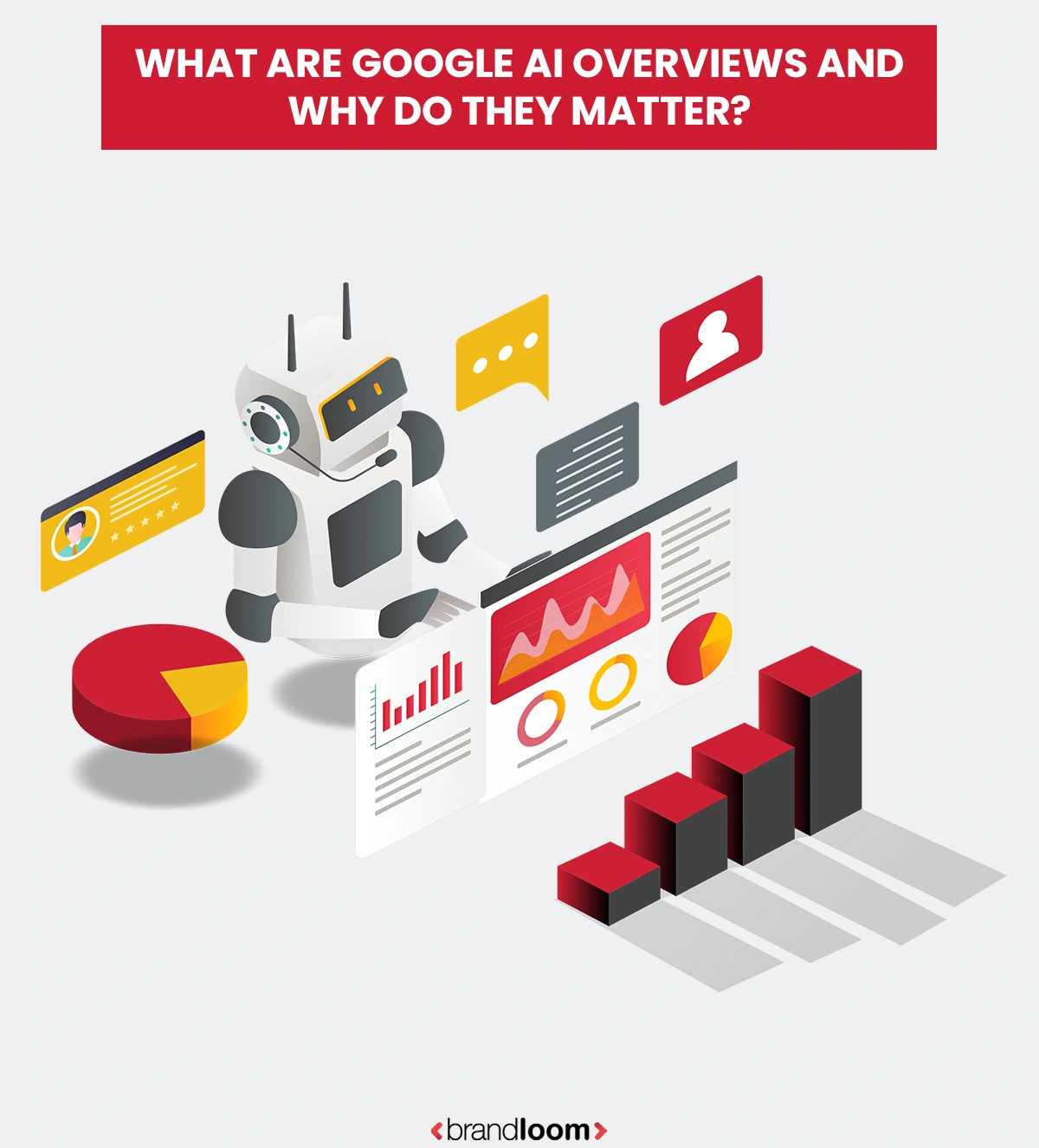
Google has just redefined the rules of search – and it did so quietly when everybody is still preoccupied with rankings. The AI-generated responses substituted the conventional blue links at the top of the results pages overnight.
Google AI Overviews SEO currently determines the first, most trusted, and least clicked content of users. Unless your brand is featured in these artificial intelligence summaries, you are not visible where you count the most.
AI Overviews extract the primary data from reliable websites and develop immediate reactions with the help of generative AI. They comprehend the search query entered into the search engine, examine the page’s context, scan structured data, and assess authority indicators. After that, they decide which content qualifies for the AI answer.
This means SEO has shifted. It is no longer a matter of ranking. It’s about inclusion. It is all about making AI readable. It is the way you structure what you are writing so that the AI systems at Google can process it to extract, summarise, and present it.
All businesses are now competing to appear in these artificial intelligence summaries. Winning it means you acquire enormous visibility in search results and zero clicks. If you don’t hit it, your traffic plummets even though your site technically ranks.
And to gain control of AI overviews and optimization, and to remain present in this AI-first search world, BrandLoom is the company that propels you forward, while others disappear.
Why Your Website May Not Appear in AI Overviews
Your site may have excellent content, but Google’s AI may not notice it. And the shocking part? Most brands do not even notice they have disappeared from the new AI-generated answer box until their traffic declines. In case you do not appear in Google AI answers, it is not a coincidence. It is the consequence of signals that Google is incapable of detecting, comprehending, and believing.
AI Overviews are not structured like traditional rankings. They are based on generative AI, entity cognition, ordered information, and transparent topical context. Unless your content is readable by AI, Google’s mechanisms cannot extract key information from your pages. Without schema markup on your pages, Google cannot recognize context. When your answers are hidden behind text blocks, the algorithm will not promote you.
Your site can also fail due to the lack of congruence with the conversational intent. AI search prioritizes natural language search, content based on the question, and answer formatting. It is these patterns that make the new AI search engine miss content that doesn’t fit them.
Another reason? Weak authority. AI Overviews bring out credible sources of quality. Without the signals of credibility on your site, you will not be shown, even when you are ranking the traditional way.
The first step is to understand these gaps. The solution to regaining visibility in AI-based search results is fixing them.
The Growing Importance of AI-Driven Visibility for Modern Brands
The use of AI in search is changing the way people find information online. Google purchases have been impacted by its AI Overviews, AI recommendations, and conversational search engines more than ever before.
The brands need to change quickly to remain visible. The SEO itself would not help in long-term development in this new environment.
The AI search is biased toward structured texts, authoritative sources, and context-rich information. Thus, companies need to perfect their content strategies and technical configurations.
Also, businesses must keep an eye on AI indicators to ensure they are visible in AI-generated searches. This involves active optimization and deeper learning about how AI interprets content.
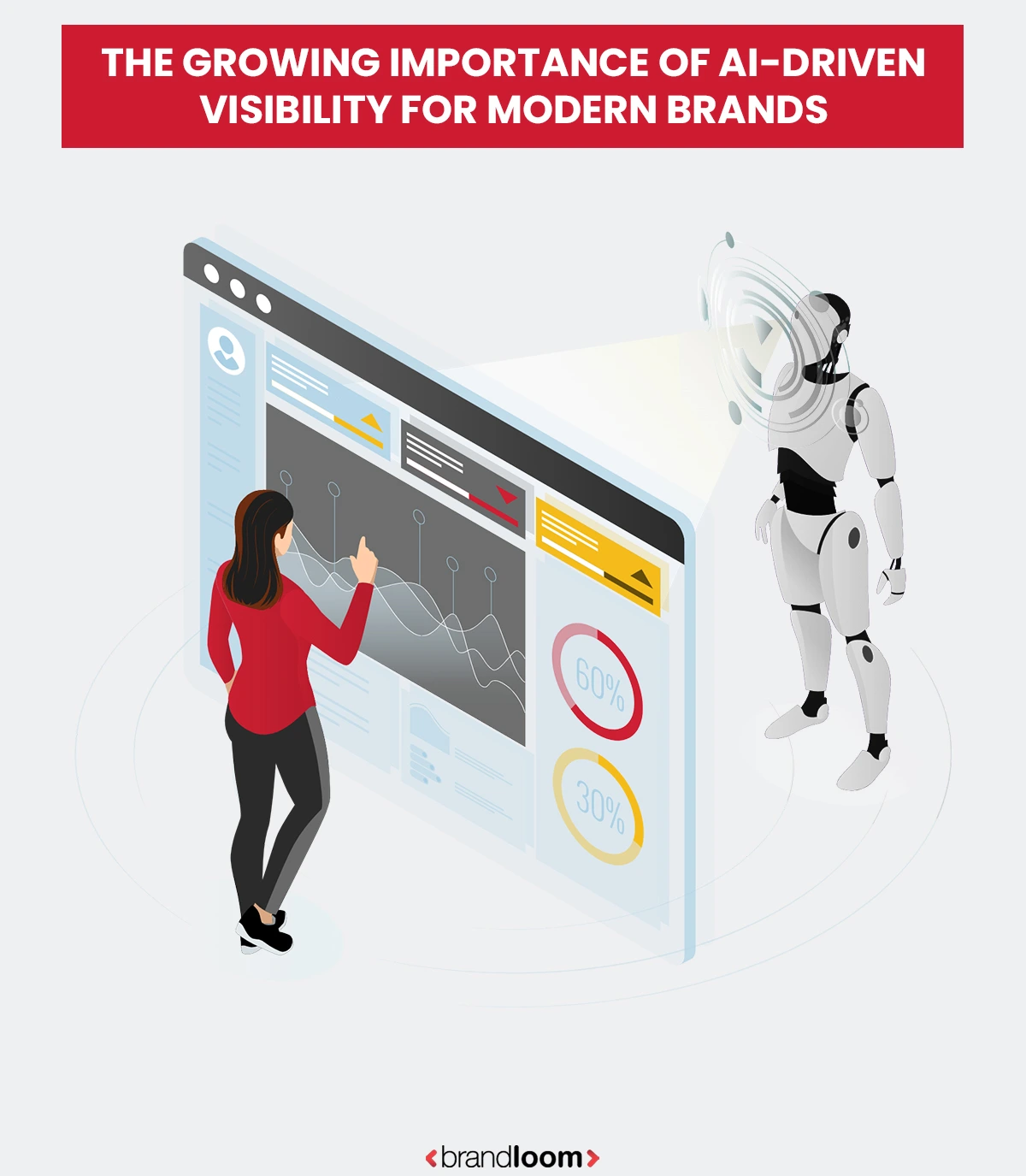
The significant reasons why visibility is essential are:
- AI search engines have taken over user journeys in every step.
- Conversational questions require content that gives a thorough context.
- Competitors could gain more traffic than the brands because AI Overviews show them instead.
- Ranking factors can change overnight due to algorithm updates.
- AI-generated summaries are more reliable for users than long pages.
Also, strategic partners become valuable assets to the brands, as they are the ones knowledgeable about AI search optimization. To accurately manage such movements, a team of AI-powered marketing professionals in India, like those at BrandLoom, can assist businesses in overcoming these changes. This will guarantee increased publicity in AI Overviews, LLM suggestions, and new search engines.
How AI Search Engines Evaluate Brand Credibility
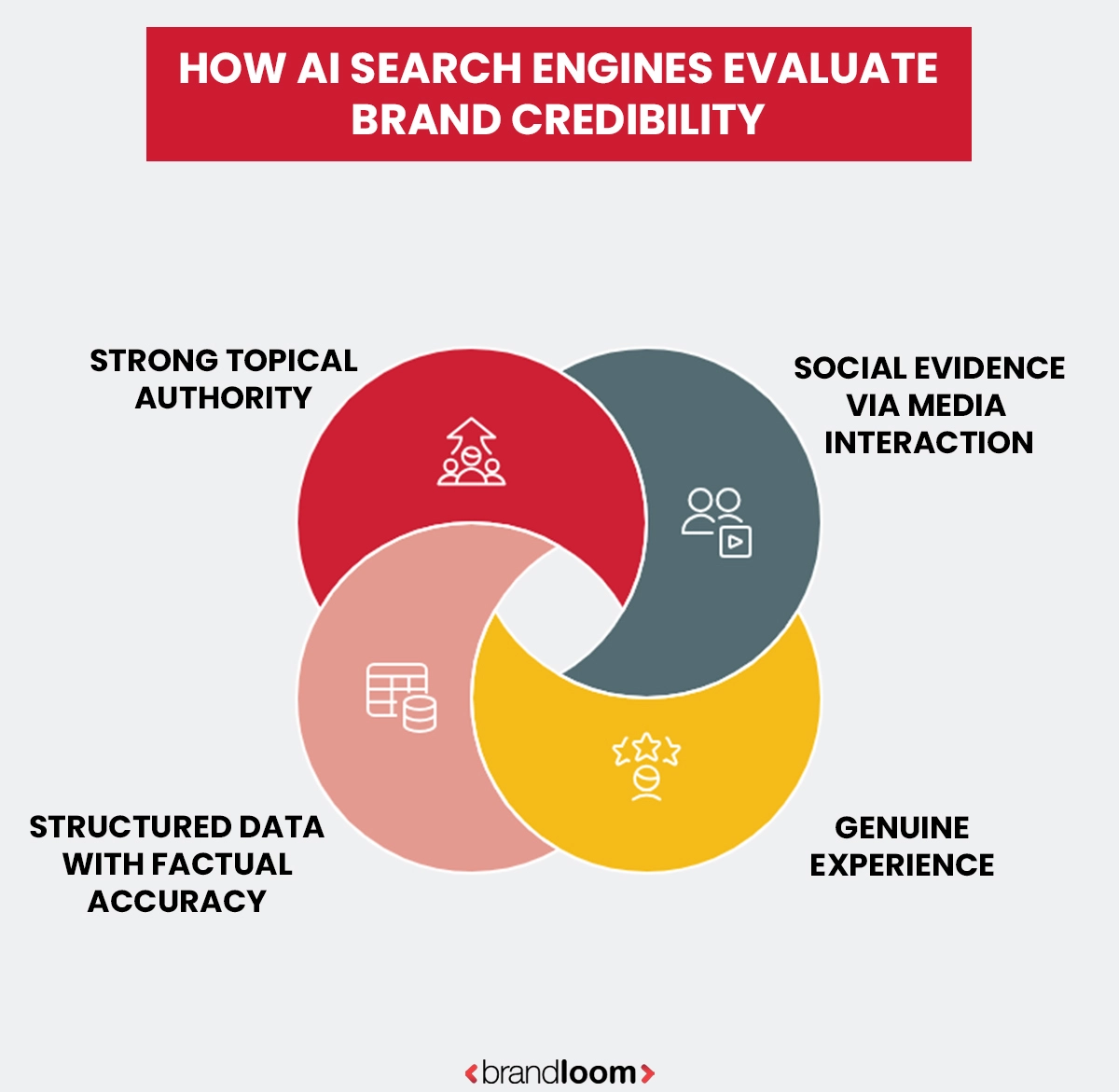
AI search engines have become assessors of brand credibility. They scan the content, analyse the context, identify indicators of authority, and then generate AI Overviews. This change makes credibility a central ranking factor. To enhance their visibility, the brands need to know how these systems evaluate content.
AI models will prioritize sources that demonstrate actual expertise. They seek correct information, congruent messages, and quality outward cues. They also ensure that a brand has depth, clarity, and useful information. Superficial content is no longer working in the AI-generated summaries. AI, instead, favors pages that provide all the answers to users.
The leading credibility indicators are:
- Powerful topical authority is exhibited in groups of content.
- Well-organized information with factual accuracy.
- Newer pages with the new information or recommendations.
- Extensive media interaction, such as social evidence.
- Authentic experience by authors, contributors, and brand owners.
Easily understandable content formats are also favored by AI systems. This consists of clean headings, bullet points, schema markup, and structured text.
Whenever AI models can generate value rapidly, they will raise the brand above others. To achieve effective search engine optimization, companies regularly collaborate with AI-based marketing specialists in India who understand the impact credibility can have on AI rankings.
The Role of Structured Data in AI Overviews Optimization
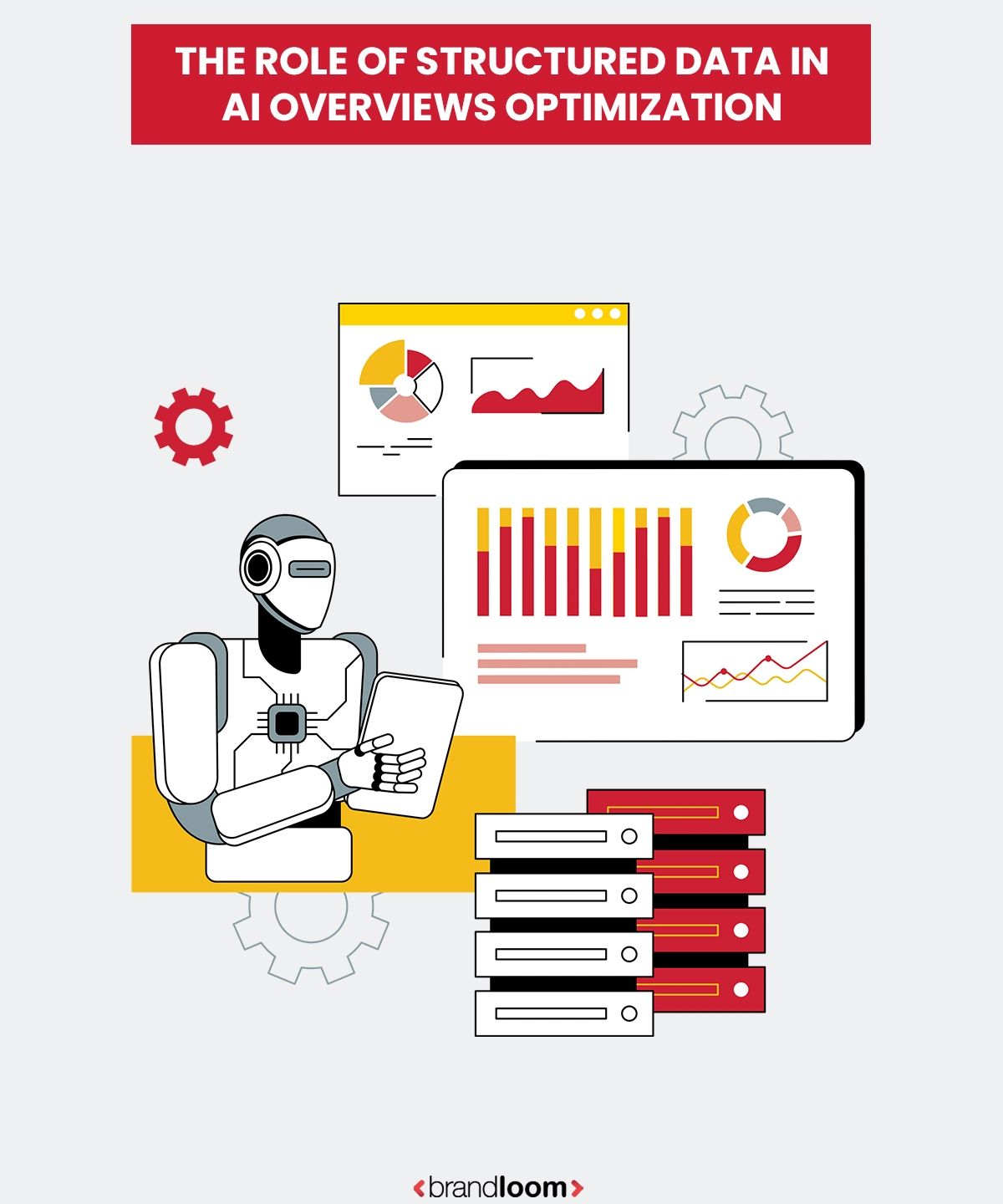
Organized data is essential for optimizing AI Overviews. It helps search engines understand what your content is about, not what it says. Structured data for AI overviews is now necessary to enable accurate interpretation, as AI is moving towards context-driven results. Companies that do not take this step will be lost in AI-generated summaries.
Schema markup enables artificial intelligence to classify content. It provides information on products, services, frequently asked questions, articles, and reviews, among other topics. This openness facilitates AI’s detection of relevance and authority. It also raises the likelihood of being featured in knowledge panels, AI summaries, and advanced search capabilities.
Key schema types in the optimization of AI are:
- Article and Blog Posting schema of editorial content.
- E-commerce product, Offer, and review schema.
- FAQ and HowTo schema of instructional resources.
- LocalBusiness and Organization schema of brand information.
- Breadcrumb schema on enhanced page comprehension.
Moreover, AI helps to develop accurate responses with structured data. It provides models with the assurance to cite your work in summaries. This results in increased visibility and increased traffic.
Thus, structured data strategies have become a common practice among brands. In most cases, they are facilitated by AI optimization company experts in India, who ensure that these tools are technically accurate and stable over time.
How to Optimize for AI Overviews (Step-by-Step Guide)
Google no longer pulls links; it pulls answers. You have to revise your SEO gamebook and focus on an AI-driven SEO strategy. Follow these steps. They are practical. They are inclusion-oriented. Apply them to increase your likelihood of being featured in AI Overviews.
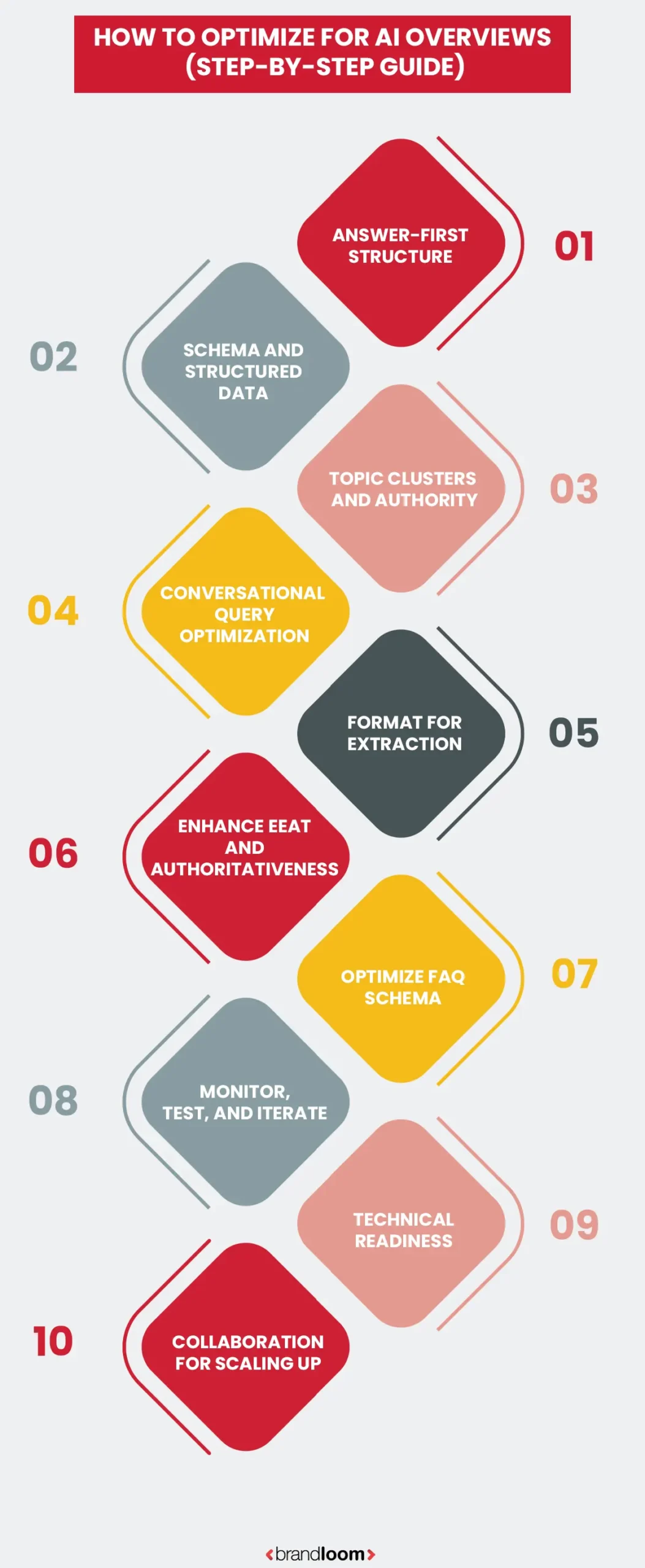
1. Start with an answer-first structure
Write the direct answer at the top. Then expand. The first paragraph should not be too long. Use plain language. AI prefers clarity.
- Put the question as an H2 or H3.
- Provide a one-sentence answer right away.
- Continue with 2–4 short supporting sentences.
This format helps AI derive important information quickly. It also assists voice and conversational search.
2. Use schema and structured data everywhere
Organised information makes the content readable by machines. It gives context. It informs Google about the meaning of each block.
- Add FAQ schema to Q&A blocks.
- Use the HowTo schema for step guides.
- Add Product, Review, and Organization schema where applicable.
- Test with Rich Results and Search Console and use JSON-LD.
Schema is a leading indicator of AI overviews optimization. It increases the likelihood that an AI will refer to your work.
3. Build topic clusters and topical authority
AI looks for trusted sources. It favors sites that discuss a subject in detail.
- Design pillar pages on core topics.
- Publish supporting articles that refer to the pillar.
- Be consistent in naming and entity usage across pages.
- Revise older information and reference to new studies.
This strategy increases entity recognition and topical authority.
4. Optimize for conversational queries
Act like a user with an inquisitive mind. Use natural language. Match intent.
- Use long tail question keywords.
- Add “How”, “Why”, and “What” headings.
- Give short, straight responses and follow-ups.
- Write FAQs in an everyday tone.
This will help your pages align with the voice assistant and AI search patterns.
5. Format for extraction
Ensure that AI can easily pull lines. Format matters.
- Use bullets and numbered lists.
- Underline definitions and the most important statistics.
- Include essential responses in the introduction to 50-150 words.
- Use plain H2/H3 headings for keywords.
A clean structure enhances your chances of appearing in search results and AI summaries.
6. Improve E-E-A-T and authoritativeness
AI favors reputable sources. Develop trust in the site and page.
- Include biographies of authors.
- Refer to secondary sources and research.
- Add case studies and original data.
- Get high-quality backlinks.
The more authoritative you are, the more likely you are to be included in AI Overviews.
7. Add and optimize FAQs with schema
FAQs are gold extraction. They are directly mapped to the user questions.
- Write 10 – 20 high-value FAQs per pillar.
- It is preferable to include answers of no more than 50 words.
- Mark them with the FAQ schema.
- Update the FAQ to reflect changes in user intent.
This is the key step in optimizing the FAQ schema and improving zero-click success.
8. Monitor, test, and iterate
AI search evolves fast. Monitor what is successful and replicate.
- Check impressions and search features with the Search Console.
- Track the pages where AI snippets appear.
- Placement of answers in A/B tests and headings.
- Update content according to performance indicators.
Track AI-inspired KPIs such as the presence of zero-click shares and featured answers.
9. Technical readiness and site health
AI will not use non-crawlable content. Fix technical issues.
- Make sure of quick loading and a mobile-first design.
- Deliver clean markup and structured markup.
- Use low crawl depth and internal links rationally.
- Correct application of canonical tags.
An improved site is healthy, which enhances the possibility of AI extraction.
10. Partner with specialists for scale
AI optimization is both tactical and technical. You can do it in-house. Or you may climb faster with assistance.
BrandLoom applies these processes to content, schema, and site architecture. Our experts create structured websites that can be read using AI. They increase topical authority. To be consistently included in the AI answers of Google, you should collaborate with a team that considers AI Overviews optimization as a full-stack functionality.
Why Brands Need AI Overviews Optimization in 2025 – 2026
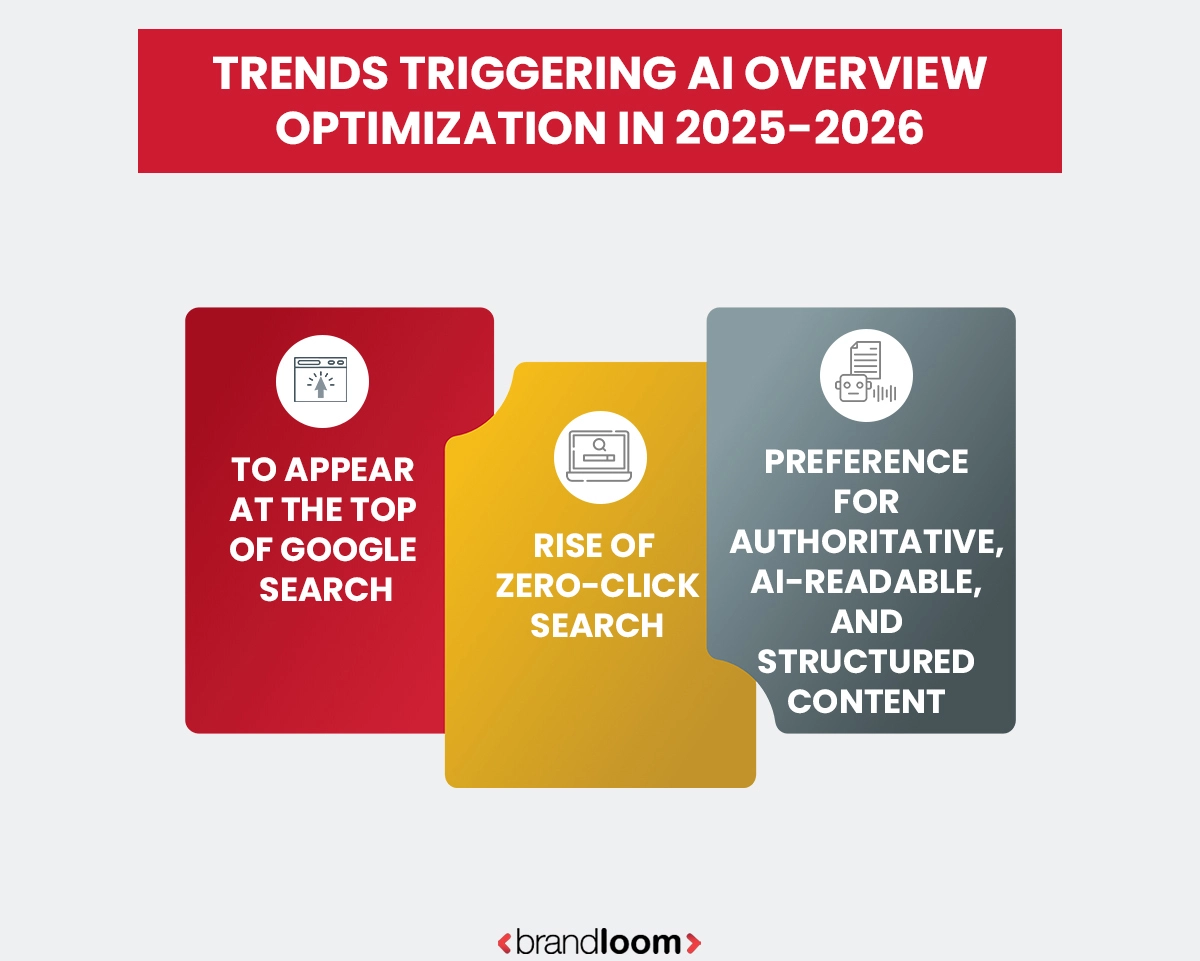
Google search is at its most disruptive. Now, AI-generated responses are taking the lead on the first page, and those brands that do not change quickly will vanish. This is why AI Overviews optimization will be a crucial part of any business that will proceed to 2025 and 2026. The search environment has changed, and you have to change with it.
AI Overviews Now Control the Top of Google Search
The AI-generated summaries from Google are displayed above traditional links. They deliver immediate replies generated by generative AI, entity comprehension, and structured data. With your brand contained in this box, you will be highly visible. When you are not, you are shoved down the fold.
This influences all industries, including eCommerce, SaaS, local businesses, and B2B brands.
Zero-Click Searches Are Rising Faster Than Expected
AI Overviews can respond to the whole search query without a single click. As a result, you need to be visible not only in the regular search results but also in the answers.
In 2025 – 2026, AI optimization is necessary for brands because:
- The number of zero-click results continues to grow on most queries.
- Users will use AI summaries rather than scroll through links.
- Google now measures the quality of answers, not ranking position.
- AI systems pull content according to its clarity, authority, and structure.
Further, being featured in AI responses produces automatic authority.
AI Search Prefers AI-Readable, Structured, and Authority-Driven Content
The new AI search at Google favors clean, factual, and easy-to-extract content. It prioritizes question-based formats, succinct explanations, and abundant schema markup.
Brands must concentrate on AI-ready content optimization since:
- AI Overviews entail content-based intelligible clarity.
- Inclusion depends on AI-readable website structures.
- Old keyword tactics are less crucial than entity-level signals.
- Great topical authority also enhances your occupation.
Therefore, outdated SEO approaches are no longer sufficient.
Businesses Must Future-Proof for the 2026 AI Search Model
Google is moving towards entirely AI-based search functionality. It means that how you look today depends on how you optimize tomorrow.
The following is why future-proofing is essential:
- The use of AI-first indexing will transform page evaluation.
- Selection will be dominated by conversational content with intent.
- Google will use more semantic cues and structured signals.
- Early adapting brands gain long-term authority benefits.
Moreover, early adopters beat those competitors who take too long to act.
AI Overview Optimization Is Now a Competitive Advantage
Optimising on AI Overviews lets you get:
- Higher AI-driven visibility.
- Greater power as a reliable source.
- Better penetration of zero-clicks.
- Enhanced prioritizing of results pages.
- More discoveries through AI enhancement.
Finally, AI Overviews optimization is not an upgrade as such. It is a survival need for brands entering the next generation of Google search.
Conclusion
The AI Overviews are transforming how brands are discovered online. In this new environment, traditional SEO alone will not ensure long-term visibility. The brands need to optimize search with AI, enhance topical authority, and provide clear, organized information that aligns with the user’s intent.
In addition, they need technical improvements, such as schema markup and ongoing content updates. Developing AI models requires proactive search engine optimization. Companies that change today will be ahead of the pack and capture a larger share of high-intent traffic.
To achieve the best results and ensure future-proof visibility in AI-first search, partnering with BrandLoom, the Best AEO Agency in India, will accelerate outcomes and guarantee success.
FAQs
A webpage is visible in Google AI Overviews when it provides relevant, easy-to-understand, precise, and authoritative information. Google is interested in content that provides the answer to user intent.
Thus, you need to design systematic, informative, and valuable pages. Our SEO professionals at BrandLoom make powerful headings, concise sentences, and uncluttered formatting. Insert schema markup to enable AI to make sense of your text. Besides, generate topical authority through subject coverage. This gives AI models the confidence to utilize your pages in summaries.
In addition, update your site with new information and confirmed data. When AI understands your knowledge, your website content is more likely to appear in Google AI Answers when competitive queries are searched.
Google uses relevance, accuracy, authority, and clarity to select content on AI Overviews. It searches pages to determine signs of competence and usefulness. It also tests whether the content fully answers the user’s question.
Structuring enhances extraction, so AI prefers schema markup, bullet points, and brief descriptions. Besides, Google analyzes expertise and the regularity of various topics. It also monitors the engagement and trust indicators.
If your site is deep, credible, and up to date, it meets AI requirements. These will give your content an edge in AI-based responses. The optimization is robust enough to rank higher in Google’s AI-generated summaries.
AI Overviews optimization focuses on context, depth, and machine-readability. Conventional SEO is very dynamic in the use of keywords and ranking signals. Nonetheless, the AI-driven search prioritizes meaning, structure, and authority.
The AI models require complete answers, and not superficial pages. As such, ensure your content clearly and thoroughly elaborates on the issues. Another area of AI analysis is schema markup and topical clusters, which are not as central to traditional SEO.
Also, conversational questions demand natural, human writing. This implies that your pages should be in line with semantic search, not keyword stuffing.
According to AI experts at BrandLoom, brands will need to optimize both SEO and AI in 2025 – 2026 to remain visible in a changing search landscape.
The best type of content for AI-generated responses is that which provides clarity, depth, and accuracy. Google favors well-organized data that can be easily extracted.
Thus, utilize headings, lists, bullet points, and short paragraphs. Provide factual, well-structured information with references. Do not use fluff and keyword stuffing. Instead, our BrandLoom content specialists believe in providing in-depth explanations that get to the heart of user intent.
Detailed instructions, frequently asked questions, how-to articles, and topic clusters are very effective. AI also prefers updated materials; hence, update your pages periodically. Additionally, markup schema to enhance machine readability.
The cleaner, more reliable, and more informative your content is, the higher its chances of being chosen by Google’s AI models.
Formatted content helps Google understand what your content is about. It provides AI with a clear indication of page type, topic, and essential items. Schema markup helps organise your data into machine-readable formats.
Consequently, AI can retrieve key information quickly. This will enhance your chances of being featured in AI Overviews. Also, structured data increases the exposure of products, frequently asked questions, reviews, articles, and services. It also aids AI to justify your authority by contextualizing.
Engine searches depend on structured data to classify information, particularly those driven by AI. Our AI experts at BrandLoom, the best AI marketing agency, suggest that by adding proper schema to your pages with BrandLoom, you will be more competitive in Google’s AI-generated summaries.
The FAQs help Google understand what you are writing about. They also give succinct answers that are easy for AI to extract. This renders them very useful in AI Overviews. All FAQs address a specific user intention, which aligns closely with the responses of AI models to the questions.
Also, topical authority is enhanced through FAQ sections that cover related subtopics. This will make your site more relevant. The machine readability is further increased by structured FAQ schema optimization.
Furthermore, the FAQs minimize ambiguity by using simple, clear language. When the AI can detect well-written Q&A formats, it has more trust in what you are writing. Therefore, FAQs greatly enhance the visibility of AI-driven answers.
Businesses can make content readable by AI by writing understandably, organizing information, and using schema markup. Begin by directly responding to users’ questions. Be brief, using short sentences and paragraphs. Put bold headings and bullets. Avoid fluff and ambiguous language. Rather, offer factual and authoritative information.
Furthermore, structure your material into topic clusters to enhance semantic relevance. Ensure your content includes schema markup to help AI make sense of it. Update your pages with new knowledge.
To change the flow of ideas, use transition words when moving between two points. This combination will ensure Google AI models read, comprehend, and present your content.
Some errors will minimize the likelihood of your inclusion in AI Overviews. Superficial content is a serious problem. AI requires descriptive and credible data. Bad formatting is also detrimental to visibility, as artificial intelligence cannot read ambiguous text.
Also, your content will be less machine-readable because it lacks schema markup. Older pages indicate irrelevance. Overuse of keywords is unhelpful as it complicates the AI and undermines credibility. Something like an inconsistent absence or a vague explanation also lowers trust.
The other significant barrier is weak topical authority. When coverage on your site is superficial, AI models pick competitors. These are the problems that need to be fixed to enhance your AI visibility.
The strength of brands can be enhanced by creating high-quality, in-depth content regularly. Topical authority is critical, and therefore, cover your areas of subject matter exhaustively.
Post helpful guides, frequently asked questions, and lengthy articles. Establish trust through reliable information and strong references.
Moreover, we should regularly update the old content to keep it fresh. Use trusted sites to get backlinks. Markup schema to enhance machine readability. Ensure that platform brand messages are congruent. Use social proof to attract users and involve experts.
BrandLoom’s professionals have noted that with time, these signals of authority are identified by AI models. Consequently, your content will be better suited to AI Overviews and conversational search rankings.
Websites should focus on clarity, organization, and command. Begin by enhancing the content and the page to align with the user’s purpose. Add schema markup to improve machine readability. Make good use of topic clusters to achieve strong contextual relevance.
Also, update outdated pages to align with evolving expectations for AI. Develop conversational, natural-sounding materials that answer particular questions. Enhance website performance through quick load and uncluttered designs. Bullet points, lists, and tight formatting should be used to make them easy to extract.
Enhance authority by using credible sources. Our BrandLoom professionals advise that these measures will help ensure that your website is visible in AI Overviews and in answers to questions powered by LLMs in 2026 as the concept of AI search optimization.