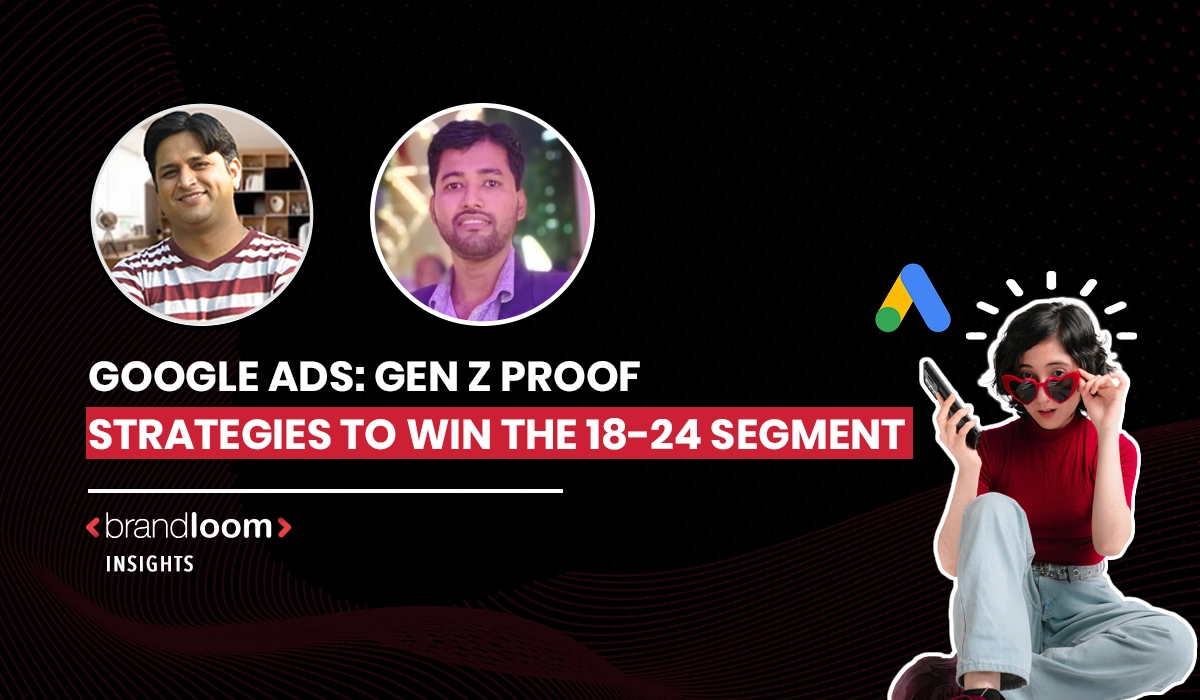
If your paid campaigns are struggling to deliver strong returns, the problem may not be your budget. It may be your strategy. Many brands still use millennial-era tactics to engage younger consumers, only to see poor engagement, weak clicks, and disappointing conversions. The reality is simple: marketing to Gen Z requires a completely different approach.
The Gen Z section matters because it influences trends, drives online conversations, and shapes future purchasing behavior. Yet, most brands fail to connect with this audience because they misunderstand Gen Z buying behavior. This generation researches extensively, values authenticity, skips generic messaging, and makes decisions quickly. Traditional ads that rely on polished corporate language or outdated assumptions often miss the mark.
That is exactly why Google Ads for Gen Z needs a smarter, more adaptive playbook. Winning attention today requires sharper audience targeting, stronger messaging, short-form creatives, and campaigns designed around real intent rather than broad demographics.
In this guide, we will break down practical Gen Z marketing strategies that help improve ROAS, strengthen engagement, and make your digital marketing efforts more relevant to younger consumers. At BrandLoom, we have seen firsthand that when brands adapt to Gen Z behavior, performance improves.
Who Is Gen Z and What Works for Them?
Generation Z, commonly known as Gen Z, includes individuals born roughly between 1997 and 2012. As the first generation to grow up fully immersed in smartphones, social media, streaming platforms, and instant digital access, their expectations from brands differ significantly from previous audiences. They value speed, authenticity, personalization, and meaningful engagement over traditional marketing tactics.
Today, Gen Z represents one of the most influential consumer groups globally, with growing purchasing power and strong influence over household buying decisions. According to research by McKinsey & Company, Gen Z consumers place a strong emphasis on authenticity and tend to support brands that align with their personal values.
Additionally, a survey by Morning Consult found that around 62% of Gen Z prefers brands that stand for social causes they believe in, highlighting the importance of purpose-driven messaging.
So, what works for Gen Z marketing?
- Authentic and Relatable Content: Gen Z responds better to brands that feel human and transparent rather than overly polished or corporate. User-generated content, creator partnerships, and behind-the-scenes storytelling often perform better than scripted advertising.
- Short-Form and Visual Content: Platforms centered around short videos continue to shape Gen Z behavior. In fact, studies show that short-form videos are among the most engaging content formats for Gen Z audiences, making snackable, visually driven storytelling highly effective.
- Value-Based Messaging: Gen Z pays attention to what brands stand for. They are more likely to engage with companies that demonstrate clear values, inclusivity, sustainability, or social responsibility.
- Community and Two-Way Engagement: Rather than passive consumption, Gen Z prefers participation. Brands that encourage conversations, feedback, trends, and community involvement often build stronger loyalty with younger consumers.
- AI-Powered Search and Discovery: Gen Z is increasingly moving beyond traditional search engines and exploring AI-powered tools for recommendations, product research, and quick answers. Many younger consumers now use platforms like ChatGPT, social search, and AI-generated summaries to compare products, discover brands, and validate purchase decisions. This shift means brands must optimize not only for traditional SEO but also for AI visibility, conversational discovery, and answer-based search experiences.
For brands, reaching Gen Z is no longer about simply selling products. It is about building trust, creating relevance, and showing up in ways that feel genuine and culturally aligned.
Why Marketing to Gen Z Is Different Than Any Previous Generation
Brands cannot market to Gen Z the same way they marketed to millennials or older audiences. The rules have changed because Gen Z consumer behavior looks very different from previous generations. This audience grew up in a hyper-digital environment shaped by constant content consumption and instant information access. As a result, they process ads faster, question messaging more, and expect brands to earn attention.
Gen Z Consumer Behavior Has Changed the Advertising Game
To market effectively to Gen Z, brands first need to understand how this generation behaves online and makes purchasing decisions. Unlike previous generations, Gen Z consumers are more intentional, research-driven, and selective in how they engage with brands.
Key aspects of Gen Z online behavior include:
- Research-Driven Purchase Decisions: Gen Z rarely makes impulsive purchases. Before spending money, they actively research products, compare reviews, watch videos, and seek recommendations from peers. Their buying journey is often shaped by information and social validation.
- Skepticism Toward Traditional Advertising: Highly polished ads and scripted brand messaging often feel inauthentic to Gen Z audiences. Instead, they respond better to communication that feels relatable, transparent, and genuinely human.
- Short Attention Spans and Content Preferences: Brands often have only a few seconds to capture attention. This makes short-form, visually engaging, and concise content essential for maintaining interest and driving engagement.
- Value-Driven Buying Behavior: Gen Z consumers are strongly influenced by brand values. They are more likely to support businesses that align with their beliefs, priorities, and social perspectives, making authenticity and purpose increasingly important in marketing.
What Gen Z Expects From Brands
Gen Z values authenticity, inclusivity, and transparency more than polished branding. They trust social proof, creator recommendations, and customer experiences over corporate promises. They also respond better to campaigns featuring real people instead of unrealistic stock imagery.
| Traditional Advertising | Gen Z Expectations |
| Polished brand messaging | Authentic messaging |
| Celebrity endorsements | Creator/community trust |
| Long-form ads | Short-form content |
| Feature-focused | Value-focused |
Why Most Google Ads Campaigns Fail With the Gen Z
Many brands invest heavily in paid media but still struggle to engage younger consumers. The reason is simple: most Google Ads campaigns fail with Gen Z because they rely on outdated assumptions instead of actual audience behavior. Brands often target age groups broadly without understanding what truly influences attention, engagement, or buying decisions.
One of the biggest mistakes involves generic ads that feel overly polished or sales-heavy. Gen Z responds poorly to messages that sound promotional or disconnected from reality. Weak ad copy, corporate language, and uninspired creative often lead to lower click-through rates and wasted ad spend.
Poor Google Ads audience targeting also creates performance issues. Many marketers still depend on broad demographic filters instead of layering intent, interests, behaviors, and purchase signals. Without intent segmentation, brands risk showing ads to users who are unlikely to convert.
The Biggest Disconnect Between Brands and Gen Z
The disconnect becomes even more obvious when brands ignore how Gen Z consumes content. Many campaigns overlook YouTube viewing habits, underestimate mobile-first behavior, or use the wrong bidding strategy for campaign goals. Slow landing pages and poor mobile experiences also increase drop-offs significantly.
At BrandLoom, we often find that improving messaging, targeting, and platform alignment creates faster performance gains than simply increasing ad budgets.
| Common Mistake | Better Gen Z Strategy |
| Generic ad copy | Conversational messaging |
| Broad targeting | Intent-based targeting |
| Static creative | Video-first assets |
| Search-only ads | Search + YouTube combo |
How to Target Gen Z in Google Ads the Right Way
If you are wondering how to target Gen Z in Google Ads, the answer starts with understanding behavior rather than relying only on demographics. Many advertisers make the mistake of targeting users aged 18–24 and expecting results. However, effective Gen Z audience targeting requires deeper audience insights, intent signals, and smarter segmentation.
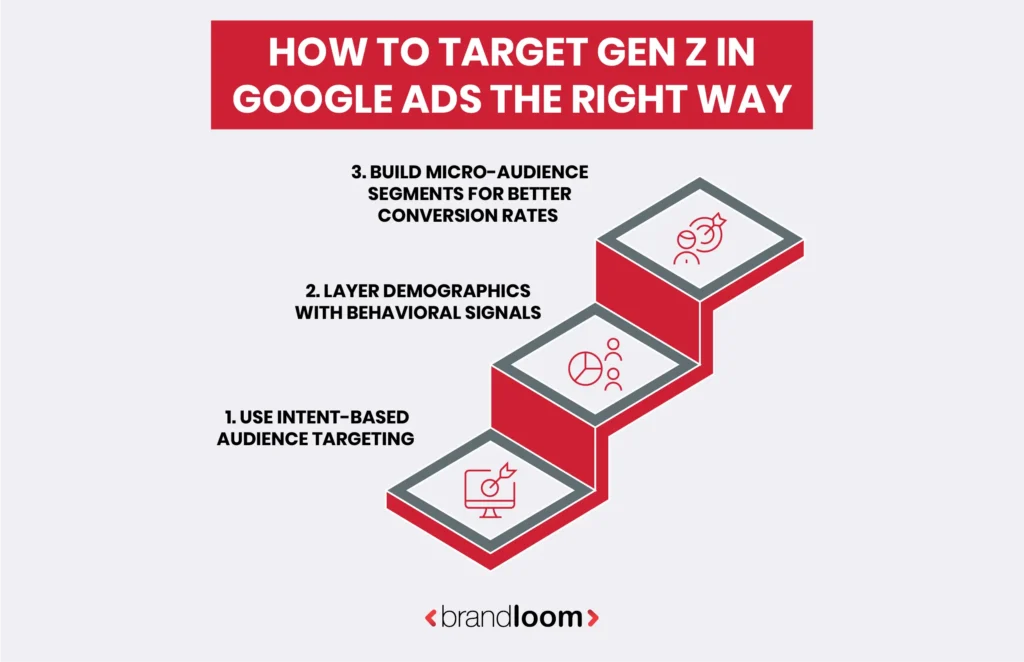
Use Intent-Based Audience Targeting
A strong Google Ads audience targeting strategy begins with intent. Gen Z actively researches before buying, which means brands must target users based on what they search, watch, and engage with online.
Start with custom intent audiences to reach users actively researching products, competitors, or related topics. These audiences help advertisers target people showing purchase intent rather than passive interest.
Next, use affinity audiences to connect with users based on long-term interests and habits. For example, fashion-focused brands can target users interested in streetwear, beauty, or lifestyle content. Pairing affinity signals with in-market audiences creates a stronger targeting framework because it combines interests with active buying behavior.
Most importantly, study search behavior. The keywords Gen Z searches, the content they consume, and the platforms they engage with reveal stronger purchase intent than age targeting alone.
Layer Demographics With Behavioral Signals
Age alone is not enough for effective targeting. Successful campaigns combine demographic data with behavioral signals like interests, device usage, browsing activity, and search history.
For example, a skincare brand should not only target 18–24-year-olds but also users researching acne solutions, beauty influencers, or skincare reviews on mobile devices.
Build Micro-Audience Segments for Better Conversion Rates
Smaller audience groups often deliver stronger conversion rates because messaging feels more relevant. Instead of broad campaigns, segment audiences into categories like fashion shoppers, skincare enthusiasts, gamers, or students.
A stronger Google Ads conversion strategy also adapts messaging and offers based on these segments, helping brands increase relevance, engagement, and purchase intent.
The Best Google Ads Strategy for Young Audiences in 2026
The best Google Ads strategy for young audience segments in 2026 focuses on attention, relevance, and intent. Gen Z moves quickly between platforms, consumes content differently, and ignores messaging that feels forced or outdated. Brands that want better engagement and stronger returns must build campaigns around how younger consumers actually behave online.
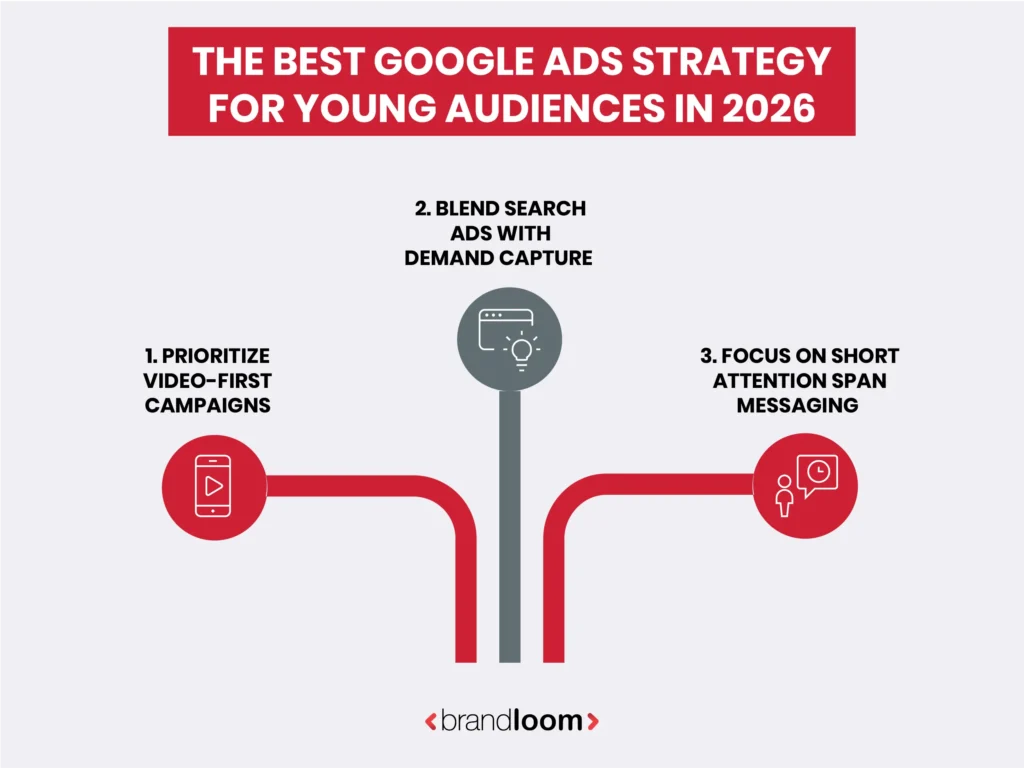
Prioritize Video-First Campaigns
Gen Z strongly prefers visual content, making video one of the most effective formats for engagement. Most younger users spend significant time on every major video platform, especially YouTube, where they research products, watch reviews, and compare brands before purchasing.
A strong YouTube Ads strategy helps brands capture attention early in the buyer journey. Instead of relying only on polished promotional content, focus on relatable storytelling, creator-style messaging, tutorials, and user-generated content. A compelling video ad that feels authentic often outperforms highly produced brand commercials because it builds trust faster.
Blend Search Ads With Demand Capture
Video creates awareness, but search ads help capture intent. Gen Z may discover products through videos, creators, or social recommendations, but they often move to a search engine before making decisions.
This is where a strong Google Ads keyword strategy matters. Brands should balance branded keywords with non-branded searches to capture both awareness and purchase intent. High-intent queries such as product comparisons, reviews, and pricing-related searches often drive stronger conversions than broad targeting alone.
Focus on Short Attention Span Messaging
Gen Z decides quickly whether content deserves attention. That makes the first three seconds of an ad critical. Strong hooks, concise messaging, and emotional relevance help improve engagement.
Effective ad copy should feel conversational, relatable, and direct rather than overly promotional. Brands should also prioritize short-form messaging that communicates value immediately.
Many brands working with performance-focused agencies like BrandLoom often discover that stronger results come from combining creator-style video, intent-based search campaigns, and messaging designed for shorter attention spans.
How Performance Max Campaigns Can Improve Gen Z Reach
Reaching younger audiences often requires brands to show up across multiple touchpoints instead of relying on a single channel. This is where Performance Max campaigns can create a stronger competitive advantage. Since Gen Z constantly shifts between content formats and platforms, advertisers need a smarter, more adaptive approach to campaign delivery.
A strong Performance max campaign strategy uses automation to optimize placements, creative combinations, and bidding in real time. Instead of manually managing campaigns across platforms, Google uses ai-driven technology to identify where younger audiences engage most and serves ads accordingly. This automation helps brands improve efficiency while reducing wasted spend.
Why Performance Max Works Better for Gen Z Discovery
One of the biggest advantages of Performance max lies in omnichannel visibility. Gen Z often discovers products through video, recommendations, or visual content before searching intentionally.
Performance Max helps brands appear across YouTube, Discover, Gmail, Maps, and Search within a single campaign. YouTube supports visual discovery, Discover captures interest through personalized content feeds, Gmail enables promotional visibility, and Search captures active buying intent. This integrated experience makes it easier for brands to stay visible during the research-heavy purchase journey.
Mistakes to Avoid With Performance Max
Despite its benefits, poor execution limits performance. Many brands assume automation alone guarantees results, but weak inputs often reduce effectiveness. Avoid these common mistakes:
- Using poor creative assets: Low-quality visuals, generic messaging, or weak videos reduce engagement and make campaigns less appealing to Gen Z audiences.
- Ignoring audience signals: Failing to provide audience insights limits Google’s ability to understand intent and optimize targeting effectively.
- Weak conversion tracking: Inaccurate or incomplete tracking prevents automation from learning which users actually convert, leading to wasted spend.
- Relying too heavily on automation: Even the strongest Google Ads automation strategy needs human oversight, testing, and performance reviews to stay effective.
A successful performance max setup works best when brands combine automation with strong creative, better targeting inputs, and clear conversion goals.
Which Google Ads Bidding Strategies Work Best for Gen Z Campaigns?
Choosing the right bidding model plays a major role in campaign performance, especially when targeting younger audiences. Since Gen Z responds differently to messaging, content, and platforms, brands need smarter bidding strategies in Google Ads that optimize for engagement and conversions instead of only clicks. The right approach depends on campaign goals, budget maturity, and audience intent.
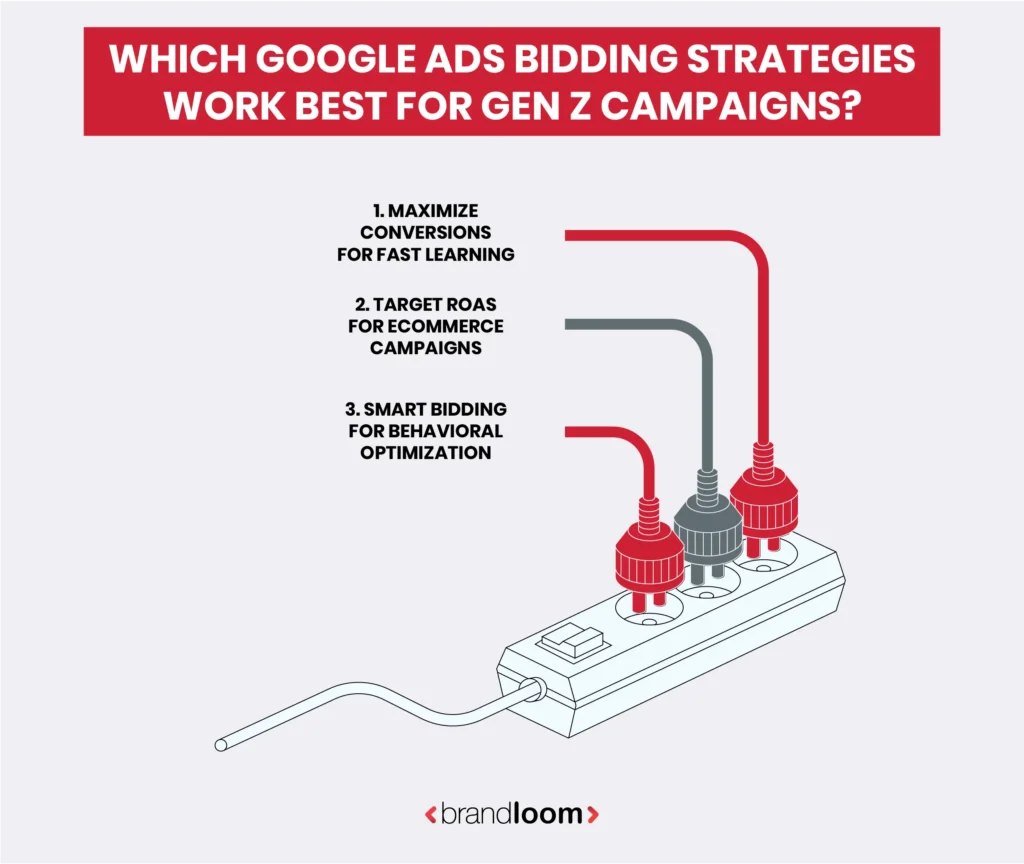
Maximize Conversions for Fast Learning
For startups and D2C brands, Maximize Conversions often delivers the fastest results. This Google Ads bid strategy helps advertisers collect data quickly while identifying which audiences engage and convert. Since younger users move quickly through the buying journey, faster learning helps brands adapt messaging and offers more effectively.
This strategy works especially well for brands testing campaigns, new product launches, or audience segments because it prioritizes actions rather than impressions.
Target ROAS for eCommerce Campaigns
Scaling eCommerce brands often benefit more from Target ROAS because it focuses on revenue efficiency instead of simply increasing traffic. Among popular Google Ads bidding strategies, this option works well when brands already have enough historical conversion data.
For Gen Z campaigns, Target ROAS helps advertisers prioritize high-value customers while maintaining profitability. This becomes especially important for brands competing in crowded D2C categories.
Smart Bidding for Behavioral Optimization
Modern smart bidding strategies Google Ads uses rely on machine learning to optimize bids based on user behavior, intent, and contextual signals. Instead of making manual adjustments, advertisers allow Google to improve performance through real-time optimization.
These automated systems evaluate device usage, browsing habits, time of day, and purchase intent instantly. Brands using smarter Google Ads bidding strategies often improve efficiency because machine learning reacts faster than manual bidding decisions.
Google Ads for eCommerce Gen Z Buyers: Winning Conversion Strategies
Winning younger buyers requires more than running standard campaigns. Brands investing in Google Ads for eCommerce Gen Z audiences must adapt messaging, targeting, and retargeting tactics to match changing buying habits. Since younger shoppers research extensively before making decisions, brands need strategies that prioritize trust, relevance, and speed.

Optimize Product Messaging for Value-Driven Buyers
Gen Z rarely responds to hard selling or feature-heavy messaging. Instead, they want brands to communicate value clearly and quickly. A strong Google Ads for eCommerce strategy should focus on affordability, sustainability, convenience, or product quality depending on audience priorities.
Product messaging should feel relatable and direct. Highlight how products solve problems, fit lifestyles, or align with personal values instead of relying only on discounts or promotional language.
Use Social Proof in Ads
Trust strongly influences younger consumers. Adding social proof through customer reviews, creator endorsements, user-generated content, or ratings can significantly improve ad performance.
Gen Z often validates products through peer experiences before buying. Ads featuring authentic testimonials or real customer experiences tend to build credibility faster and improve engagement levels.
Retarget Researchers, Not Just Visitors
Many brands only retarget abandoned carts or website visitors, but younger shoppers often spend more time researching before purchasing. A smarter Gen Z customer acquisition strategy includes retargeting users who watched videos, engaged with ads, browsed product pages, or searched related terms.
Instead of repeating the same ad, personalize messaging based on behavior. This approach often improves conversion rates because it keeps products relevant throughout longer decision-making journeys.
Common Google Ads Mistakes Brands Make With Gen Z
Even well-funded campaigns struggle when brands misunderstand how younger audiences engage online. If your campaigns are underperforming, chances are you are making one of these common mistakes. Avoiding them can improve engagement, lower wasted spend, and support better Google Ads ROI optimization.
- Treating Gen Z like millennials
Gen Z behaves differently. They prefer authenticity, faster communication, and value-driven messaging. Reusing older audience strategies often weakens engagement. - Ignoring YouTube Ads
Many brands underestimate YouTube’s influence on buying decisions. Since younger consumers actively watch reviews, tutorials, and creator content, ignoring video limits visibility. - Using generic ads with a corporate tone
Overly polished messaging feels disconnected. Gen Z responds better to conversational, relatable communication that feels authentic rather than promotional. - Creating poor landing page experiences
Slow load times, cluttered design, or weak mobile optimization increase bounce rates. Strong landing pages remain essential for better campaign outcomes. - Skipping A/B testing
Without a proper Google Ads A/B testing strategy, brands miss opportunities to improve messaging, creatives, and targeting performance.
Smart brands regularly use Google Ads campaign optimization techniques to test, refine, and improve campaigns instead of assuming one setup will always work.
Conclusion
Reaching younger audiences through Google Ads is not impossible. It simply requires a different approach. Brands that still rely on outdated targeting, generic messaging, or broad demographic assumptions often struggle to connect with Gen Z consumers.
Success comes from understanding how younger audiences discover, research, and evaluate brands. Stronger results happen when businesses combine smarter targeting, intent-based audience segmentation, compelling messaging, and platform-specific creative. Testing also matters. From refining audience signals and improving ad copy to experimenting with bidding models and creative formats, consistent optimization drives better outcomes over time.
Brands should also rethink how they approach automation. Features like Performance Max work best when paired with strong audience signals, high-quality creative assets, and accurate conversion tracking. Combined with smarter bidding and behavioral targeting, these strategies can significantly improve campaign performance.
The good news is that Gen Z is not difficult to reach they simply expect brands to communicate differently.
From BrandLoom’s perspective, the brands seeing the strongest results today are the ones adapting faster to changing audience behavior instead of relying on outdated campaign structures.
Smarter targeting, stronger creative alignment, and continuous optimization now play a bigger role in growth than simply increasing ad budgets. If your Google Ads campaigns are struggling to engage younger audiences, the issue may not be spend it may be strategy.
Frequently Asked Questions
The best Google Ads strategy for Gen Z combines intent-based targeting, creator-style video, concise messaging, and platform-specific creatives. Since younger users value authenticity, brands should prioritize YouTube, behavioral signals, and short-form content. According to BrandLoom’s experience, relevance consistently outperforms aggressive promotion.
The ideal bidding strategy in Google Ads depends on campaign goals. Startups often benefit from Maximize Conversions, while D2C brands may prefer Target ROAS. For growing brands, smarter automation improves performance. We recommendation usually depends on audience maturity and campaign objectives.
Common Google Ads bidding strategies include Maximize Clicks, Maximize Conversions, Target CPA, Target ROAS, and Manual CPC. Each supports different goals, from traffic generation to revenue optimization. Based on BrandLoom’s perspective, advertisers should align bidding models with measurable business outcomes.
Google Ads smart bidding uses machine learning to optimize bids automatically based on user behavior, device usage, time, intent, and conversion likelihood. It adjusts bids in real time to improve performance. Our advice is to pair automation with strong audience signals and tracking.
Improving Google Ads ROI optimization starts with stronger targeting, better ad messaging, conversion tracking, and testing. Brands should refine audiences, improve landing pages, and reduce wasted spend. From BrandLoom’s observations, small optimization changes often create significant performance improvements over time.
A beginner-friendly Google Ads campaign structure should separate campaigns by objectives, audience intent, and product categories. Start with clear ad groups, targeted keywords, and measurable conversions. According to us, simplicity and testing matter more than overcomplicated campaign setups initially.
To target younger audiences, combine demographics with interests, behaviors, and search intent. Effective Google Ads audience targeting includes custom intent audiences, video engagement, and behavioral signals rather than age alone. BrandLoom’s insight suggests intent-based segmentation usually improves campaign relevance significantly.
Performance Max campaigns use automation to deliver ads across Search, YouTube, Gmail, Discover, and Display from one campaign. Google optimizes placements using audience signals and conversions. Based on our experience, strong creative inputs improve automation performance substantially.
A strong Google Ads keyword strategy helps brands target users at different buying stages. High-intent keywords improve relevance, reduce wasted clicks, and increase conversions. From BrandLoom’s experience, balancing branded and non-branded keywords usually drives better campaign efficiency and growth.
Common mistakes include weak targeting, poor ad copy, ignoring mobile experience, skipping testing, and relying on outdated assumptions. Strong Google Ads campaign optimization techniques help brands improve efficiency and reduce wasted spend. Our recommendation is to optimize continuously instead of setting campaigns once.